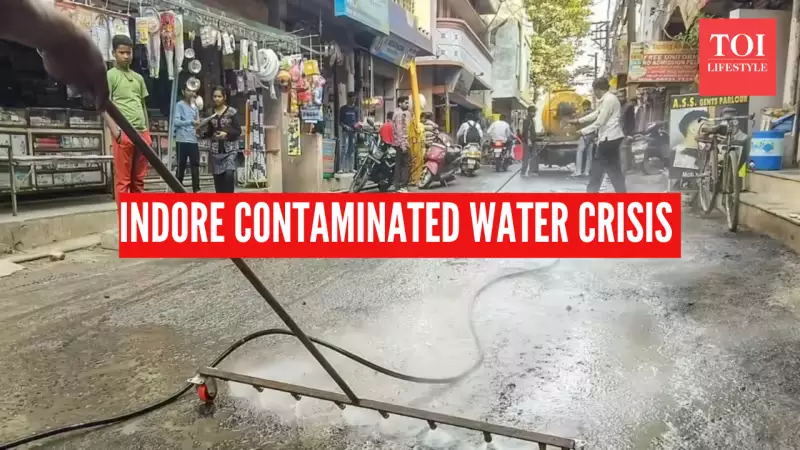
A severe public health crisis has gripped the Bhagirathpura locality in Madhya Pradesh's Indore, where a waterborne disease outbreak has led to nine confirmed deaths and affected more than 1400 people. The tragic death of a six-month-old infant has intensified public anger and highlighted the gravity of the situation.
Heartbreaking Loss and Community Outrage
The outbreak's human cost became painfully clear with the death of a baby boy. His father recounted the family's ordeal, stating the child was born after a decade-long wait, following a daughter. "He had diarrhoea and fever. We took him to the doctor on December 26. The doctor gave medicine and we brought him home," the grieving father said. "The child was fine for two days but again, suddenly, at night, he developed a very high fever. He vomited, and he died at home on December 29." The infant's death is suspected to be directly linked to the contaminated water supply.
Source of the Contamination Confirmed
According to media reports, the crisis began when sewage water from a local toilet seeped into the Bhagirathpura water supply. Residents soon started reporting symptoms of vomiting, diarrhoea, dehydration, and high fever. The Chief Medical and Health Officer (CMHO) of Indore, Dr. Madhav Prasad Hasani, confirmed that laboratory tests identified contamination in the drinking water. The cause was traced to a leak in the main supply pipeline, allowing sewage to mix with potable water.

The Invisible Threat in Contaminated Water
The World Health Organization identifies contaminated drinking water as a critically underestimated global health threat. Water contaminated by sewage, as in Indore, can harbour dangerous bacteria like:
- Escherichia coli (E. coli)
- Salmonella
- Shigella
- Vibrio cholerae
A study published in PLOS One Journals, "Health risks to children from exposure to fecally-contaminated recreational water," underscores the danger. Exposure can lead to severe gastrointestinal illness. In young children, these infections can escalate rapidly, causing dehydration, electrolyte imbalance, sepsis, and organ failure, becoming life-threatening within hours if treatment is delayed.
Emergency Measures to Stay Protected
While government-level measures are expected to sanitize the water supply, knowing how to protect oneself in such emergencies is crucial. The US Centres for Disease Control and Prevention (CDC) recommends the following for emergency situations:
- Boil Water: This is the most effective method to kill harmful germs in water intended for drinking or cooking.
- Disinfect with Chemicals: If boiling is not possible, use chemical disinfectants like unscented household chlorine bleach, iodine, or chlorine dioxide tablets. These can kill most harmful pathogens.
It is vital to note that these are emergency steps and do not guarantee complete safety. The primary recommendation remains to avoid consuming any water suspected of contamination.