

Jaundice Outbreak in Haryana Village Claims Seven Lives, Health Authorities Launch Investigation
A tragic jaundice outbreak in Chainsa village, located in Palwal district of Haryana, has resulted in the deaths of seven residents between January 27 and February 11. The Haryana health department has initiated a comprehensive investigation into what appears to be a significant public health crisis, with water contamination emerging as a primary suspect.
Details of the Fatalities and Medical Response
The victims, whose ages ranged from 9 to 65 years, were identified as Huzaf (9), Payal (9), Sarik (14), Huma (15), Dilshad (22), Samsuddin (42), and Jamila (65). All seven patients were admitted to Shaheed Hasan Khan Mewati Government Medical College in Nalhar, Nuh, where they later succumbed to their conditions. Medical reports indicate that four of these deaths were directly linked to acute hepatitis or acute liver failure complicated by hepatic encephalopathy.
Common symptoms reported among the deceased included fever, abdominal pain, vomiting, jaundice, and altered sensorium prior to death. The health department received its first alert regarding these jaundice-related fatalities on January 31, prompting immediate action.

Comprehensive Health Department Investigation
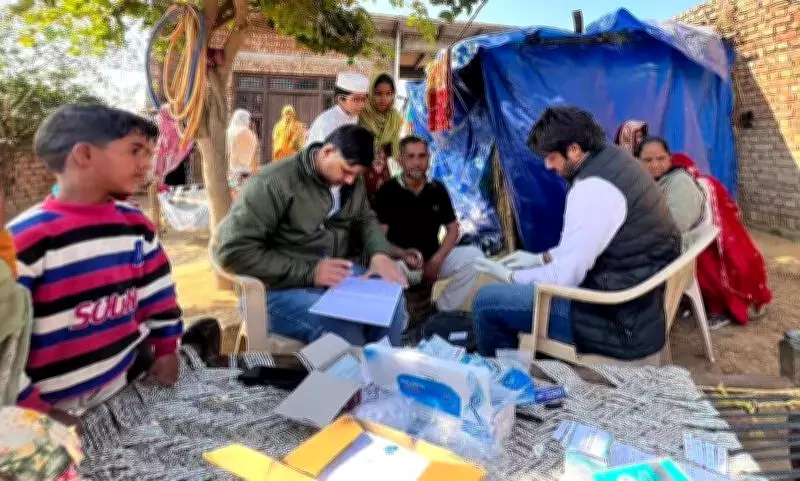
Following the initial alert, the Palwal health authorities deployed a rapid response team on February 1, with medical camps and doorstep surveys commencing the following day. Dr. Satinder Vashisth, Chief Medical Officer of Palwal, reported that approximately 800 outpatient consultations have been conducted so far, with screening and blood sampling for Hepatitis A, Hepatitis E, Hepatitis B, and Hepatitis C.
"We have screened around 1,500 individuals, including all close contacts of the deceased," Dr. Vashisth stated. "Community awareness activities focusing on safe drinking water and food hygiene have been implemented alongside the medical interventions."
By February 15, medical camps in the village had screened approximately 800 people, with blood samples collected from 210 villagers. Laboratory testing revealed two positive cases for Hepatitis B and nine for Hepatitis C, while all samples tested for Hepatitis A and Hepatitis E returned negative results.
Water Quality Testing Reveals Contamination Concerns
Bacteriological sampling of drinking water sources in Chainsa village, which has a population of 5,728 residents across 865 households, uncovered significant water quality issues. Of 31 water samples collected from storage tanks and pipelines, six household samples tested positive for coliform bacteria.
Further testing revealed that 82 stored water samples showed no detectable chlorine as of February 12. Following corrective measures, testing of 32 samples the next day found only four with adequate chlorine levels, indicating ongoing water purification challenges.
Additional Testing and Public Health Measures
Health authorities conducted leptospirosis testing using IgM and IgG ELISA methods on multiple samples, with all results returning negative. A veterinary inspection was also performed, revealing no animals suspected of carrying leptospirosis.
The investigation into the exact cause of the jaundice outbreak remains ongoing, with detailed records being collected from affected villagers and families of the deceased. Public health measures have included the distribution of approximately 15,000 halogen tablets for water purification in the village.
"Three patients with similar clinical complaints were admitted to Civil Hospital and Nalhar Medical College. They are currently stable," Dr. Vashisth noted. "We are thoroughly investigating the cause since Hepatitis B is typically blood-borne, yet our tests and screening also indicate water infection as a contributing factor."
The health department has established a dedicated helpline (01275-240022) for public queries regarding the outbreak. Scrub typhus test results were pending at the time of reporting, and daily medical camps continue with screening for HBsAg and Hepatitis C as health authorities work to contain the situation and prevent further fatalities.






