

Kerala Health Authorities Face Hurdles in Tracing HIV-Positive Migrant Laborers
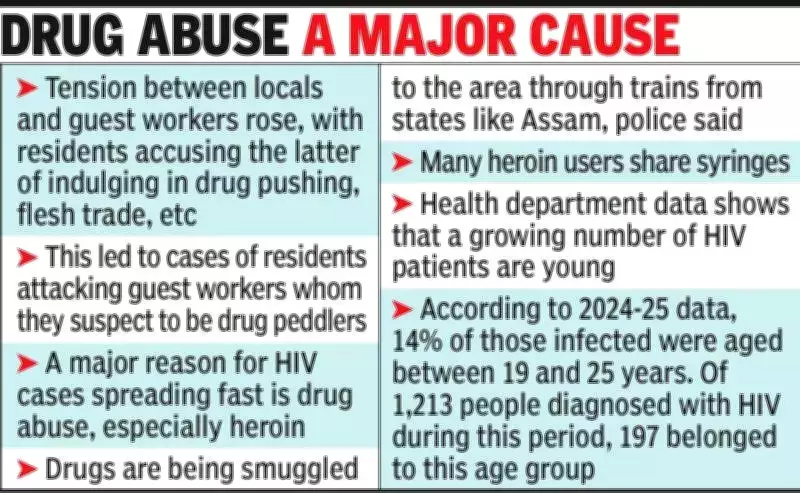
In the wake of escalating drug-related tensions between local residents and migrant laborers in Perumbavoor, a new and pressing concern has emerged for the Kerala health department. Officials are grappling with significant difficulties in tracking guest workers who tested positive for HIV during recent months, severely hampering efforts to provide them with essential medical treatment and timely intervention.
Fake Details and High Mobility Create Major Obstacles
The primary challenges stem from incorrect mobile numbers, fabricated addresses, and the constant movement of these workers within the state due to the transient nature of their employment. This floating population makes consistent follow-up nearly impossible for health authorities. In response, the health department has organized a field visit to Perumbavoor, and the Kerala State Aids Control Society (KSACS) is set to convene a crucial meeting with multiple government departments.
This high-level meeting will include representatives from the police, excise, labor departments, and local bodies to develop a comprehensive strategy to address this urgent public health issue.

Alarming Statistics and the Real Concern
Data from the health department reveals that approximately 26% of individuals who tested HIV-positive in the Perumbavoor area over the past few months were guest workers. These random tests were conducted through the Perumbavoor taluk hospital. While the department has been hesitant to disclose the total number of people tested or the exact count of positive cases, officials have emphasized that their primary worry revolves around the migrant labor community.
Although the percentage might not seem immediately alarming—since migrant laborers constitute only one-fourth of the total HIV-positive cases in the region—the real issue lies in their elusive nature. Health officials are deeply concerned because they cannot locate many of these HIV-positive guest workers, making timely medical intervention extraordinarily difficult.
Systemic Failures and Incomplete Registries
Health officials have discovered that in numerous instances, the addresses provided by these workers are completely fake, which also complicates tracking efforts in their home states. A KSACS official stated, "We are currently compiling comprehensive data regarding all HIV cases in the area, including the latest test results. By the time we receive detailed results, we fear the infected guest worker may have already left the area. Attempts to trace them using the phone numbers or addresses they provided often lead to dead ends."
Shockingly, some workers even possess multiple Aadhaar cards, further obscuring their identities. Even when addresses are genuine, the high mobility of these laborers—often moving from one location to another within days or even leaving the state entirely—makes tracking a formidable task. In such cases, authorities must seek assistance from the National Aids Control Organization (NACO).
Longstanding Administrative Delays Exacerbate the Crisis
Compounding the problem are administrative delays. Over four years ago, the state government instructed the labor and home departments to create a registry of guest workers, but this project remains incomplete. The labor department was supposed to issue digital ID cards through the Athithi portal, yet the process is only halfway finished. Additionally, local bodies and health departments are mandated to conduct inspections at the accommodation facilities of guest workers, but such inspections are rarely carried out.
To improve coordination, the health department plans to seek support from the district administration to collaborate with various government departments in the district. The proposed strategy involves assigning specific targets and responsibilities to each department to ensure a more organized and effective response to this growing health challenge.






