Noida: The district administration is launching a major outreach initiative for industrial workers following protests on April 13 that highlighted the harsh conditions caused by extremely low wages. On Friday, officials announced a series of medical camps across the district on May 1, celebrated globally as Workers' Day. The district employs an estimated 13 lakh people across 12,000 industrial units.
The administration will set up 201 medical camps throughout the city, while all government hospitals and 22 private hospitals will offer free consultations, diagnostic tests, surgeries, and medicines for the entire day. Additionally, creches will be introduced in factories and industrial units that currently lack this facility.
Comprehensive Healthcare Services
Officials stated that the May 1 camps will provide a wide range of healthcare services, including general health checkups, dental treatment, eye screening, gynaecological consultations, mammography, breast screening, TB and HIV testing, cancer screening, and X-rays.

District Magistrate Medha Roopam urged workers to bring their family members to the camps. "This is not a one-day exercise. We want to build a culture where preventive healthcare regularly reaches workers," she said. The administration is also identifying factories and industrial units where creches will be established. "While several industries already have creche facilities, we are conducting a survey to determine how many factories and units still need them," Roopam added.
Worker Perspectives on Creche Facilities
Jyoti, a worker at a garments factory in Noida Phase 2, said creches would make it easier for working parents to manage childcare. She and her husband both work in the area and leave their two children, aged three and seven, with an elderly neighbour until they return. "If a creche is available at my factory, I would be able to bring my younger child with me while the older one attends school," she said.
Under Section 48 of the Factories Act, 1948, factories employing more than 30 women workers must provide suitable, clean, and well-ventilated rooms for children under six years of age. These creches must be supervised by trained women.
Industry Response
Industry representatives noted that women workers are primarily concentrated in the garments and electronics sectors in Noida, where creche facilities are already common. Vipin Malhan of the Noida Entrepreneurs Association stated that compliant industries provide daycare and feeding rooms for female employees. Dharmendra Nagar, a labour contractor supplying around 10,000 workers to about 15 factories in Noida and Greater Noida, said creches are available in most factories, especially larger ones.
Preparatory Camps and Future Plans
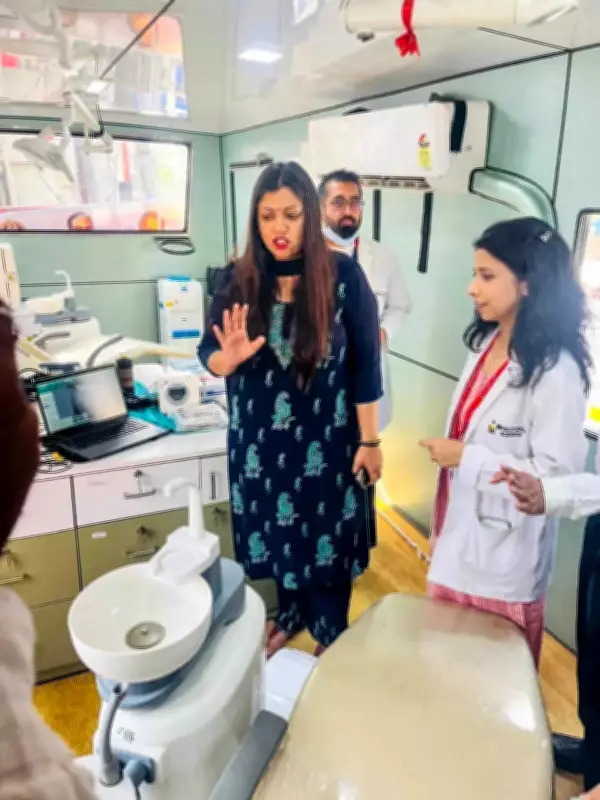
Ahead of the May 1 drive, the district administration organized medical camps at 25 locations in labour-intensive areas on Friday. Roopam inspected one such camp at Ambedkar Bhawan in Surajpur, where she reviewed arrangements, interacted with workers, and sought feedback on the services offered.
"The May 1 campaign is being planned on a much larger scale so that workers and their families can access quality healthcare near their homes and workplaces," Roopam said. The aim is to ensure that no worker is denied treatment due to distance, cost, or lack of awareness.
The DM also highlighted that the district administration, health department, private hospitals, and voluntary organizations are collaborating to expand healthcare outreach in industrial belts and labour settlements. The effort is intended to go beyond a single day and build a system where preventive healthcare regularly reaches workers.
Chief Medical Officer Dr. Narendra Kumar noted that Friday's camps saw participation from hospitals, NGOs, and health teams providing specialized services. At the Surajpur camp, the health department conducted general screenings and distributed medicines.
Officials confirmed that camps were held in labour-dense areas such as Surajpur, Baraula, Sarfabad, Salarpur, Gejha, Kulesara, Chapraula, Habibpur, Mangrauli, Kakrala, and Bhangel, along with slum clusters across Noida.