A recent survey conducted by Jnana Prabodhini's Institute of Psychology has brought to light concerning trends in substance use among adolescents in Pune. The study, released on Friday, indicates that one out of every six older adolescents has experimented with alcohol at least once. Additionally, energy drinks have emerged as a silent risk factor, with many young individuals unaware of their potential side effects, including increased heart rate and anxiety.
Key Findings on Alcohol and Substance Use
The survey reveals that nearly 90% of the city's youth are aware of the harmful effects of alcohol. However, consumption rates remain significant: approximately 8% of 13-16 year olds, 10% of 17-19 year olds, and 17% of 20-22 year olds have tried alcohol, drugs, or tobacco at least once. This translates to at least one in six older adolescents having consumed alcohol. Researchers noted that energy drinks, which are readily available in neighborhood stores, have become a dominant addiction. Awareness of their dangers is low among the youth, yet these drinks are extremely popular during exams or late-night activities, despite adverse effects.
Survey Methodology and Scope
Conducted between January and March 2025, the survey involved 1,887 adolescents aged 13 to 22 across Pune. It highlights that vulnerability to addiction increases with age and exposure but can be mitigated through stronger emotional regulation, supportive families, and engaged schools. The study was commissioned by the Tarachand Ramnath Seva Trust and launched by Pune Police Commissioner Amitesh Kumar at the commissionerate. It examines five key areas of risk: alcohol, tobacco, drugs, energy drinks, and digital use.

Expert Insights on Addiction Risks
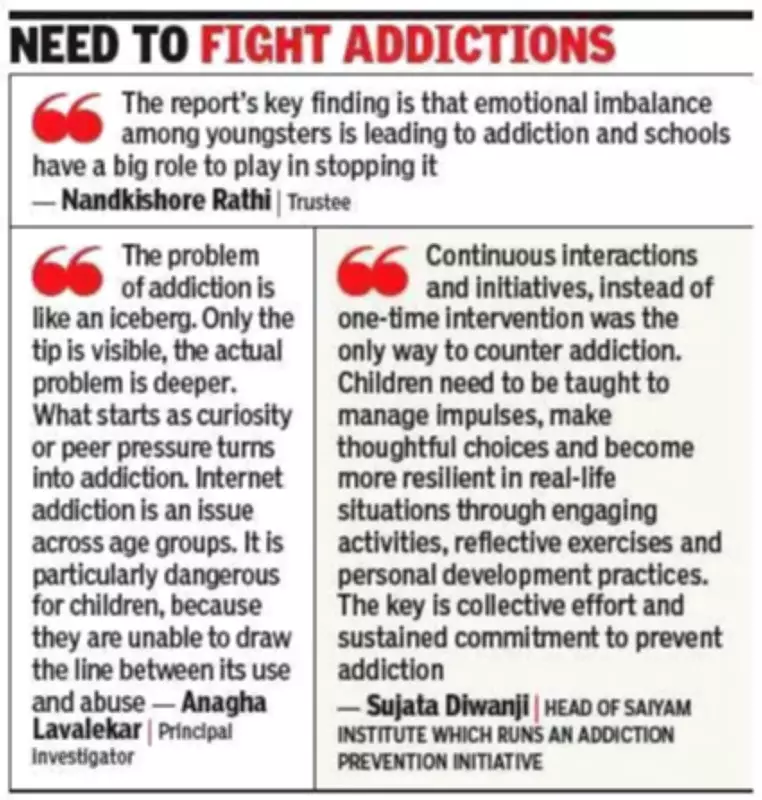
Research coordinator Sandhya Khasnis emphasized that parents often underestimate their children's digital and substance use. The report categorizes energy drinks as a silent risk because awareness of their harm is low, and they are perceived as performance boosters. Consumption of these drinks is rising across all age groups, with high availability exacerbating the problem. Trustee Nandkishore Rathi noted that high availability, early exposure, and changing attitudes contribute to addiction. He stated, "The report's key finding is that emotional imbalance among youngsters is leading to addiction, and schools have a big role to play in stopping it."
Principal investigator Anagha Lavalekar compared addiction to an iceberg, noting that only the tip is visible while the actual problem is deeper. What starts as curiosity or peer pressure can turn into addiction. Internet addiction is an issue across age groups and is particularly dangerous for children who struggle to differentiate between use and abuse. Furthermore, over 70% of children observe people in their surroundings; if they perceive substance abuse as acceptable, they may initiate it themselves.
Availability and Triggers
According to the report, 60% to 70% of adolescents reported that alcohol, tobacco, or energy drinks are easily available in their neighborhood or through friends. Digital platforms are accessible 24/7. Older adolescents (17-19 years) reported the greatest exposure to both substance and digital addiction. Common triggers include peer gatherings, online challenges, competitions, games, birthday parties, and celebrations.
Prevention Initiatives
Saiyam Institute has been running an addiction prevention initiative since 2019 for adolescents aged 11 to 16. Head Sujata Diwanji emphasized that continuous interactions and initiatives, rather than one-time interventions, are essential to counter addiction. "Children need to be taught to manage impulses, make thoughtful choices, and become more resilient in real-life situations through engaging activities, reflective exercises, and personal development practices. The key is collective effort and sustained commitment to prevent addiction," she said.
The Vicious Cycle of Addiction
The study further shows that vulnerability to addiction increases when stress is high or perceived as unmanageable, family conversations are limited leading to isolation, peer influence drives FOMO (fear of missing out) behaviors, and digital dependence has already set in. These factors form a vicious cycle that requires comprehensive intervention.