

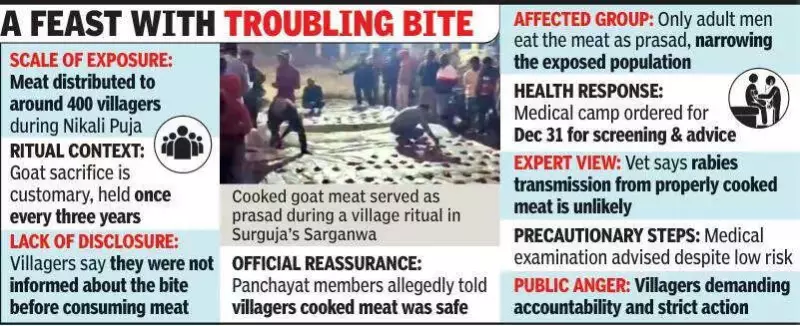
A wave of fear and anxiety has swept through Sarganwa village in Chhattisgarh's Surguja district after it emerged that approximately 400 villagers consumed the meat of a goat that was allegedly bitten by a rabies-infected dog. The incident occurred during a traditional ritual, sparking urgent health concerns and demands for accountability.
The Ritual and the Revelation
The event took place on December 28 during Nikali Puja, a significant local ritual held once every three years to worship deities, where animal sacrifice is a customary practice. As part of the ceremony this year, between 12 to 15 goats were sacrificed, and their meat was distributed in a community feast.
However, panic set in after the feast when villagers claimed that one of the goats sacrificed had previously been bitten by a "mad dog" suspected of carrying rabies. The information about the goat's potential exposure to the deadly virus surfaced only after the meat had been consumed, primarily by the adult men of the village, as is the local custom for such ritual offerings.

Villagers' Anger and Official Response
Residents expressed deep anger and fear, stating they were not initially informed about the goat's condition. The animal had reportedly been purchased from a local resident by the village sarpanch and deputy sarpanch specifically for the ritual.
"Officials told us that nothing will happen if the meat was cooked properly. But what if something does happen?" asked villager Tapan Mistri, capturing the community's palpable anxiety. As the scare intensified, village leaders alerted health authorities, leading to swift action.
Chief Medical and Health Officer (CMHO) Dr. P S Marko confirmed that the health department has been directed to intervene immediately. A medical camp is scheduled to be organized in the village on December 31 to examine all those who consumed the meat and to advise on further treatment or preventive measures if necessary.
Medical Perspective on the Risk
Amid the rising panic, veterinary experts have stepped in to offer reassurance based on scientific evidence. Government veterinarian Dr. Chandu Mishra explained that rabies is primarily transmitted through the saliva of an infected animal, typically via bites or scratches that break the skin.
"If the meat is thoroughly cooked at high temperatures, the rabies virus does not survive. The risk of infection through cooked meat is extremely low," Dr. Mishra stated. He emphasized, however, that medical monitoring as a precautionary step is still a prudent course of action.
Echoes of a Previous Scare
The incident has revived memories of a similar health scare in Uttar Pradesh's Bareilly district. There, a buffalo died after being bitten by a rabid dog, leading to widespread fear when it was discovered that raita made from that buffalo's milk had been consumed. Although health officials later calmed fears by stating the risk was minimal, the episode left a lasting impact on public anxiety regarding rabies transmission through food products.
For now, Sarganwa village remains a mix of fear and frustration. While medical experts assert that the chances of rabies transmission from properly cooked meat are negligible, the central question haunting the villagers is why an animal with a suspected rabies exposure was ever allowed to become part of a sacred community feast, putting hundreds at potential risk. The upcoming health camp will be crucial in monitoring the situation and providing much-needed peace of mind to the concerned community.






