Hyderabad: Telangana has registered significant improvements in child nutrition over the past five years, but undernutrition continues to affect more than one in four children in the state, according to the recently released National Family Health Survey-6 (NFHS-6) for 2023-24.
Key Findings of NFHS-6
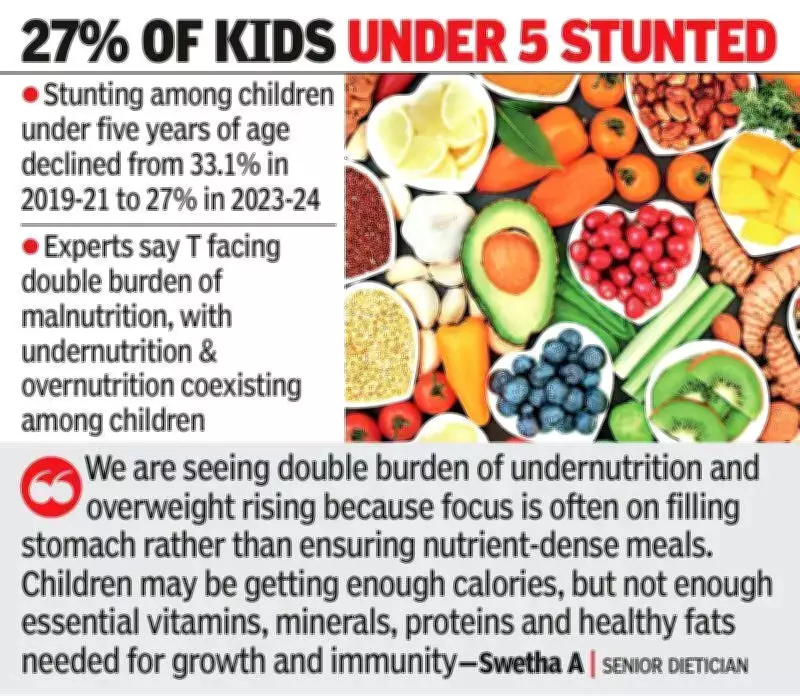
The survey revealed that stunting among children under five years of age declined from 33.1% in NFHS-5 (2019-21) to 27%. Wasting, a form of acute malnutrition, fell from 21.7% to 16.9%. The proportion of underweight children also dropped from 31.8% to 27.8%. Severe wasting, one of the most serious forms of malnutrition, nearly halved from 8.5% to 3.9%.
These improvements suggest that nutrition interventions, immunisation coverage, and maternal and child health services have contributed to better outcomes for children across the state. Compared with several large states, Telangana performs relatively well. Its stunting rate of 27% is lower than states such as Bihar (35.6%), Jharkhand (35.7%), and Assam (30.3%). However, it still trails better-performing states such as Kerala (around 20%), Sikkim (around 20%), and Goa (below 20%), indicating that there is still room for improvement.

Undernutrition Remains a Major Challenge
However, the latest figures indicate that undernutrition remains a major public health challenge. With 27% of children stunted and 27.8% underweight, more than one in every four children under the age of five continues to suffer from the effects of inadequate nutrition. Health experts said Telangana is increasingly facing a double burden of malnutrition, with undernutrition and overnutrition coexisting among children.
According to doctors, children's eating habits have changed significantly in recent years, with ultra-processed foods becoming a regular part of diets even among toddlers and school-going children.
Dr S Hemaltha, senior government gynaecologist, said: “Many children consume fewer vegetables, fruits and other nutrient-rich foods, resulting in poor dietary diversity. This leads to chronic undernutrition and repeated infections during the early years of life, which can impair not only a child's physical growth but also cognitive development, learning abilities and future productivity. Children who are stunted are more likely to face difficulties in school and may have reduced earning potential as adults.”
Emerging Concern: Overweight Children
The NFHS-6 survey also highlights an emerging concern. While undernutrition indicators have improved, the proportion of overweight children under five increased from 2.7% to 3.6% during the same period. Public health specialists described this as a growing “double burden of malnutrition”, where undernutrition and excess weight coexist within the same population.
Experts added that while economic growth has improved food availability, it has also led to greater consumption of foods high in sugar, salt and unhealthy fats but low in essential nutrients.
Swetha A, senior dietician, explained: “We are seeing a double burden of undernutrition and overweight rising because the focus is often on filling the stomach rather than ensuring nutrient-dense meals. Children may be getting enough calories, but not enough essential vitamins, minerals, proteins and healthy fats needed for growth and immunity. Overweight children at an early age are more likely to remain overweight or obese during adolescence and adulthood, increasing their risk of developing diabetes, hypertension, heart disease and other non-communicable diseases later in life.”
Recommendations for Improvement
Experts emphasised that nutrition interventions should begin during the first 1,000 days, from conception to a child's second birthday, which lays the foundation for lifelong health. They recommended balanced diets containing both macronutrients and micronutrients, along with greater awareness among parents about healthy feeding practices during early childhood.