

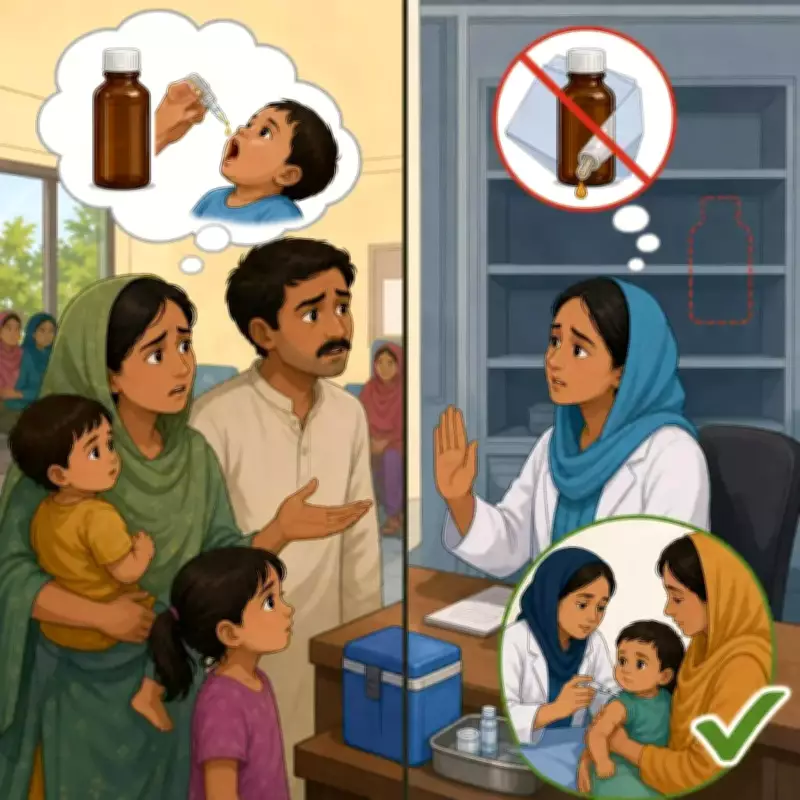
Dharwad: A shortage of vitamin A syrup administered to children aged around one-and-a-half years has created difficulties for parents across Dharwad district, forcing many to make repeated visits to government hospitals and anganwadi centres over the past several months.
Background of the Immunisation Programme
Under the government's universal immunisation programme, children are provided free vaccines and other preventive health interventions in a phased manner to protect them from various diseases. The immunisation schedule begins soon after birth and continues through adolescence, with services delivered through anganwadi centres, primary health centres, and government hospitals.
According to official data, Dharwad district has 29,271 children in the 0-15 months age group, and vitamin A syrup is supplied in 100ml bottles, each sufficient to administer doses to around 15 to 30 children. The first dose is given after the child completes 9 months of age, while the second dose is administered at around 16 to 18 months as part of the child health programme.

Parents' Allegations
Parents allege that vitamin A syrup has not been available in many government health facilities for the past several months. While routine vaccines are being administered as scheduled, the oral vitamin A dose remains unavailable. Asha workers have reportedly informed parents that they will be contacted once fresh stocks are received from the government.
“Whenever we enquire after a few weeks, we are told that the syrup has still not arrived,” several parents said.
Asha Worker Confirms Shortage
An Asha worker, requesting anonymity, confirmed the shortage. “Vitamin A syrup has not been available for nearly 5 months. Fresh supplies have not been received from the government. Children will be given the dose as soon as stocks arrive,” she said.
Impact on Economically Weaker Families
The shortage has particularly affected economically weaker families who depend on government healthcare facilities. Parents say that when such services are unavailable in public health centres, they are forced to approach private hospitals, adding to their financial burden.
“People with money can access private healthcare facilities. We are daily wage labourers and cannot afford additional expenses,” a parent said.
Official Response
Responding to the issue, district health officer Dr Parashuram Kase said health centres have been instructed to coordinate with one another and obtain medicines or vaccines from facilities where stocks are available.
“Even if a health centre faces a shortage, officials have been directed to procure supplies from other centres wherever available,” he said.
Stay updated with the latest Hubballi news. Download the TOI App.






