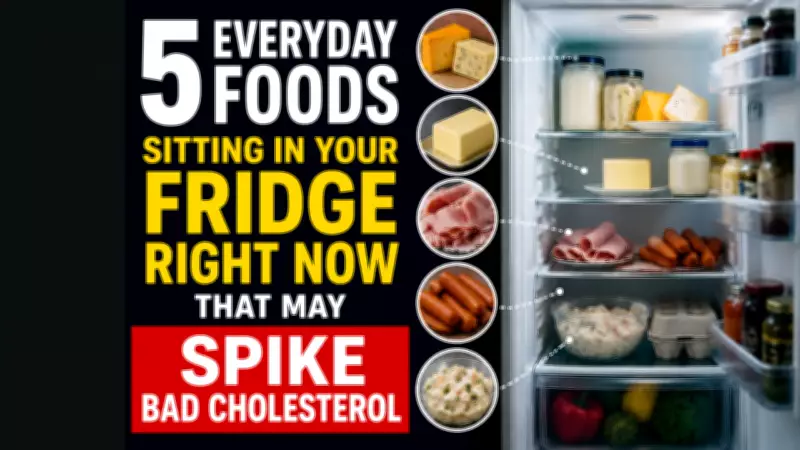
We are not talking about eggs here. Instead, we are focusing on foods that hit all the right taste receptors while absolutely tanking our cholesterol numbers. The worst part is that many of these foods are so delicious, so comforting, and so woven into our daily lives that we barely notice the damage they are doing.
The relationship between diet and cholesterol is becoming clearer, and what really matters is the mix of saturated and trans fats in your diet. While eggs got a bad reputation for decades, the real villains are much more ordinary. They are the foods sitting in your fridge right now.
Pastries and Commercial Baked Goods
Nobody ever craved a bowl of boiled vegetables, but a croissant, a glazed doughnut, or a fresh cookie with chocolate chips? Those are the foods that make people weak at the knees. And that is exactly why they are so dangerous for your cholesterol levels.

Mass-produced cookies, cakes, and pastries are often dense in calories, low in nutrients, and contain large amounts of fat—especially saturated fats like butter and shortening—and sugar. All of these are big culprits of high cholesterol. But here is the insidious part: many of these products also contain trans fats. Trans fats are the worst type of fat. They increase LDL and lower HDL cholesterol levels.
Think about it. A single doughnut can contain around 5 grams of trans fat. Research shows that the daily intake of about 5 grams of trans fat is associated with a 25% increase in the risk of heart disease. That means one pastry could represent your entire daily trans fat budget—if you are even thinking about one, which most people are not. They eat three, or four, or grab another one the next day.
Processed Meats
Bacon, sausage, deli meat, and hot dogs are foods people actively look forward to. A bacon cheeseburger tastes objectively better than a grilled chicken breast. That is not up for debate.
But research suggests that consumption of any fatty meat, red or white, can contribute to elevated total cholesterol levels. What makes processed meats particularly sinister is that the damage is not necessarily just about fat. When researchers compared the average nutrients in unprocessed red and processed meats eaten in the United States, they found that while both contained similar amounts of saturated fat and cholesterol, processed meats contained four times more sodium and 50 percent more nitrate preservatives.
That is a Harvard report telling you that processed meats are doing damage through multiple pathways simultaneously. It is not just one bad thing—it is the salt, the preservatives, the processing itself. Your body processes deli meat differently than it does a steak. And your cholesterol pays the price.
Creamy Salad Dressings
Here is where things get genuinely sneaky. You are eating salad. Salad is healthy. You are making good choices. Except then you pour ranch dressing on top of it.
Creamy salad dressings often contain high amounts of saturated fat because they are usually made from milk, mayonnaise, and cream. A 2-tablespoon serving of ranch dressing provides about 2 grams of saturated fat, which is 10% of the daily limit. And here is the kicker—most people use way more than two tablespoons. They drown their salad in the stuff. Suddenly that salad goes from a heart-healthy meal to something that is actively working against you.
The problem is psychological as much as nutritional. The American Heart Association recommends eating no more than 5-6% of your daily calories from saturated fats for a heart-healthy diet. For a 2,000-calorie diet, this means no more than 13 grams of saturated fat per day. One seemingly innocent salad with creamy dressing can consume 15-20% of that daily limit. And most people eat salad during lunch, meaning they have the rest of the day to pile on more saturated fat. It is a hidden killer hiding under the guise of health.
Ice Cream
Summer shows up, and suddenly ice cream does not feel like an indulgence—it feels normal. Everyone is eating it. Kids are eating it. And it just tastes so phenomenal. Cold, creamy, rich, sweet. There is no food more specifically engineered to trigger pleasure centers in your brain.

Ice cream can be high in saturated fat and refined sugar. Regularly consuming large quantities of this dessert can potentially increase low-density lipoprotein (LDL), which is known as bad cholesterol, levels in the blood. The problem is manufacturers make ice cream from full-fat cream, which is packed with saturated fat. And if that was not bad enough, even ice cream companies market as being lower in fat often contains sugar and high amounts of vegetable fats such as coconut and palm oil.
Coconut and palm oil are insidious because they are plant-based. People think, "Oh, it is from a plant, so it must be healthier." Wrong. Saturated fatty acids in coconut oil and palm oil increase LDL cholesterol. You are getting the worst of both worlds—the health-conscious marketing of a plant-based product combined with the actual cholesterol-spiking effects of saturated fat.
Full-Fat Butter and Cheese
This is where things get culturally complicated. In many parts of the world, butter and cheese are not just food—they are the foundation of cooking. They are how you make things taste good. And they do. A grilled cheese sandwich made with real butter and real cheese is genuinely better than one made with margarine and processed cheese food.
But dietary saturated fatty acids found in butter and cheese increase LDL cholesterol. Your liver literally processes these foods differently, and the end result is higher levels of bad cholesterol circulating through your bloodstream.
Now here is where it gets interesting: research shows that cheese might actually be less problematic than butter when consumed in equal amounts of fat. Studies found that cheese lowers LDL cholesterol when compared with butter intake of equal fat content and does not increase LDL cholesterol compared with a habitual diet. But that does not mean you should go crazy with cheese. It just means butter is worse.
The Real Problem
These foods taste amazing because they are delicious. And they are bad for your cholesterol for the same reason they are delicious: they are loaded with fats, especially saturated and trans fats, that your body processes in ways that increase LDL cholesterol. Research systematically evaluating foods' effects on LDL cholesterol found that unfiltered coffee caused a moderate to large increase, and sugar caused a small increase, while foods high in unsaturated fats, plant sterols, and soluble fiber caused reductions.
The foods that ruin your cholesterol are often the ones we grew up eating, the ones we crave, the ones that make us happy. But the numbers do not care about nostalgia. Your arteries do not care about tradition. You can still eat these foods occasionally, in moderation. Just understand what you are actually choosing when you do.