

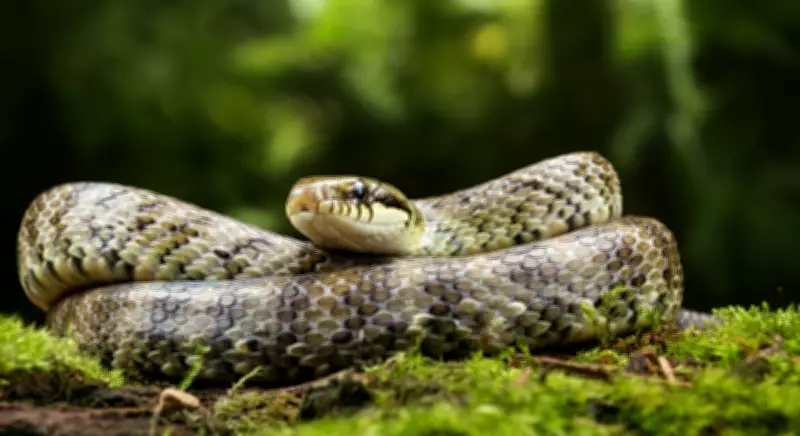
Snakes have a reputation for being quick to strike, but several species rarely live up to that image. Breeders who work with these animals select for calm temperaments, and many of the snakes kept as pets today are far less defensive than their wild relatives. Still, no snake can be guaranteed bite-free, since biting is an instinctive response triggered by fear, hunger, shedding, or agitation rather than a fixed personality trait. Juveniles tend to nip more readily than calmer adults. Whether a species relies on stillness, camouflage, or an unusual defensive display instead of striking, certain snakes have built reputations as some of the most tolerant, easygoing animals in the reptile world, making them popular choices among many first-time keepers.
Why Some Snakes Rarely Bite Humans
Most snakes that rarely bite share one of a few traits: a naturally docile disposition reinforced through generations of captive breeding, an alternative defence mechanism that replaces biting altogether, or simply a mouth poorly equipped to cause harm in the first place. Species favoured by breeders for calm behaviour are selectively paired much like coat colour or pattern, gradually producing lines that tolerate handling far better than wild populations. Others rely on theatrics, freezing, curling, or releasing foul-smelling musk, to convince predators or curious humans to back off. The eight snakes below represent some of the best-known examples of this gentler side of the reptile world.
Corn Snakes Stay Calm Instead of Biting
Corn snakes (Pantherophis guttatus) are known for their manageable four-foot length and wide range of colour morphs. According to the U.S. Fish & Wildlife Service, this nonvenomous species is native to the southeastern and central United States, where wild individuals tend to be noticeably more defensive than their captive-bred counterparts. Generations of selective breeding have produced lines that rarely strike, and even when a corn snake does bite, it rarely breaks human skin.

Hognose Snakes Usually Play Dead Instead of Biting
The hognose snake's upturned snout makes it instantly recognisable, but its real party trick is theatrical death feigning, a behaviour scientists call thanatosis. A recent review of tonic immobility published on PubMed Central describes how the Eastern hognose snake rolls onto its back, opens its mouth, lets its tongue hang out, and remains motionless to convince predators it is already dead. Hognose snakes are technically venomous, but their mild, rear-fanged venom poses little risk to humans, and biting remains a rare last resort.
Rosy Boas Rarely Bite Unless They're Burrowed
Rosy boas (Lichanura trivirgata) are slow-moving, docile snakes native to the deserts of the American Southwest and northern Mexico. The U.S. Fish & Wildlife Service lists this species among the boas found in arid scrubland and rocky hillsides, where it burrows into sandy substrate to ambush prey. Because rosy boas feel safe with handling and rarely perceive people as a threat, bites are uncommon, though reaching into their enclosure while they are buried increases the odds of a defensive nip.
Rubber Boas Are Known for Not Biting
Rubber boas (Charina bottae) get their name from their smooth, loose skin, which gives them a rubbery feel. According to the National Park Service, this secretive, burrowing species is found in forests and meadows across the western United States, including Yellowstone National Park, and is naturally curious rather than aggressive. Rubber boas hardly ever use their fangs, even when handled repeatedly, which has made them a favourite among reptile keepers despite their tendency to be killed out of fear in the wild.
Garter Snakes Are Not Known to Bite
Garter snakes (Thamnophis sirtalis) are among the most widespread snakes in North America, found in gardens, meadows, and wetlands from Canada to Central America. The Animal Diversity Web, maintained by the University of Michigan, notes that this species is nonvenomous and generally considered harmless to humans. Garter snakes have small teeth but no fangs, and they tame quickly when handled regularly, making them an easy, low-maintenance choice for first-time snake owners.

Bites From Ball Pythons Are Unusual
Ball pythons (Python regius), native to the grasslands of West and Central Africa, are named for their habit of curling into a tight ball with their head hidden in the centre when threatened. The Animal Diversity Web describes this species as a heavy-bodied, generally docile constrictor that spends most of its time hidden in burrows. Because balling up is such a reliable defensive strategy, bites from ball pythons are uncommon both in the wild and in captivity.
Egg-Eating Snakes Can't Bite Humans
African egg-eating snakes (Dasypeltis scabra) have evolved such a specialised diet that biting has become almost irrelevant to their survival. This genus feeds exclusively on bird eggs, using flexible jaws and bony spinal projections to crack shells internally rather than teeth. With only tiny, largely functionless teeth, egg-eating snakes are physically unable to deliver a meaningful bite to a person, even if startled.
The Children's Python Rarely Strikes
Children's pythons (Antaresia childreni), among the smallest pythons in the world, are friendly, easy-to-care-for snakes native to northern Australia. A genomic study of the genus published through PubMed confirms the species' wide distribution across the continent's tropical and semi-arid regions. In the wild, children's pythons famously catch bats by hanging from cave ceilings and snatching them mid-flight, a hunting style suited to patience rather than aggression, which carries over into their calm, rarely-biting temperament in captivity.





