

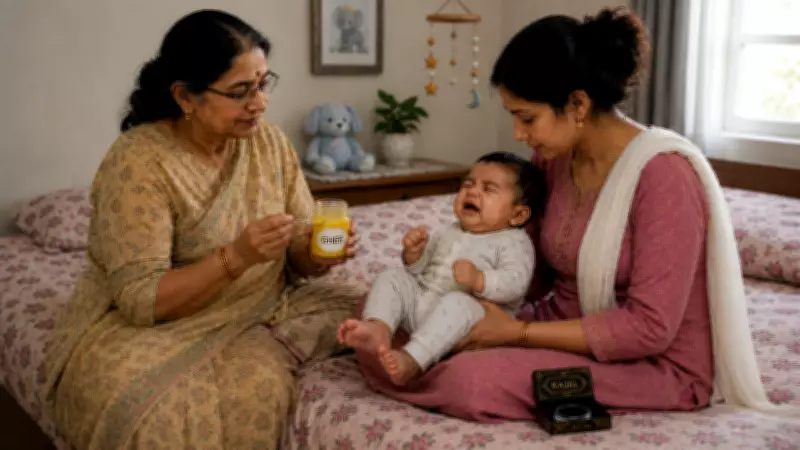
When a baby arrives in Indian households, a set of traditional practices often follows. Known as "nani-dadi ke nuskhe," grandparents pass down home remedies believed to protect the child from health issues and the evil eye. While these remedies come from love and care, do they have scientific backing? And are they safe for infants?
Common practices include giving ghee, gripe water, and applying kajal. Ghee is associated with strength and growth, gripe water is trusted for gas or colic, and kajal is applied to ward off evil eyes. However, experts urge caution.
Ghee: Does it make babies stronger?
Many believe ghee is essential before solids. Dr. Purushottam Das Garg, Consultant Pediatrics at Kailash Deepak Hospital, says, "A baby's growth depends on overall nutrition and feeding habits, not any single food." Ghee is introduced around six months in complementary feeding, like khichdi or purees. While nutritious, quantity matters. For babies 6–12 months, ¼ to ½ teaspoon mixed into food is sufficient. Excessive ghee may unbalance the diet.

Gripe water: A trusted remedy?
Gripe water, a herbal supplement with fennel, ginger, or chamomile, is often used for colic or gas. Dr. Purushottam notes, "Scientific evidence supporting its effectiveness remains limited." He advises identifying the underlying cause of discomfort rather than relying solely on gripe water.
Kajal: Cultural significance vs. safety
Applying kajal is deeply rooted in Indian culture, believed to protect from the evil eye or improve eyesight. However, Dr. Purushottam warns, "Kajal is the remedy I would be most cautious about." Dr. Sandhya E S, Consultant Ophthalmologist, notes that some kajal products may contain lead and heavy metals, harmful to developing brains. Even homemade kajal can risk contamination or corneal abrasion from application. Experts recommend avoiding kajal on infants entirely.
Tradition and science need not conflict. Parents should observe their baby's cues and make informed choices for safety and health.






