

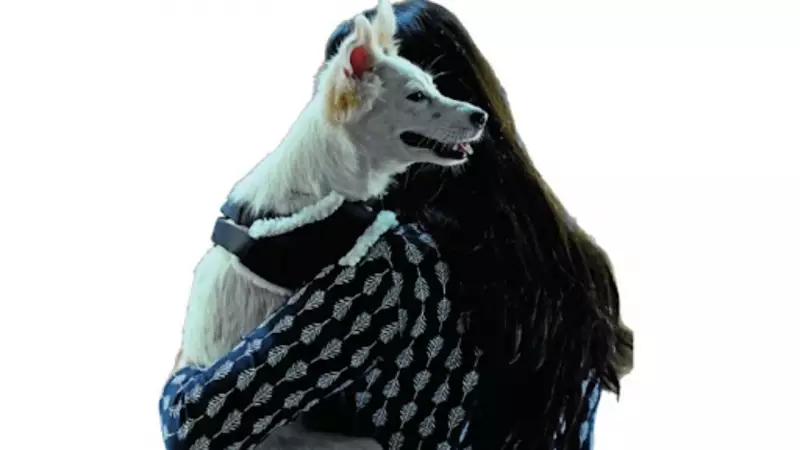
It's a long-held belief that dogs are man's best friend, offering companionship and loyalty. But new scientific research from Japan suggests the bond might go much deeper, literally altering our internal biology in ways that promote empathy and social connection.
The Canine Connection: Surveying Adolescent Behaviour
A team led by Takefumi Kikusui at Azabu University in Japan set out to investigate if living with dogs changes the human gut microbiome in a manner that enhances well-being. The researchers analysed detailed surveys from caregivers of 343 adolescents aged 12 to 14 in Tokyo.
The surveys assessed various social behaviours, including feelings of loneliness and peer relationships. Crucially, the data showed that roughly one-third of these adolescents lived with a pet dog. The analysis revealed a clear trend: on average, the dog owners were rated as less socially withdrawn and exhibited less aggressive behaviour compared to their peers without dogs.

Saliva Samples Reveal a Bacterial Link
The scientific exploration went beyond questionnaires. The team collected saliva samples from the participants and made a fascinating discovery. Adolescents who owned dogs had significantly higher levels of several species of Streptococcus bacteria in their mouths.
This finding is particularly noteworthy because previous research has linked these specific bacteria to reduced symptoms of depression. "If you're playing with a dog a lot, you're going to have a lot of exposures to the microbes the dog has, from licks [and] them jumping up on you," explains Gerard Clarke at University College Cork, Ireland, commenting on the study.
From Humans to Mice: Testing the Empathy Hypothesis
To establish a direct cause-and-effect relationship, the researchers conducted a groundbreaking transplant experiment. They took oral microbes from three dog owners and three individuals without dogs and introduced them into the stomachs of germ-free mice.
Over the following weeks, these mice underwent behavioural tests. In one key experiment, a mouse was placed in a cage with another mouse trapped in a small tube. The results were striking. Mice that had received transplants from dog owners chewed the tube and poked their noses through its holes far more frequently than mice that received transplants from non-dog-owners.
"This suggests that the former mice had more empathy and were trying to help," says Kikusui. In another test, the same group of mice also spent more time sniffing an unfamiliar mouse introduced to their cage, indicating heightened social curiosity and interaction.
Implications for Well-being and Future Research
This series of experiments, published via New Scientist, provides compelling preliminary evidence that cohabiting with dogs can transfer microbes that may positively reshape our internal ecosystem. This microbial shift appears to be associated with measurable improvements in social and empathetic behaviours.
The study opens new avenues for understanding the complex links between pets, human microbiology, and mental health. It suggests that the benefits of dog ownership might be partially rooted in biological changes, offering a fresh perspective on the age-old human-canine bond and its potential role in fostering a healthier, more connected society.






