

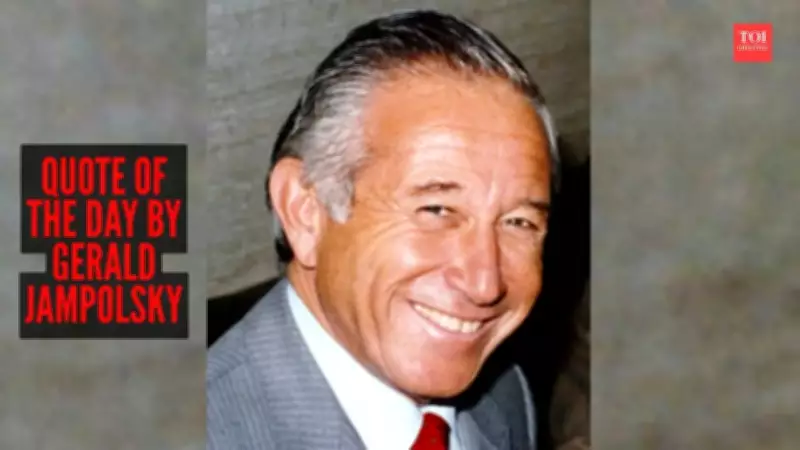
Gerald G. Jampolsky was a distinguished American psychiatrist, prolific author, and revered spiritual teacher whose groundbreaking work seamlessly bridged the realms of clinical psychology and profound inner healing. Educated at the prestigious Stanford University, he initially embarked on his professional journey practicing conventional psychiatry. However, through years of clinical experience, Jampolsky came to a pivotal realization: numerous emotional wounds and psychological distresses could not be adequately addressed through clinical methodologies alone.
The Evolution from Clinical Psychiatry to Spiritual Healing
This profound insight marked a significant turning point in his career, compelling him to delve deeper into the fundamental roles that love, fear, and forgiveness play in achieving genuine mental well-being. Jampolsky gradually earned widespread respect and admiration for his gentle yet remarkably potent approach to emotional healing. He firmly believed that inner peace was not an elusive state that required relentless struggle to attain. Instead, he posited that peace naturally emerges when individuals consciously replace fear-based thinking patterns with love-based perception.
Core Philosophical Principles
Throughout his lifetime, Jampolsky remained steadfastly committed to guiding people in unlearning deeply ingrained emotions such as fear, guilt, and resentment. He identified these emotions as the primary sources of all psychological pain and suffering. His therapeutic philosophy emphasized that by addressing these core emotional blocks, individuals could experience transformative healing.

Founding The Center for Attitudinal Healing
One of Gerald Jampolsky's most enduring and significant contributions was the establishment of The Center for Attitudinal Healing in California. This innovative center pioneered a revolutionary approach focused on transforming lives through changing internal attitudes rather than attempting to alter external circumstances. The center's methodology was particularly influential in supporting individuals facing serious illnesses, demonstrating that psychological well-being could be cultivated regardless of physical health challenges.
Spiritual Influences and Literary Contributions
Jampolsky's teachings were profoundly influenced by A Course in Miracles, a spiritual text that emphasizes forgiveness as an essential pathway to peace. He masterfully translated these spiritual principles into practical psychological applications. Through his bestselling books, most notably Love Is Letting Go of Fear, Jampolsky shared accessible insights demonstrating how shifting our inner perceptions could heal damaged relationships, troubled minds, and even improve physical health outcomes.
The Power of Forgiveness: Analyzing Jampolsky's Famous Quote
The widely attributed quote, "Inner peace can be reached only when we practice forgiveness. Forgiveness is letting go of the past, and is therefore the means for correcting our misperceptions," perfectly encapsulates Jampolsky's core philosophy. This statement highlights the inseparable connection between forgiveness and achieving genuine inner tranquility.
Understanding the Quote's Depth
At its essence, Jampolsky suggests that peace remains unattainable when we persistently carry emotional baggage from past experiences. Clinging to anger, blame, or regret effectively traps the mind in repetitive narratives of unresolved pain. Importantly, Jampolsky redefined forgiveness not as excusing wrongful behavior, but as liberating ourselves from the emotional burdens of past experiences that no longer serve our well-being.
The second part of his quote introduces forgiveness as a cognitive process of "correcting our misperceptions." Often, emotional pain stems less from actual events and more from how we continuously reinterpret and replay these events in our minds. Forgiveness, therefore, becomes a tool for releasing fear-based thinking patterns, allowing more loving and accurate perceptions to develop naturally.

Forgiveness as Empowerment and Healing
Jampolsky's teachings powerfully counter the common misconception that peace depends on external changes. He consistently emphasized that peace is fundamentally an internal process—a conscious choice to release resentment and reinterpret past experiences through a compassionate lens. Through forgiveness, individuals transition from psychological victimhood to emotional empowerment.
This perspective reframes forgiveness as an act of strength and self-healing rather than weakness. When we forgive, we don't erase memories but dissolve the associated pain. This process helps correct distorted perspectives, creating space for peace to flourish in our hearts and minds. Jampolsky's legacy continues to inspire countless individuals seeking holistic approaches to emotional well-being and spiritual growth.





