

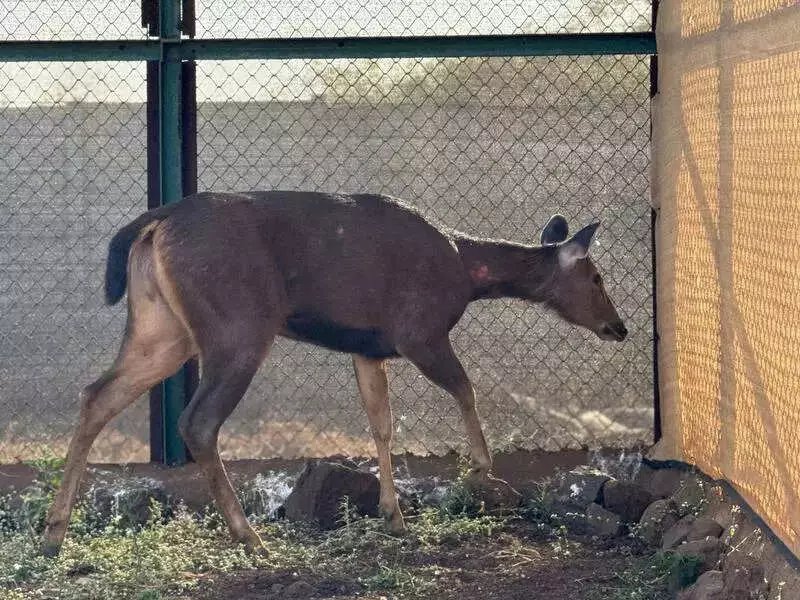
A potentially dangerous situation was averted on the outskirts of Nashik city on Tuesday morning when a six-year-old female sambar deer, which had strayed into a human settlement, was successfully rescued by a dedicated team from the forest department.
Swift Response Averts Highway Danger
The incident unfolded in the Ashwin Nagar area near Pathardi Phata. The deer is believed to have wandered from the forested stretch behind Gaulane village. In a state of panic, likely after being chased by stray dogs, the disoriented animal collided with a wire fence, sustaining a significant injury to its left eye. Exhausted and injured, it was finally spotted resting under a tree along the service road running parallel to the busy Mumbai-Agra highway.
Understanding the imminent risk to both the animal and commuters on the high-speed highway, personnel from the Ambad police station and Nashik city traffic police sprang into action. They immediately halted vehicular movement and cordoned off the area, creating a safe perimeter for the wildlife experts to operate.

Coordinated Rescue Operation
The rescue mission was launched under the guidance of deputy conservator of forests for Nashik West division Siddhesh Sawardekar. The team on the ground included assistant conservator of forests (regional) Prashant Khairnar and range forest officer (regional) Sumit Nirmal, who supervised the operation.
Acting swiftly, the forest department's wildlife rescue squad arrived at the scene. A wildlife veterinarian carefully administered a tranquiliser using a dart gun. After waiting nearly 15 minutes to confirm the animal was fully sedated, the rescue team secured the sambar and gently transferred it into a waiting rescue van.
Treatment and Stable Recovery
The rescued deer was promptly transported to the Wildlife Treatment Centre at Mhasrul. Officials confirmed that the sambar is currently receiving necessary treatment for its eye injury and its condition is reported to be stable.
Forest authorities highlighted that the timely and coordinated operation served a dual purpose: it prevented a potential traffic accident on the crucial highway and likely saved the life of the distressed animal. The frontline rescue effort was carried out by team members including Abhijit Mahale and honorary wildlife warden Vaibhav Bhogale along with their squad.
This incident underscores the challenges of human-wildlife interface in expanding urban zones and showcases the effectiveness of inter-departmental coordination in managing such crises.






