

The Science Behind Floating Ice: A Life-Sustaining Wonder
We've all observed it countless times: ice cubes bobbing gently in a glass of water or frozen lakes forming a solid surface layer while liquid water remains beneath. Have you ever paused to consider why ice floats at all? Most substances become denser when they freeze, causing them to sink. Water, however, behaves differently, making this one of the most fascinating and life-supporting properties on our planet. In this exploration of scientific curiosity, we delve deep into the mechanisms behind this natural wonder.
The Critical Role of Density in Floating Ice
The fundamental reason ice floats comes down to a concept called density. Density refers to how tightly packed molecules are within a substance. When an object is denser than water, it sinks; when it is less dense, it floats. Remarkably, solid ice is actually less dense than liquid water. This means its molecules are more spread out when frozen, allowing ice to remain on the surface rather than sinking to the bottom. This distinctive characteristic sets water apart from nearly all other liquids found in nature.
How Water Molecules Create a Floating Structure
Water consists of tiny particles known as molecules. In liquid form, these molecules move freely and remain relatively close together. When water freezes, the molecules slow down dramatically and arrange themselves into a structured, open, hexagonal pattern. This specific arrangement creates significant gaps between the molecules, thereby increasing the overall volume. Because the same quantity of water now occupies more space in its solid form, the density decreases substantially. This decreased density is precisely what enables ice to float on water's surface.

Floating Ice as a Protective Shield for Aquatic Life
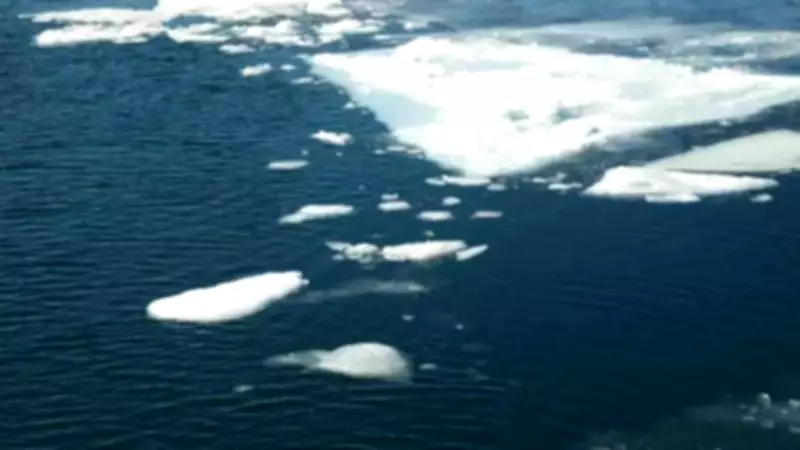
This unusual property is not merely an interesting scientific observation; it is absolutely essential for life on Earth. During winter months, when lakes and ponds freeze, ice forms initially on the surface. Since it floats, it creates an insulating layer that protects the water below from freezing completely. Fish and other aquatic organisms can survive beneath this ice layer because the water underneath remains relatively warmer. If ice sank instead of floating, entire water bodies could freeze solid from the bottom upward, making survival virtually impossible for countless aquatic species.
The Influence of Temperature on Water's Behavior
Water exhibits unique behavior as it cools. Most liquids continuously contract and become denser as temperatures drop. Water, however, reaches its maximum density at 4 degrees Celsius. As it cools further toward its freezing point of 0 degrees Celsius, it begins expanding rather than contracting. This expansion is what causes frozen pipes to burst and ice cubes to occupy more space than the water they originated from. That crucial expansion is also what makes ice less dense, allowing it to float on water.
A Seemingly Small Phenomenon with Global Impact
Though it might appear to be a minor scientific quirk, ice floating on water has profoundly shaped ecosystems, weather patterns, and even the survival of civilizations near water bodies. It influences ocean currents, seasonal cycles, and the delicate balance of freshwater environments worldwide. Without this unique characteristic, life on Earth would look dramatically different, highlighting how this simple physical property supports our planet's biodiversity.






