The Silent Danger of Osteoporosis: A Growing Crisis in India
Osteoporosis carries a particularly insidious nature. It operates without pain, leaves no visible marks on the face, and provides no overt warnings to slow one's gait. This condition methodically erodes bone density over years, often decades, until a seemingly minor incident—a slight stumble or a gentle fall—results in a fracture that irrevocably alters life. By that critical juncture, as highlighted by Dr. Bharat Mody, Director and Chief Joint Replacement Surgeon at Welcare Hospital, substantial bone loss has typically already occurred.
"Most individuals remain unaware of their osteoporosis until a fracture happens," Dr. Mody explains. "Diagnosis often comes too late, after significant bone density has been depleted." This characterizes what he terms a silent disease, and in India, its impact is unfolding on a scale that the healthcare infrastructure is only starting to fully address.
Alarming Statistics Reveal a Widespread Issue
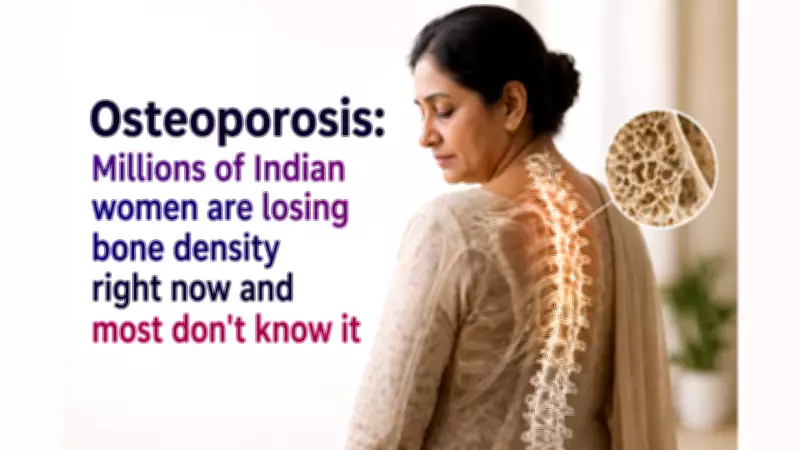
Research indicates that nearly one in three women aged over 50 in India will suffer an osteoporotic fracture during their lifetime. This is not a negligible risk but a near-certain outcome for a vast segment of the female population, especially as life expectancy and the elderly demographic continue to rise steadily. Dr. Mody emphasizes that osteoporosis represents "not only a medical issue but also an emerging public health challenge."

The disproportionate effect on women stems from biological factors, primarily estrogen. Post-menopause, estrogen levels decline sharply, disrupting the balance between bone formation and breakdown. As this hormone diminishes, bone resorption accelerates, surpassing formation rates. The skeleton weakens gradually and silently, a process that can persist for years before any symptoms emerge.
Thus, when a 65-year-old woman fractures her hip from a simple step off a curb, the underlying damage likely originated in her early fifties.
Why Hip Fractures Pose Severe Risks
Not all fractures are created equal. While osteoporosis commonly affects the spine and wrist, with serious consequences, hip fractures carry a distinct gravity. In older women, they can initiate a detrimental cascade: prolonged immobility, loss of independence, surgical procedures, and extensive rehabilitation. Studies reveal a particularly sobering fact: hip fractures are linked to a significantly increased mortality rate within the first year post-injury. This is not merely a broken bone that heals; for many elderly women, it marks a permanent decline in health and autonomy.
Dr. Mody is candid about clinical observations: "Fractures from weakened bones are increasingly common among elderly patients. Unfortunately, underlying osteoporosis often goes undiagnosed or untreated until after the first fracture." Altering this pattern necessitates proactive screening.
The Crucial Test Many Women Miss
A DEXA scan, which measures Bone Mineral Density, serves as the gold standard for diagnosing osteoporosis. It is non-invasive, relatively quick, and provides clinicians with a clear assessment of bone health. Dr. Mody advises women to commence screening around menopause, with earlier evaluation for those with additional risk factors such as:
- Family history of osteoporosis
- Low body weight
- Long-term steroid use
- Nutritional deficiencies
Additionally, the FRAX model, a clinical tool, integrates bone density results with individual risk factors to estimate the ten-year fracture probability. This enables doctors to identify high-risk patients and initiate treatment pre-fracture, where intervention proves most effective. However, these measures are futile if women do not undergo screening initially.
Effective Prevention and Treatment Strategies
Treatment options have advanced significantly. Bisphosphonates remain widely used to decelerate bone loss. Newer therapies, including denosumab and anabolic agents like teriparatide, have demonstrated robust outcomes in enhancing bone density for more vulnerable patients. These are not experimental but established, accessible, and efficacious when initiated early.

Medication alone is insufficient. Adequate calcium and Vitamin D intake are foundational, yet chronically inadequate in much of India's population. Weight-bearing exercises, such as:
- Walking
- Resistance training
- Yoga
These activities help maintain bone strength and, crucially, improve balance, directly reducing fall risk. Simple home safety measures—like better lighting, non-slip floors, and addressing vision issues—are unglamorous yet vital in preventing fractures altogether.
"Osteoporosis should not be viewed as an inevitable aspect of ageing," Dr. Mody asserts. He is correct; this condition responds to early attention. The core issue is not a lack of tools but that many women reach their fifties without realizing their bones warrant preventive care akin to heart health or blood pressure management. This dialogue must commence earlier and urgently.