

Indians' Smartphone Addiction: A Silent Health Crisis Unfolding
In 2024, Indians collectively spent a staggering 1.1 trillion hours staring at their smartphones, averaging five hours per person each day, according to a new report by EY. Nearly 70% of this time was devoted to social media, gaming, and short-form video content. However, beyond the visible distraction, a far quieter crisis is emerging—a growing body of scientific evidence points to a hidden biological cascade. Excessive screen time disrupts sleep, which in turn ravages the gut microbiome, fuels neuroinflammation, and accelerates brain aging in ways that researchers are only beginning to measure. This is not a doomsday prediction but an emerging field of science that might make you reconsider your next late-night scroll.
The First Domino: How Screens Hijack Sleep
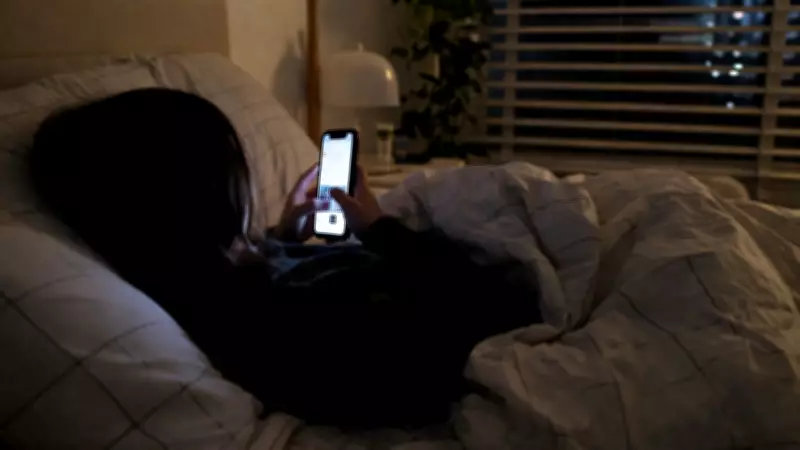
That Instagram reel at 11 p.m. or WhatsApp forwards at midnight might feel like harmless entertainment, but your body registers them as a health hazard. When you scroll before bed, the blue light emitted by your screen suppresses melatonin—the hormone that signals the body to wind down. LED screens, present in every smartphone, tablet, and laptop, emit far higher concentrations of short-wavelength blue light than older light sources like incandescent bulbs. Epidemiological research published in the journal npj Digital Health confirms a direct negative relationship between evening electronic device use and sleep quality—the more you scroll at night, the worse you sleep.
The damage runs deeper than a groggy morning. Blue-light exposure can reduce dendritic spines—the tiny protrusions on neurons where memories form and are stored. Think of them as the branches on which your recollections grow; when these wither, so does your ability to learn and remember. Circadian rhythm disruption from mistimed light exposure has also been shown to raise inflammatory markers, including interleukin-6 and tumour necrosis factor-alpha, molecules closely associated with depression and cognitive decline. Repeated exposure to blue light during evolutionarily inappropriate hours creates what researchers describe as a state of chronic internal jet lag, with neural tissue paying the price.

Sleep Lost: The Scale of the Problem
Up to 72.7% of students in India get fewer than eight hours of sleep on school nights. A 2024 study tracking 140 middle-aged adults over three years found that individuals sleeping fewer than six hours per night experienced dramatically steeper declines in memory, executive function, and attention—even after adjusting for age, obesity, and existing health conditions. A landmark 2024 Lancet Commission report identified sleep disorders as emerging and modifiable risk factors for dementia, placing late-night scrolling habits in the same risk category as hypertension and physical inactivity.
The effects appear dose-dependent. More than four hours of daily use of a blue-light device is associated with poorer sleep efficiency, greater daytime dysfunction, and irregular sleep timing. Magnetic resonance imaging scans on affected individuals have revealed reduced cortical thickness in the frontal lobes—the very regions governing attention, memory, and complex problem-solving.
Gut Rebellion: Poor Sleep Devastates Microbiome
Sleep deprivation fundamentally rewires the trillions of bacteria living in your digestive tract. A 2023 study published in Frontiers in Microbiology found a significant association between mobile phone addiction and decreased gut microbiota diversity. Low diversity is a hallmark of compromised health at every stage of life. Disruptions in sleep patterns disturb the delicate equilibrium of the gut microbiota, causing dysbiosis—alterations in microbial composition and function that cascade through the body's most essential systems.
The gut-brain axis, the two-way communication highway between the digestive system and the central nervous system, becomes collateral damage. This disruption reduces the production of serotonin—90% of the body's serotonin is manufactured in the gut, not the brain. When your gut suffers, your emotional resilience suffers with it, leading to increased anxiety, low mood, and reduced stress tolerance. The very device you reach for to relax may be quietly dismantling your mental resilience.

Dr. Aaron Hartman of Richmond Integrative and Functional Medicine has described how digital stress systematically undermines what he calls the Triangle of Health—sleep, stress regulation, and gut function. "When one pillar fails, the others follow. Poor sleep elevates stress hormones. Chronic stress destroys gut health. Gut dysfunction disrupts sleep," he says. The cycle is self-reinforcing, and smartphones are the engine that keeps it turning.
Fire Within: Inflammation—The Hidden Accelerant
When gut health deteriorates, the intestinal barrier can become compromised—a condition informally known as leaky gut. Tiny gaps form in the intestinal wall, allowing bacterial fragments to enter the bloodstream and trigger systemic inflammation. Research now confirms that this inflammation reaches the brain. A 2024 GeroScience study found that circadian rhythm disruption caused by artificial light at night can trigger a cascade that damages gut microbiota structure, increases gut barrier permeability, and ultimately impairs the blood-brain barrier—enabling neuroinflammation and accelerating the accumulation of neurotoxic proteins such as beta-amyloid and tau, which are associated with Alzheimer's disease.
Sleep deprivation triggers pro-inflammatory microglia in the hippocampus—the brain region central to memory and spatial navigation. These activated immune cells release compounds that impair neuronal synaptic plasticity, effectively reducing the brain's ability to learn and retain new information. Meanwhile, functional MRI studies reveal another layer: continuous partial attention—the modern habit of monitoring multiple digital inputs simultaneously—activates the amygdala's threat response while impairing the prefrontal cortex's capacity for impulse control. In plain language, screens make you simultaneously more anxious and less able to resist the next notification.
Aging Brain: When Inflammation Meets Neurons
Chronic low-grade inflammation is now widely recognized as a primary driver of accelerated brain aging—a phenomenon researchers have named inflammaging. A 2025 review in Neuroscience documents how sleep deprivation-induced dysbiosis "exacerbates neurological disorders such as depression, anxiety, and cognitive decline" through multiple interconnected pathways. This is not about feeling foggy; it is about measurable structural changes at the cellular level.
A 2025 study by South Korean researchers showed that individuals with dysbiotic gut microbiomes had significantly older-appearing brains on MRI scans and correspondingly worse scores on dementia and cognitive assessments. The gut-to-brain aging pathway was not theoretical—it was visible in the anatomy. Dr. John La Puma, a board-certified American internist, has coined the term Digital Obesity for this phenomenon: the neurological and physiological consequence of consuming too much ultra-processed time—hours spent in artificial light, on screens, in digitally mediated environments that overstimulate the brain while starving it of what it actually needs.
The mechanism bears a striking resemblance to addiction. Every notification delivers a microdose of dopamine. Each ping is small, but the frequency is relentless. The brain adapts by downregulating dopamine receptors, demanding more stimulation to maintain baseline satisfaction—the identical neuroadaptation pathway that drives substance tolerance. Meanwhile, elevated cortisol from constant digital alertness disrupts sleep architecture and impairs memory consolidation. The result is a brain that ages faster, remembers less, and craves the very device that is contributing to its decline.
A gut-based biological-age model published in the journal Gut Microbes has now enabled scientists to measure how microbiome composition can be used to calculate a person's rate of biological aging. Individuals with healthier, more diverse gut microbiomes showed slower biological aging and lower frailty scores. The implication is stark: your gut microbiome may, in part, determine how old your body truly is—regardless of the date on your birth certificate.
Hope Through Intervention: Resetting the Cycle
The most important finding is the one most easily overlooked: this is reversible. Groundbreaking work from University College Cork, published in Nature Aging, showed that transplanting gut microbes from young animals into old ones reversed measurable aspects of brain and immune aging, improving learning ability and cognitive function. While fecal transplants are not yet a clinical tool for this purpose, the research establishes the gut microbiome as a genuine lever for brain health—one that lifestyle changes can meaningfully shift.
Studies confirm that probiotics, dietary changes, and behavioral strategies can restore gut balance and ease neurological symptoms. Importantly, one prospective study found that individuals who improved their sleep duration showed attenuated cognitive decline, nearly as great as in those who had maintained healthy sleep all along. The damage is not permanent; the body wants to heal. Dr. Adithya V Naragund, senior consultant in GI surgery at Cytecare Hospitals, Bengaluru, offers a grounded prescription: "Create a consistent sleep schedule, keep evenings caffeine-free after 3 p.m., and reduce screen time at least one hour before bed."
The Bottom Line: Change Is Possible
Your body's stress response has not changed in 200,000 years. It cannot distinguish between a predator in the forest and a stressful news feed at midnight—both trigger the same fight-or-flight response. When that response fires dozens of times a day, the cumulative wear accelerates aging in ways we are only beginning to quantify—in the brain, in the gut, in the very cells that define how old we truly are.
The unbridled use of smartphones is, science suggests, a measure of a national health risk hiding in plain sight. If you feel inflamed, mentally foggy, or chronically fatigued, by all means examine your diet. But then examine your digital load. Look at your screen-time report. Notice how you feel after three consecutive hours of scrolling. Listen to what your body is signalling.
The solution will come from reclaiming time for what the brain requires: rest, real connection, and the natural rhythms that sustained human health for millennia. Your phone is a tool; it was never designed to be a lifeline. And your brain—that magnificent three-pound universe inside your skull—deserves better than to be collateral damage in the attention economy.
So today, when you are tempted to scroll just for a few minutes, ask yourself: is this worth a night of disrupted sleep, a gut ecosystem thrown off balance, another morning of brain fog? Or is it time to let your body do what it has been quietly waiting to do—heal? The choice, thankfully, is still yours.





