

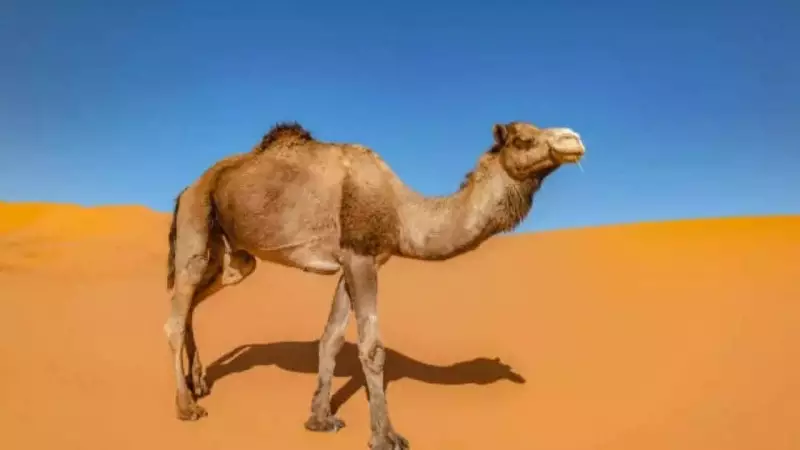
Camels, often called the 'ships of the desert,' are extraordinary creatures built for Earth's harshest environments. They thrive in scorching, arid landscapes where water is a rare luxury and temperatures reach extreme highs. While most animals would perish within a day without water, camels can survive for many days, and sometimes even weeks, without a single drink. This incredible feat is not magic but a result of sophisticated biological and behavioral adaptations that make them masters of desert survival.
The Truth Behind the Camel's Hump: It's Not a Water Tank
A common myth is that a camel's hump stores water. In reality, the hump is a reservoir of stored fat. This fat serves as a crucial energy reserve when food is scarce. When this fat is metabolized for energy, it yields a small amount of water as a byproduct. By concentrating fat in one or two humps instead of distributing it across the body, camels achieve better heat regulation, minimizing water loss through sweating.
Masterful Water Conservation: Every Drop Counts
Camels are unparalleled in their ability to conserve water. Their bodies are designed to lose minimal moisture. They sweat very little, even under intense desert heat. Their thick fur coat acts as insulation against the sun, slowing down dehydration. Internally, their highly efficient kidneys produce extremely concentrated urine, and they excrete very dry dung, ensuring almost no water is wasted through excretion.

Unique Biology: Oval Blood Cells and Water-Guzzling Power
One of the camel's most fascinating adaptations lies in its blood. Unlike other mammals with round red blood cells, camels have unique oval-shaped red blood cells. This shape allows their blood to flow smoothly even when they are severely dehydrated. When a camel finally finds a water source, it can drink an astonishing amount—up to 100 litres in just minutes. Their elastic blood cells can expand rapidly to absorb this water without rupturing, enabling rapid rehydration.
Clever Anatomy and Smart Behavior
The camel's nose is a clever water-saving device. Its long nasal passages capture moisture from the exhaled breath, which is then reabsorbed by the body, recycling precious water that would otherwise be lost. Behaviorally, camels are equally smart. They rest during the hottest parts of the day and are more active during cooler mornings and evenings. Furthermore, they can tolerate significant fluctuations in their core body temperature, which reduces the need to sweat for cooling.
Together, these remarkable physical and behavioral traits—from the fat-storing hump and water-efficient kidneys to the special blood cells and moisture-recycling nose—create a perfect blueprint for survival. They transform the camel into a supremely efficient organism, perfectly engineered to conquer the daunting challenges of life in the desert with very little water.






