

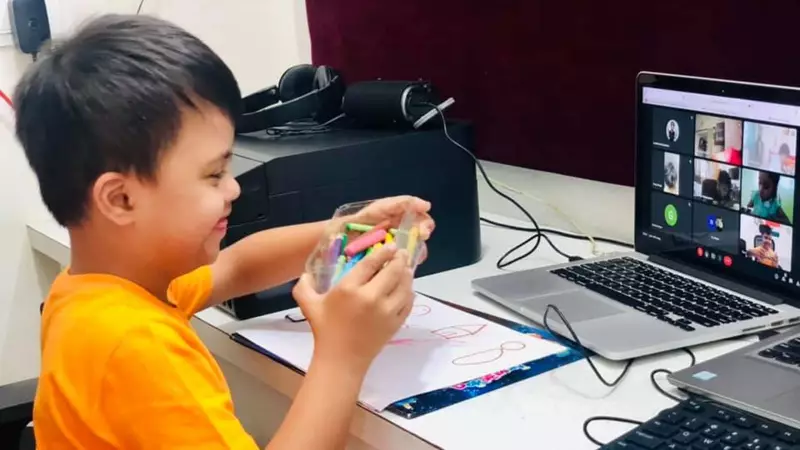
Single Father's Inspiring Journey with Son Who Has Down Syndrome
Aditya Tiwari, a software professional from Indore, made a life-changing decision at age 28. He adopted Avnish, a child with Down syndrome who had been abandoned by his biological parents. Avnish was born with a hole in his heart and faced numerous health challenges. Aditya chose to become a single father despite family objections, embarking on a remarkable journey that would inspire countless others.
Early Challenges and Medical Interventions
When Aditya brought Avnish home at 22 months, doctors said the child might never stand independently. Avnish had multiple congenital issues including heart problems, constipation due to low muscle tone, impaired thyroid function, and a low IQ. However, within six months, the hole in his heart closed naturally without surgery, which was unusual for such cases.
Dr. Imran Noorani, a child development specialist at Sir Ganga Ram Hospital in New Delhi, explains that children with Down syndrome can achieve excellent developmental milestones with early diagnosis and intervention. "More than 95 percent of these children learn to walk and run after two years," he says. "They need multidisciplinary therapy to enhance brain function, not just life skills."

Aditya focused on creating a nurturing environment from the beginning. He ensured Avnish attended regular school and adjusted his work schedule to be available for medical emergencies. "These children are not abnormal," Aditya emphasizes. "They simply have different intellectual and physical capacities. With proper support, they can be as normal as you want them to be."
The Everest Adventure
Avnish developed a love for nature early on, often joining his father on drives to farms. After watching a documentary about Mount Everest, he expressed a desire to see the famous peak. Aditya took this seriously and began an intensive training regimen.
They spent a year and a half preparing, first acclimatizing to different temperatures and high-altitude conditions. During lockdown periods, Aditya filled their room with Everest posters and showed expedition videos to help Avnish understand the challenges. They practiced in Kashmir and Ladakh before attempting the actual trek.
At age seven, Avnish reached the Everest base camp with his father. He repeated this achievement at age nine. Standing under the glistening sun at the base camp, both father and son felt they had shattered barriers of impossibility.
Achievements and Recognition
Avnish's accomplishments extend far beyond mountain trekking. He became a TEDx speaker at age 11 and championed the "Save the Tiger" campaign. At 12, he's preparing to start his own blog. In 2024, he received the Prime Minister's National Children's Award as the youngest recipient, validating Aditya's parenting approach.
Aditya fought lengthy court battles to adopt Avnish, eventually helping change adoption laws in India. "Before me, a man could adopt only at 30," he notes. "Now any man can do so at 25. A single dad adopting a differently-abled child was unheard of. Today, both of us are a living reality."
Therapeutic Approaches and Daily Routine
Aditya implemented a multidisciplinary approach, working closely with teachers, educators, and counselors at his son's school. He discovered that children with Down syndrome learn best through play that is visual, hands-on, repetitive, and success-oriented. This approach helped Avnish develop language, memory, attention, motor skills, and confidence.
"I set up a routine and break it down into small, achievable tasks," Aditya explains. "This gives him confidence to do things independently." He took days to teach single alphabets and build vocabulary through games and puzzles specifically chosen for his son's learning style.
Nutrition and Health Management
Dr. Noorani emphasizes that diet forms a crucial pillar for those living with Down syndrome. "They have low metabolism, need fewer calories, and often have trouble chewing and swallowing," he says. "Food must be nutrient-dense, soft, high in fiber, and rich in vitamins, minerals, and Omega-3s. Avoid added sugar and saturated fats. Proper hydration is also essential."

Aditya strictly follows these guidelines, ensuring Avnish eats only home-cooked meals without junk or processed foods. He maintains his son's physical activity levels to prevent weight gain, which can be challenging due to low muscle tone.
Overcoming Health Insurance Hurdles
Avnish required surgeries for adenoids and undescended testes, leading to battles with insurance companies. "Standard health insurance often excludes Down Syndrome as a congenital condition," Aditya reveals. "Specific treatments and therapies are sometimes covered under government schemes like Niramaya, but you must fight for complications arising from the condition."
He had to convince insurers that the testes surgery was medically necessary rather than cosmetic, highlighting the ongoing challenges parents of special needs children face in accessing proper healthcare coverage.
Spreading Awareness and Building Community
Since their Everest achievement, Aditya and Avnish have visited schools, colleges, and even participated in the World Economic Forum to raise awareness about Down syndrome. They emphasize the importance of employing people with special needs and creating inclusive environments.
Aditya has formed a support group for parents of children with special needs, offering guidance based on his experiences. His advice to other parents is simple yet profound: "Just learn and enjoy at the child's pace and laugh with them. They will be alright."
Dr. Noorani adds that early intervention remains critical. "Track development milestones in the first three years," he advises. "If you notice floppy limbs, lack of eye contact, smiling, or delays in sitting, talking, or walking, take action immediately. Early brain plasticity is highest during these years, and timely intervention dramatically improves outcomes."
Today, Avnish continues to defy expectations while preparing for the Special Olympics. His journey with his father demonstrates that with love, determination, and proper support, children with Down syndrome can achieve extraordinary things and inspire communities worldwide.





