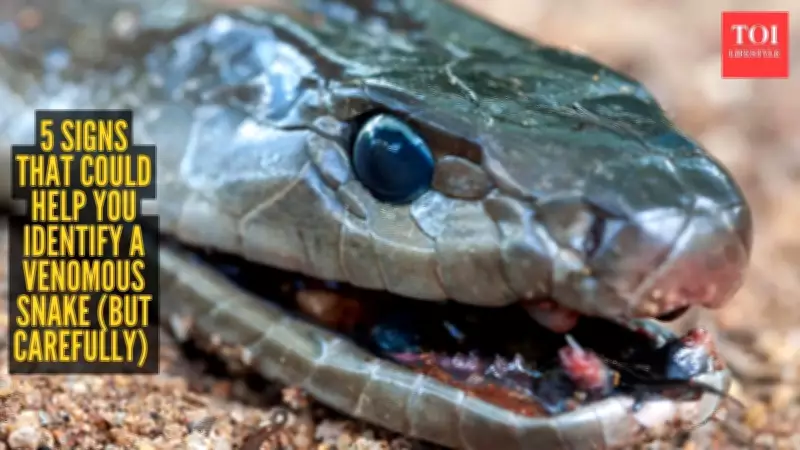
Encountering a snake can quickly turn into a moment of panic. Whether on a roadside, inside a garden, or during a walk in the hills, the first instinct is often to determine whether it is venomous. While this concern is valid, what frequently goes overlooked is that there is no single, reliable feature that can instantly confirm whether a snake is venomous. Even experts depend on proper identification methods rather than quick visual guesses. That said, there are several commonly observed traits that people refer to, but these offer only limited clues and should never be treated as confirmation.
Head Shape Is Often Misunderstood
A widely circulated belief is that venomous snakes have a triangular or broader head due to venom glands. While this applies to some species, it is not a dependable rule. Many non-venomous snakes flatten their heads when threatened, making them appear triangular. At the same time, several venomous snakes do not show a distinctly wide head. Thus, relying on head shape alone can lead to dangerous misidentification.
Eye Pupils Are Not a Safe Indicator
Another common claim is that slit-shaped pupils indicate venom, while round pupils mean the snake is harmless. In reality, this is not a practical or reliable way to identify a snake, especially in natural conditions. Visibility, lighting, and species variation make this difficult to judge. Importantly, some highly venomous snakes also have round pupils, making this trait unreliable.

Colour and Patterns Can Be Deceptive
Bright colours and bold patterns are often associated with danger in the animal world, and some venomous snakes do display striking markings. However, this is not a rule you can rely on. Several non-venomous snakes mimic the appearance of venomous ones. Conversely, some venomous species have dull, earthy colours that help them blend into their surroundings. Colour and pattern are therefore poor indicators of venom status.
Behaviour Is Not a Clear Sign
It is often assumed that venomous snakes behave more aggressively. In reality, most snakes avoid human interaction. Defensive actions like hissing, coiling, or striking usually indicate that the snake feels threatened, not whether it is venomous. Non-venomous snakes are equally capable of biting when provoked or handled. Behaviour alone cannot distinguish between venomous and harmless snakes.
Fangs Are Not Something to Check
Venomous snakes have specialized fangs, but this is not a feature that can be safely observed in real-life encounters. Attempting to get close enough to confirm such details can increase the risk of a bite, regardless of whether the snake is venomous or not. Checking for fangs is impractical and dangerous.
Why Caution Matters in Every Case
One key point often ignored is that non-venomous snakes can still be dangerous. Their bites can cause pain, bleeding, and possible infection. In some cases, reactions may require medical attention. The absence of venom does not make a snake harmless. Therefore, every snake encounter should be treated with respect and caution.
What You Should Do Instead
- Maintain a safe distance
- Avoid sudden movements
- Do not attempt to touch or capture the snake
- Inform trained wildlife handlers if necessary
Snakes play an essential role in controlling pests and maintaining ecological balance. The safest approach, however, is not to rely on quick identification methods. Because in real situations, assuming a snake is harmless is where the real risk begins.
Disclaimer: This article is intended for general awareness only. Visual traits mentioned here are not definitive methods of identifying whether a snake is venomous. Do not attempt to approach, handle, or provoke any snake. In case of a snake sighting or bite, contact trained wildlife authorities or seek immediate medical assistance.