

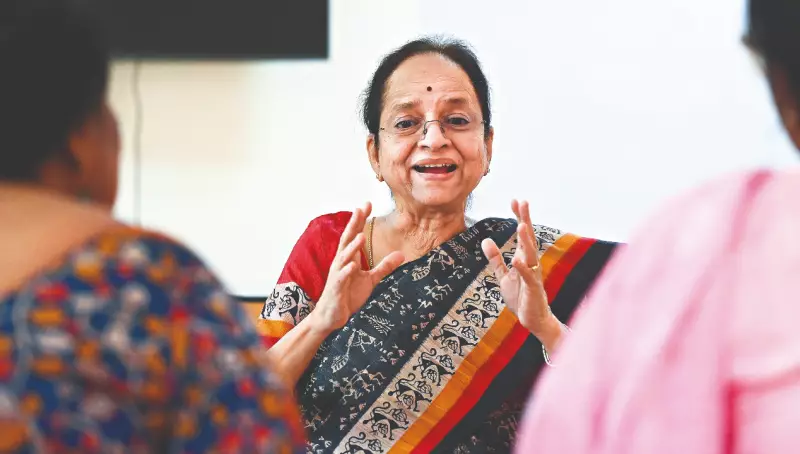
The Quiet Beginning of a Lifesaving Movement
One afternoon in February 1986, when discussions about suicide were still shrouded in societal silence and stigma, psychiatrist Dr Lakshmi Vijayakumar took a courageous step. With borrowed furniture and a simple rotary telephone, she rented a modest building and launched Sneha, establishing one of India's pioneering volunteer-led crisis intervention helplines. This initiative emerged during an era when mental health concerns received minimal attention, and suicide prevention was virtually uncharted territory in the country's healthcare landscape.
Challenging Prevailing Beliefs Through Compassionate Action
"No one believed it was necessary. No one thought we could actually prevent suicides, especially through training ordinary volunteers to listen empathetically to those in deep distress," recalls Dr Lakshmi, now 70. "Yet, from the very first week, through newspaper advertisements and word-of-mouth referrals, someone reached out every single day. That consistent flow of calls has continued uninterrupted for the past forty years."
Over these four decades, Sneha has handled more than 1.5 million distress calls, evolving from a basic listening service into a comprehensive organization engaged in research, advocacy, and public health reform. What began as a small volunteer operation has gradually become integral to broader national efforts addressing suicide prevention across India.

The Personal Experience That Sparked a Lifelong Mission
The pivotal moment that set Dr Lakshmi on this dedicated path occurred years earlier during her medical internship. A man in his late twenties was urgently wheeled into Madras Medical College after ingesting cyanide. "Most physicians had abandoned hope, but I recalled reading about sodium thiosulfate as a potential antidote," she explains. "We administered it experimentally, and miraculously, the man survived. Shortly afterward, as a mere intern, I was invited to present this case before a panel of senior medical experts."
Months later, the survivor approached her on Marina Beach, sharing that he was now married, expecting a child, and overflowing with gratitude. "That encounter profoundly revealed how timely, compassionate care could completely transform a life. It solidified my decision to specialize in psychiatry," she reflects.
Bridging the Gap Between Textbook Theory and Ground Reality
During that period, psychiatry—and suicide prevention specifically—received scant focus within Indian medical education. Textbooks predominantly described older white men, particularly those experiencing loneliness, social isolation, or widowhood, as high-risk candidates. However, in hospital wards, students witnessed a strikingly different reality: young, often married individuals whose distress stemmed more from intense social pressures than diagnosable mental illness. "What we observed daily contradicted what we had been taught academically," Dr Lakshmi notes.
Chennai-based psychiatrist Dr R Thara contextualizes the era: "Only three or four NGOs were addressing mental health nationally. People generally didn't perceive mental health as requiring professional intervention. Suicide prevention was essentially unexplored terrain, further complicated by legal frameworks that treated attempted suicide as a punishable offense, creating additional struggles for Dr Lakshmi and her team."
International Insights Shaping a Homegrown Philosophy
In 1983, a conference in Vienna exposed Dr Lakshmi to transformative perspectives on suicide, framing it as both a social issue and a medical concern. Guided by Vanda Scott, chairman of Defenders International—an organization training volunteers to support distressed individuals—insights from this visit crystallized into Sneha's founding philosophy: empowering trained volunteers to listen empathetically without judgment.

While Sneha operated without salaried staff, it still required funds for rent and basic operational expenses. Philanthropists like industrialist Nalli Kuppuswami Chetti stepped forward during these early stages. "We were witnessing young lives lost to suicide. Supporting this effort felt imperative," says Chetti, among the organization's earliest patrons. "Several of us contributed financially. I served as a board member initially and remain associated because of the tangible difference this institution has made."
Evolution of Access and Volunteer Training Methodologies
Initially, nearly seventy-five percent of help-seekers visited Sneha's office to speak with volunteers working in two shifts. As telephone accessibility expanded over the following decade, calling became the preferred mode for most individuals.
"Telephones help maintain crucial anonymity," observes Sita, a volunteer since 2012. "I walked into the office after seeing a newspaper advertisement, imagining we would sit face-to-face persuading people against suicide. The reality was entirely opposite."
She and numerous others joined the team after extensive interviews—termed "discussions"—assessing empathy, non-judgmental attitudes, and crisis-handling abilities. "We never probed for personal stories. We focused solely on addressing emotions," Sita emphasizes.
Data-Driven Advocacy Leading to Tangible Policy Changes
Dr Lakshmi observed that callers were progressively younger. "Each May, during exam results season, calls surged dramatically, predominantly from anxious teenagers—often girls—terrified of disappointing their families," she notes.
In 2003, a Sneha-conducted study revealed that several students who died by suicide had missed top grades by marginal marks. Dr Lakshmi presented these findings to then Chief Minister J Jayalalithaa. Consequently, the Tamil Nadu government introduced a supplementary exam program allowing Class X and Class XII students reattempt opportunities within a month. "Over time, exam failure-linked suicides dropped by seventy percent statewide and eighty-two percent in Chennai," she reports.
In 2023, 127,622 students appeared for these supplementary exams in Tamil Nadu, with 60,551 (approximately forty percent) passing. "This straightforward policy intervention saved numerous young lives," Dr Lakshmi affirms. Multiple Indian states have since adopted similar models.
Expanding Impact Beyond Urban Centers
As Sneha's work broadened, it began contributing to mental health policy dialogues at state and national levels. The organization served on advisory committees at premier institutions like the IITs and later extended engagement to sectors like agriculture.
"In Tamil Nadu's rural regions, pesticide ingestion had long been a common, impulsive suicide method among farmers," Dr Lakshmi explains. "We piloted central pesticide storage sheds—community-managed lockers restricting access while promoting safer alternatives. A decade later, suicide rates in those villages remain significantly lower."
Sneha's community-based model also transcended state boundaries. When rising suicide rates were reported among Sri Lankan Tamil refugees, the organization trained volunteers within the camps to provide peer support. This emphasis on empowering insiders over external counselors was later replicated by UNHCR in refugee camps across Lebanon and Turkey.
Legal Reform and National Policy Advancements
One of Dr Lakshmi's most prolonged campaigns focused on decriminalizing attempted suicide. "A woman who survived a suicide attempt was publicly named and shamed in a criminal case. That same night, she ended her life. We were essentially punishing individuals for being in profound pain," she recounts.
She consistently advocated that suicide attempt survivors needed medical care, not prosecution. After nearly fifteen years of persistent advocacy, the Mental Health Care Act of 2017 incorporated a clause recognizing this principle.
In 2023, India launched its National Suicide Prevention Policy. While Dr Lakshmi had long championed such a framework, she acknowledges implementation challenges. "We often treat suicide as a private tragedy rather than a public health issue. Identifying collaborative partners remains an ongoing endeavor," she states.
Adapting to Contemporary Challenges and Communication Shifts
From Sneha's offices, Dr Lakshmi and her team now train religious leaders and traditional healers—frequently the first contact points for distressed individuals—to recognize warning signs and refer serious cases appropriately.
The COVID-19 pandemic disrupted the helpline's round-the-clock volunteer shifts, necessitating a temporary reduction to phone hours from 8 AM to 10 PM, supplemented by chat support from 7 PM to 1 AM and 24-hour email assistance. "Volunteers adapted resiliently, and so did callers," notes Sita. "Most young people now prefer texting over talking, often reaching out via social media platforms."
Profiles remain anonymous, with volunteers rarely pressing for real identities. In high-risk situations, they offer callback options, though refusals are common. "There are moments we've hung up, uncertain if we truly helped," Sita admits. "But Dr Lakshmi continually reminds us that simply being present and listening compassionately matters profoundly."





