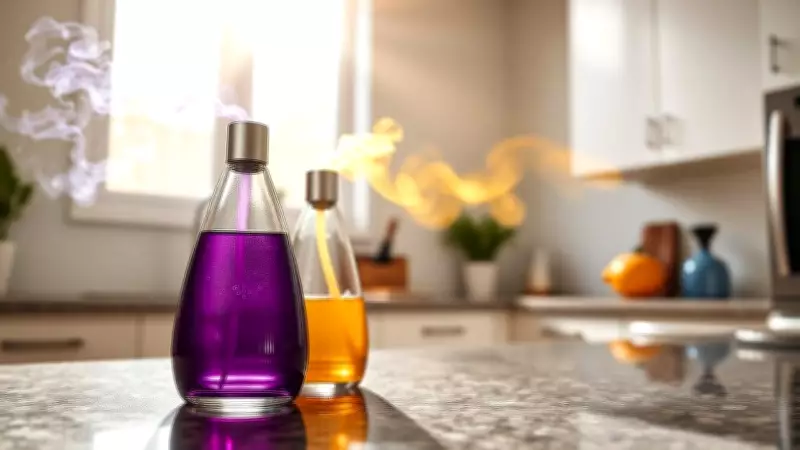
Once you have served pasta loaded with garlic or prepared seared salmon to perfection, there is a sense of pride in the food served at home. However, the lingering smell that persists for hours after cooking is not a sign of success but a problem to be solved. Many people instinctively reach for air fresheners or candles to purify the air. Yet, the common spray air freshener has an innocent flaw: it does not address the problem at all. It does not clean those nasty odor molecules off your floors or walls; it merely masks them. Masking smells is like a game of hide-and-seek right in front of your nose. Instead of eliminating odor molecules that smelled like spoiling fish, your nose is flooded with scents like lavender and linen.
The Hidden Danger in Fooling Your Nose
Masking odors means bypassing an unpleasant task and fooling one of the important human senses. People rely on their sense of smell to alert them to danger from specific odors of hazardous objects or substances. By flooding the air with counterfeit smells, you suppress this mechanism. A detailed report titled Findings and Recommendations from the Joint NIST – AGA Workshop on Odor Masking explains that masking is a purely sensory phenomenon. The research highlights that masking agents do not chemically react with or neutralize the molecules causing the unpleasant odor. Instead, they interact with the nerves in your nose to suppress the perception of the original scent. The NIST report warns that this can lead to a false sense of security, where a homeowner might miss a hazardous odor because it has been buried under a mountain of artificial citrus. Solutions like baking soda, activated charcoal, and enzymatic cleaners effectively bind to or degrade odor-causing compounds, leading to a truly fresh environment.
Health and Safety Concerns
Beyond safety issues, another disadvantage of masking chemicals is that aerosols and sprays contain volatile organic compounds (VOCs) that can fill the entire house with chemicals, especially if ventilation is poor. According to the workshop report by NIST, deodorization occurs only when odorant molecules are physically or chemically removed, which a candle cannot accomplish.

Masking Versus Molecule Removal
Once masking is ruled out, the question becomes how to eliminate kitchen odors. This can be achieved by isolating the specific chemicals responsible for the odor. Kitchen odors are produced by volatile chemicals such as amines, which cause a fishy smell, and fatty acids, which lead to rancidity. Research published in Advances in Food and Nutrition Research suggests that we need to think like food scientists to keep our homes fresh. The study explains that off-odors often involve complex interactions between proteins and flavor compounds that can be incredibly stubborn. To beat them, you need agents that actually adsorb or degrade the molecules.
Effective Solutions
The food off-odor generation research suggests that instead of adding a new scent, focus on physical scavengers like baking soda or activated charcoal. These materials do not mask; they chemically bind to odor molecules, pulling them out of the air for good. For organic residues in drains or on sponges, enzymatic cleaners are far more effective than soap alone. These bio-based cleaners actually eat the organic matter that bacteria feed on, stopping the odor before it starts.
Real cleaning has nothing to do with the scent of pine. It is about maintaining an environment without any smell, noise, or distraction. Avoid using fast solutions that provide only temporary relief. Implement the steps advised by NIST and Advances in Food and Nutrition Research, and you will maintain a more hygienic cooking environment. Yes, you might spend additional time washing the drain and installing a charcoal filter, but it will definitely be worthwhile.