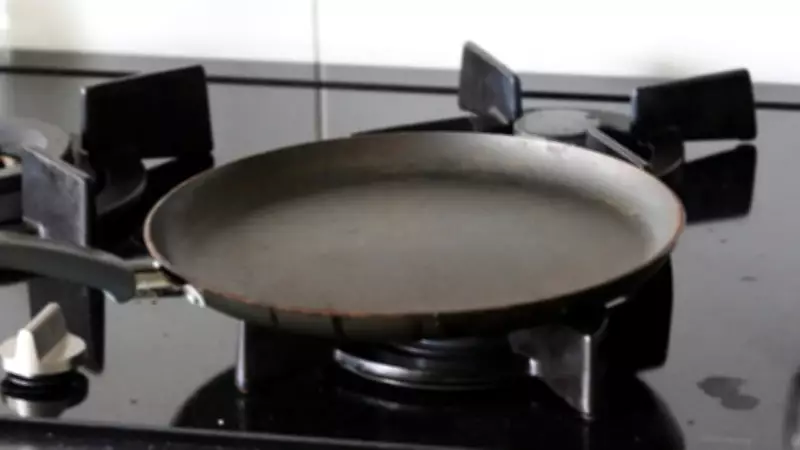
Let us accept it: non-stick cookware makes cooking effortless. But, at the same time, we all know that non-stick cookware is not good for human health. And we also know that iron cookware not only makes food tastier but healthier too. So, keeping that in mind, we thought of sharing easy steps on converting your regular iron tawa into a non-stick pan for smooth cooking. Take a look at these steps and also read the tips by an expert on how to use an iron tawa efficiently.
How to Make Iron Tawa Non-Stick
Wash and dry: To begin with, clean the iron tawa with hot water. Make sure to avoid any dishwashers or harsh detergents. Dry it completely to prevent rusting using a kitchen towel.
Heat the tawa: Now, heat the tawa on medium flame for 2-3 minutes.

Apply oil generously: Next, spread 1 tablespoon of oil on the tawa. It is best to use any high-smoke-point oil such as gingelly, sesame, groundnut, or sunflower oil.
Add a layer of salt: Also, sprinkle 2-3 tablespoons of salt on the oily surface and spread evenly, then heat for 2-3 minutes. Remove it gently using a tissue or towel.
Season with oil again: At last, apply oil once more and heat on low flame for 5-7 minutes, then let it cool with oil on the surface. Wipe off excess oil. Your tawa is all set to be used as a non-stick pan.
What Does the Expert Say?
Chef Sanjeev Kapoor once shared a list of kitchen hacks (dos and don'ts) one must follow while using iron utensils for cooking at home. According to his post, never add lemon juice or anything citrus or acidic when cooking in an iron vessel, as it may add a metallic flavour to the final dish. Also, once the food is prepared in an iron vessel, never let it sit in it. Immediately transfer it to a bowl. This helps in preventing the food from turning black.
How to Season Iron Tawa
According to Chef Sanjeev, to avoid batter from sticking to the tawa, dip an onion half in oil and apply it over the tawa. Let it heat up. The tawa is now seasoned, the chef mentioned. Alternatively, you can use a muslin cloth instead of onion. Apply the oil over the iron tawa using a muslin cloth and let the tawa heat up.
Benefits of Cooking in Cast Iron
According to Dimple, a wellness and nutrition expert, cast iron cookware is great because it slowly releases bioavailable iron into our food. This is beneficial if you are suffering from anaemia, haemoglobin issues, or thalassaemia minor, as well as for hair loss and women's health issues. You can make crepes, dosas, pancakes, or any kind of thin bread toast on it. This is a great way of getting iron in your diet in a sustainable manner. According to a study published by the National Library of Medicine titled "Effect of cooking food in iron-containing cookware on increase in blood hemoglobin level and iron content of the food: A systematic review," it can be inferred that cooking food in an iron pot escalates the levels of blood haemoglobin and iron content of the food, thus reducing the incidences of iron deficiency anaemia. The bioavailability of food containing heme iron increases more when cooked in an iron pot than food having non-heme iron form. Also, the content of iron in the food was found to be increased by cooking acidic food with iron ingots.
Things to Keep in Mind
According to Saras Salil, a nutrition and wellness expert, acidic foods like tomato-based curries or use of lemon may leach more iron, but can also affect the seasoning of the pan. It is said that those with conditions like haemochromatosis (iron overload) should be cautious of food cooked in cast iron. Also, one should avoid too much dairy with iron-rich meals, as calcium competes with iron absorption.
What Types of Food Should Be Cooked in Cast Iron?
Dishes like saag, aloo baigan, rajma, chole, kala chana, bhindi, poriyal, rasam, and sambar are best cooked in cast iron. Also, make sure to pair iron-rich foods with vitamin C (like lemon, amla, tomatoes) to enhance iron absorption.