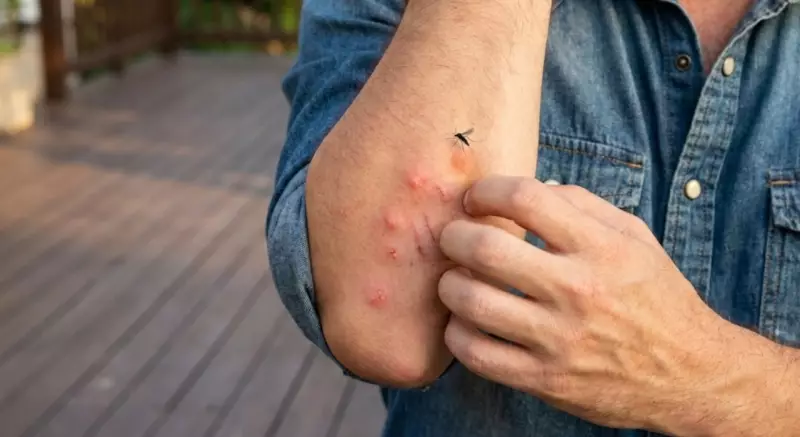
Have you ever been in a group, only to find yourself relentlessly targeted by mosquitoes while others remain untouched? That frustrating feeling of being singled out is a common summer woe. However, entomologists confirm it's not a personal vendetta. The decision-making process of a mosquito is a complex, multi-layered sequence driven by specific signals from your body.
The Three-Stage Hunt: From Your Breath to Your Skin
Mosquitoes don't choose their victims at random. Professor Jonathan F. Day, an entomology expert with years of research in mosquito behaviour, explains that these insects use a step-by-step approach, combining cues from a distance right up to the moment they land.
The first and most critical long-range signal is carbon dioxide (CO₂). Every time you exhale, you release a plume of CO₂ that acts like a dinner bell for mosquitoes. "People with high metabolic rates—genetically or due to factors like pregnancy or recent exercise—produce more carbon dioxide," Day states. "The more you give off, the more attractive you become to these insects." This explains why larger individuals, pregnant women, and those who have just finished a workout often find themselves covered in bites.

Once drawn by CO₂, mosquitoes use vision to zero in. Flying low to avoid wind, they look for shapes that stand out against the horizon. "Your clothing choice matters significantly," Day emphasises. "Dark-coloured clothes create a stronger contrast, making you a more visible target. Light-coloured attire blends in better and attracts fewer mosquitoes."
The final stage involves close-range signals. Body heat is a crucial tactile cue. People who naturally run warmer, or whose body temperature is elevated due to alcohol consumption, exercise, or other factors, provide a clearer map for mosquitoes to find blood vessels close to the skin's surface. Dermatologist Dr. Melissa Piliang of the Cleveland Clinic notes that changes in skin chemistry and metabolism in such individuals further increase their appeal.
The Blood Type Debate: Is Type O Really a Magnet?
Beyond breath, sight, and heat, the role of blood type has been a point of scientific investigation and debate. The theory hinges on antigens—proteins on red blood cells—which some people, known as "secretors," release in their sweat, saliva, or tears.
Several studies point to a pattern. A 1974 study with 102 participants found mosquitoes showed a preference for hosts with blood type O. This was supported by a 2004 study, which noted that type O subjects attracted more mosquitoes, though it added that ABH antigens did not universally influence landing preference. A 2019 study also recorded the "highest preference" for type O blood in controlled feeder tests.
However, experts urge caution. Pharmaceutical giant Pfizer notes that the evidence on blood-type preference remains controversial and contradictory. Professor Day and other scientists argue that a combination of factors is at play, with skin odours and the unique community of bacteria (microbiota) living on your skin likely playing a more significant role than blood type alone.
No Single Answer, But a Cascade of Clues
The search for a single "mosquito magnet" gene is futile. Joseph Conlon, a technical adviser to the American Mosquito Control Association, highlights the complexity: with over 3,000 mosquito species and more than 350 chemical compounds identified in human skin odour, research has only scratched the surface.
The attraction is a cascade. Your breath (CO₂) draws them in, your clothing makes you visible, your body heat guides them, and your unique skin chemistry seals the deal—or sends them away. While you can't change your metabolism or blood type, opting for light-coloured clothing and using recommended repellents can help tilt the odds in your favour during mosquito season.