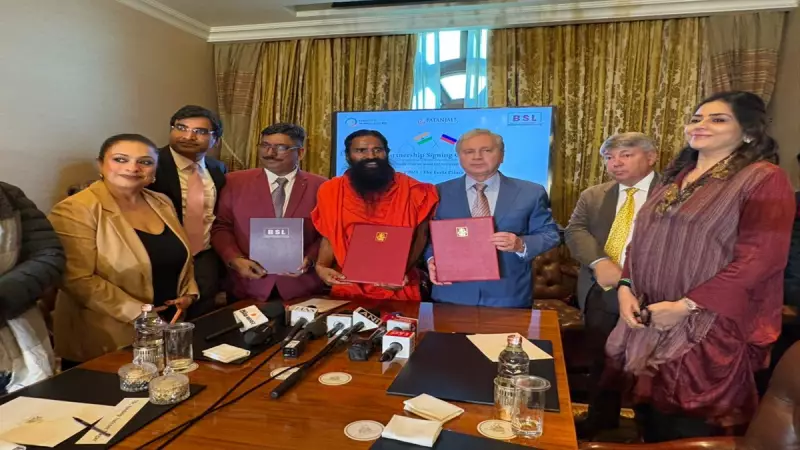
In a significant move to deepen bilateral wellness and cultural connections, Patanjali Yogpeeth and the Government of Moscow, Russian Federation, formalized a partnership on Friday. The Memorandum of Understanding (MoU) was signed in the national capital, Delhi, marking a new chapter in India-Russia relations centered on traditional health disciplines.
Key Figures and Vision Behind the Agreement
The high-profile signing ceremony saw the presence of influential leaders from both nations. Representing the Indian side was Yoga guru Swami Ramdev, the co-founder of Patanjali Yogpeeth. The Russian delegation was led by Sergey Cheremin, Minister of the Moscow Government and Head of the Department for External Economic and International Relations.
This agreement, inked on December 6, 2024, aims to create a structured framework for collaboration. The core vision is to propagate India's ancient knowledge systems of yoga and Ayurveda within Russia, while simultaneously fostering a deeper cultural and spiritual exchange between the peoples of the two long-standing allies.

Core Objectives and Planned Initiatives
The MoU outlines several concrete areas of cooperation designed to translate the shared vision into actionable results. A primary focus will be on organizing joint yoga and wellness programs across various cities in Russia. These initiatives are expected to make the holistic benefits of yoga more accessible to the Russian public.
Furthermore, the pact emphasizes collaboration in the field of Ayurveda and traditional medicine. This opens doors for knowledge exchange, research partnerships, and potentially the integration of Ayurvedic principles with wellness practices in Russia. The agreement also seeks to strengthen people-to-people ties by facilitating cultural exchanges, seminars, and training sessions conducted by experts from both countries.
Strategic Implications and Future Outlook
This partnership extends beyond mere wellness programming; it is viewed as a strategic tool of soft diplomacy and cultural outreach. By partnering with a prominent entity like Patanjali, Russia signals its interest in embracing Indian holistic lifestyle practices officially. For India, this represents a successful export of its soft power, strengthening a non-political bond with a key strategic partner.
The collaboration is expected to have a multi-faceted impact:
- Boost to Wellness Tourism: It could encourage more Russians to visit India for authentic yoga and Ayurvedic experiences.
- Institutional Knowledge Sharing: Patanjali's expertise will be shared with Russian institutions, potentially leading to the establishment of certified yoga and wellness centers.
- Strengthening Bilateral Ties: At a time of global geopolitical shifts, this agreement reinforces the enduring nature of the India-Russia relationship through a unique, human-centric channel.
The signing event in Delhi has set the stage for a series of follow-up activities. Both Swami Ramdev and Minister Sergey Cheremin expressed strong commitment to implementing the MoU's clauses promptly. This alliance between a spiritual- wellness organization and a foreign government underscores the growing global recognition of yoga as a vital component of preventive healthcare and cross-cultural harmony.