If you have ever stared at the handful of hair left behind in your shower drain and wondered where it all went wrong, you are not alone. Hair loss has quietly become one of the most common beauty concerns today. Men are noticing receding hairlines earlier than ever, women are struggling with thinning hair after stress, illness, pregnancy or hormonal changes, and social media is flooded with miracle oils, supplements and guaranteed regrowth hacks.
In India, traditional remedies have always been turned to when hair starts acting up. Amla, bhringraj, hibiscus, methi seeds, curry leaves — every family seems to have its own trusted recipe. But now, another ancient remedy is making headlines, and this one comes from China.
He Shou Wu: A Thousand-Year-Old Herb
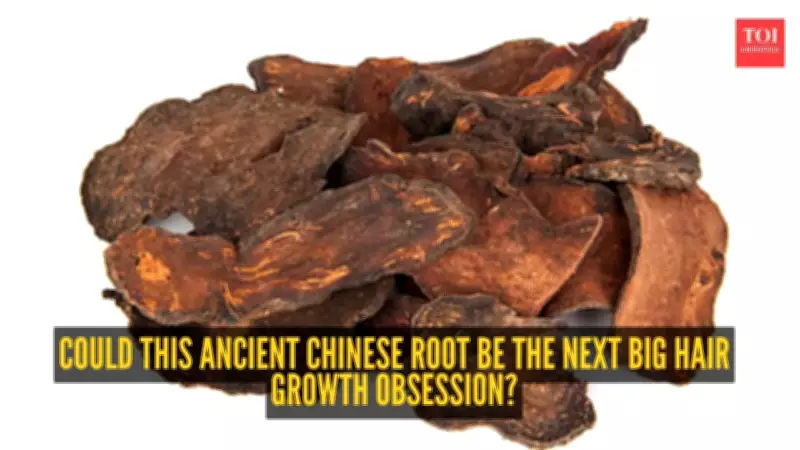
A herb called Polygonum multiflorum, better known as He Shou Wu, is attracting attention after researchers found that it may help tackle hair loss in several different ways. Unlike many viral beauty trends, this one has scientists looking into it seriously.

Long before hair growth serums and laser treatments existed, traditional Chinese medicine practitioners were recommending He Shou Wu for thinning hair and premature greying. For generations, it earned a reputation as the herb that could help restore vitality and keep hair looking thick and dark.
A recent study published in the Journal of Holistic Integrative Pharmacy found that modern science is beginning to uncover reasons why this root became so popular. Researchers examined existing studies on the herb and found that it may affect several biological processes linked to hair growth.
Understanding Hair Loss Causes
When people talk about hair loss, they often think it is simply a part of ageing. The reality is more complicated. One of the biggest factors behind male and female pattern hair loss is a hormone called DHT (dihydrotestosterone). In people who are genetically sensitive to it, DHT gradually weakens hair follicles.
At first, the change is easy to miss. Your ponytail feels slightly thinner. The parting looks wider. More hair shows up on your pillow. Over time, follicles start producing finer and weaker strands until some eventually stop producing visible hair altogether. Most hair-loss treatments available today focus on slowing down this process.
How He Shou Wu Works
What caught researchers' attention is that Polygonum multiflorum does not appear to focus on just one thing. According to the review, it may help reduce the impact of DHT on hair follicles, potentially protecting them from one of the biggest causes of pattern hair loss.
But that is only part of the picture. Scientists also found evidence suggesting that the herb may help keep follicle cells healthy for longer. Think of hair follicles as tiny factories. If the workers inside those factories stop functioning properly, production slows down. Healthy cells are essential if hair is going to keep growing.
The review also pointed to growth signals. Hair follicles naturally move through cycles: they grow, rest, shed and then start growing again. Researchers found that the herb may activate biological pathways that help follicles move back into the growth phase. In simple language, it may encourage sleeping follicles to become active again.
Scalp Health Matters
One reason the study has generated interest is because it aligns with something many dermatologists have been saying for years: healthy hair starts with a healthy scalp. The review suggests the herb may improve blood circulation around hair follicles, helping deliver oxygen and nutrients where they are needed.
This is particularly relevant because modern lifestyles are not exactly kind to our scalps. Stress levels are through the roof. Diets are often lacking key nutrients. Pollution, hard water, heat styling and chemical treatments all take a toll. It is no surprise that hair ends up paying the price.
Connecting Ancient Wisdom and Modern Science
What is interesting is that the philosophy behind this Chinese herb is not very different from the way traditional Indian remedies approach hair care. Ask your grandmother why she used amla oil or hibiscus paste and she probably will not mention hormones or cellular signalling pathways. She will simply say they nourish the roots.

Modern science may use more complicated language, but the basic idea is remarkably similar: stronger roots create healthier hair. That is partly why this research feels so fascinating. It sits at the intersection of ancient wisdom and modern biology.
Cautious Optimism Required
Before you start ordering supplements online, here is the important part. The researchers are excited about the findings, but they are also cautious. Most of the evidence so far comes from laboratory studies and smaller clinical observations. Larger human trials are still needed before scientists can confidently say how effective the herb really is for hair loss.
They also note that the herb is traditionally processed before use, and that preparation method may affect both safety and effectiveness. In other words, this is not a case of more is better. Like any medicinal herb, it needs to be studied carefully.
No one is claiming that Polygonum multiflorum is about to replace minoxidil, finasteride or every other hair-loss treatment on the market. But what makes it interesting is that it seems to work across several pathways at once rather than targeting a single problem. In the world of hair loss, that is relatively rare.
For now, it is best viewed as a promising area of research rather than a miracle cure. Still, there is something undeniably intriguing about the fact that a root used more than a thousand years ago is now being examined by scientists armed with modern technology. Perhaps those ancient healers understood something that science is only beginning to catch up with. And for anyone anxiously counting the hairs on their hairbrush every morning, that is a story worth paying attention to.