Polish Farmers Unearth 17th Century Silver Hoard, Offering New Historical Insights
What started as a normal day of fieldwork in northern Poland transformed into an extraordinary archaeological discovery. Two local farmers working their land in Bukowiec Wielki, located in the Warmian-Masurian Voivodeship, stumbled upon a buried treasure from the 17th century. They found 162 silver coins along with various other artifacts that archaeologists believe could provide fresh insights into regional life during the Polish-Lithuanian Commonwealth period.
Heritage Authorities Secure the Site
The discovery immediately caught the attention of heritage authorities. They secured the site and initiated formal archaeological excavations. While coin hoards sometimes appear across Central and Eastern Europe, many suffer damage, get scattered, or vanish into private collections. This particular find, however, has been properly documented and transferred through official channels. Researchers now have a rare opportunity to study not just the coins but also the objects discovered alongside them.
A Silver Cache from a Turbulent Era
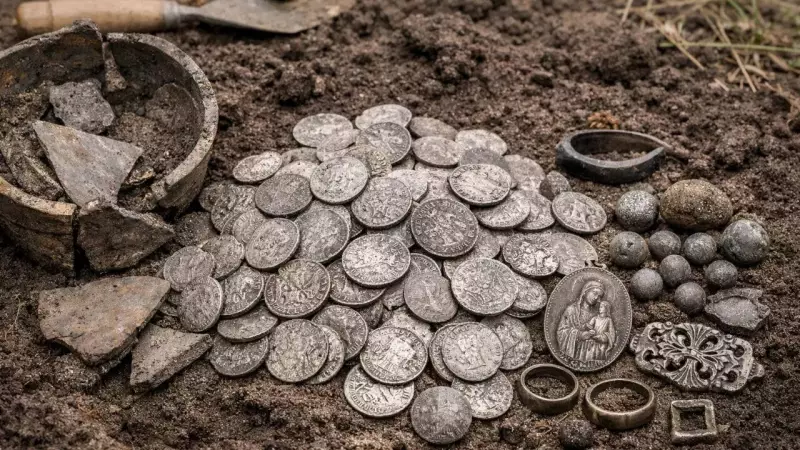
Specialists have confirmed that the hoard consists of 162 silver coins dated between 1660 and 1679. The collection includes several denominations commonly used in the late 1600s, such as szóstaks, orts, and tymfs. These coins represent everyday currency from that period rather than ceremonial or decorative pieces.

The coins were originally buried inside a ceramic vessel. Archaeologists recovered fragments of this container during excavation. The presence of the vessel suggests someone deliberately deposited the hoard for safekeeping. The reasons for hiding it remain unknown. One central question puzzles historians: why did the owner never return to collect it?
Historically, people buried money during times of uncertainty. Wars, raids, sudden displacement, or fear of theft often prompted such actions. Many hoards were later retrieved, but some were forgotten, abandoned, or left behind when owners never returned.
More Than Just Coins: Additional Artifacts Recovered
Archaeological teams working around the discovery area documented additional material beyond the silver pieces. Among the recovered items were ceramic fragments, metal buttons, rings, and other small fittings consistent with everyday life in the 17th century. Researchers also found lead balls linked to black powder firearms. These items serve as a reminder of the security concerns that shaped rural life during that era.
A particularly notable object was a decorative clasp fragment. Archaeologists noted that it shows stylistic similarities to comparable finds recorded at historic sites beyond Poland. These include locations linked to Brandenburg and Prague. Such parallels do not automatically confirm who lived there, but they may help researchers map wider influences in material culture and trade connections during the period.
The combined discovery of coins and personal objects holds significant value. Hoards are often found in isolation. Here, the surrounding artifacts provide added context that could help historians better understand who may have buried the silver and what kind of community existed nearby.
Signs of Structures Beneath the Surface
Excavation work also identified stone structural remnants. Researchers say these may indicate a former building site in the area. The remains have sparked interest in whether an older residence or agricultural complex once stood nearby. Experts have not confirmed a specific estate name in surviving records yet.
Further research is expected to focus on mapping and archival investigation. Historians will look for any documented references that match the site's archaeological footprint.
Why People Buried Wealth in the 1600s
The coin dates place the hoard in the decades after major regional upheavals. Political instability, economic shocks, and local insecurity were still part of daily reality in the Polish-Lithuanian Commonwealth during that time. Under such conditions, burying valuables served as a practical method of protection. Households that wanted to conceal savings quickly often resorted to this practice.

The Bukowiec Wielki hoard appears to fit that broader pattern. It represents a deliberate deposit intended for later recovery, left untouched for centuries until modern agricultural work brought it back into view.
Now Preserved for the Public
The entire collection has been transferred to the Muzeum Pogranicza w Działdowie. Conservation and documentation are currently underway. The museum has indicated that the hoard will become part of a permanent exhibition planned for early 2026. Once preservation work is complete, the public will be able to view the coins and selected artifacts.
For the farmers, the discovery turned an ordinary day into a once-in-a-lifetime event. For researchers, it offers a rare opportunity. They now have a sealed snapshot of 17th-century life, wealth, and uncertainty. This treasure remained preserved beneath the soil until the right moment brought it to light.