Groundbreaking Discovery: 430,000-Year-Old Wooden Tools Unearthed in Greece
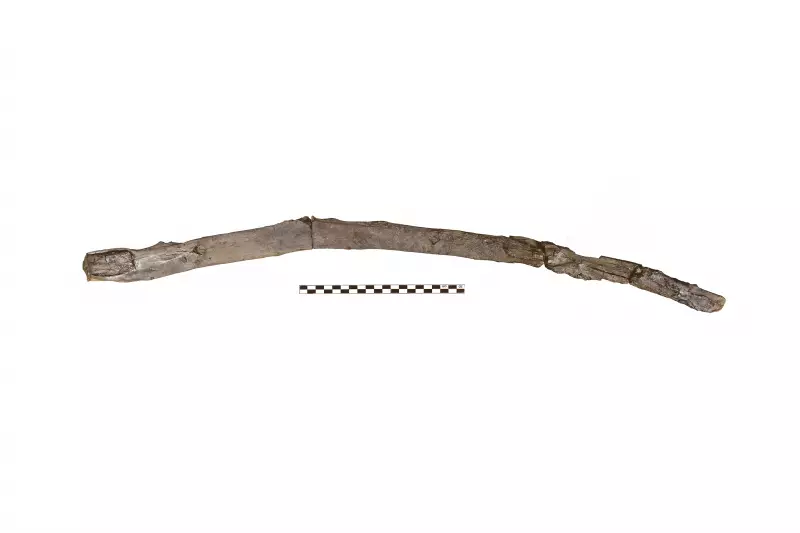
In a remarkable archaeological breakthrough, researchers have uncovered the oldest wooden tools ever discovered, dating back an astonishing 430,000 years. The findings, excavated from a site in southern Greece, provide compelling evidence that early human ancestors possessed advanced technological skills far earlier than previously believed.
Revising the Timeline of Human Innovation
The discovery, detailed in a study published in the journal PNAS, includes a worked alder shard used for digging and a carved poplar or willow twig. These artifacts were found at the Marathousa 1 site, a former lakeshore mine in the Megalopolis basin of Greece. According to lead author Katerina Harvati, a paleoanthropologist at the University of Tübingen in Germany, these tools offer unprecedented insight into the prehistoric origins of human intelligence and craftsmanship.
"Organic artifacts, especially those derived from plants, are a lot more fragile and harder to find than those made from stone," Harvati noted, emphasizing the rarity and significance of the preservation.

Sophisticated Toolmakers: Neanderthals or Homo Heidelbergensis?
The wooden tools are believed to have been crafted by early Neanderthals or their predecessors, Homo heidelbergensis. This pushes back the established timeline for such sophisticated toolmaking in Europe, long before Homo sapiens arrived on the continent. Microscopic analysis and CT scans conducted by archaeologist Annemieke Milks of the University of Reading revealed clear marks of chopping and carving, confirming human modification.
Simultaneously, another study published in Science Advances reports the discovery of a 500,000-year-old hammer made from elephant or mammoth bone at the Boxgrove site in West Sussex, England. Silvia Bello, a paleoanthropologist at London's Natural History Museum and author of the bone-tool study, highlighted that this artifact, used for knapping stone tools, challenges previous assumptions that such tools were limited to warmer southern regions of Europe.
Context and Implications of the Findings
The wooden tools were found alongside the partial skeleton of a straight-tusked elephant and remains of various animals, suggesting a rich ecological context. Researchers speculate that the digging stick might have been used to process elephant carcasses, though its exact function remains under investigation.
Thomas Terberger, an expert in ancient artifact analysis, pointed out that these discoveries underscore the diversity of raw materials utilized by prehistoric humans. "Flint was more common, but bone and wood were probably more valuable for our ancient ancestors," he remarked, illustrating the resourcefulness of early toolmakers.
Broader Archaeological Significance
These findings are part of a growing body of evidence that rewrites human history. The oldest previous evidence of intentional wood crafting was from 476,000-year-old logs in Zambia. The new studies suggest that early hominins in Europe were engaging in complex toolmaking hundreds of thousands of years earlier than once thought.
Bello and Terberger both emphasized that the apparent scarcity of such ancient tools may be due to preservation challenges rather than absence of activity. "Further proof may be found in as-yet undiscovered sites or existing museum collections," Terberger added, hinting at more revelations to come.
This groundbreaking research not only highlights the technological prowess of early humans but also opens new avenues for understanding the evolution of human cognition and cultural development. As archaeology continues to rewrite its own history, each discovery brings us closer to unraveling the mysteries of our ancient past.