

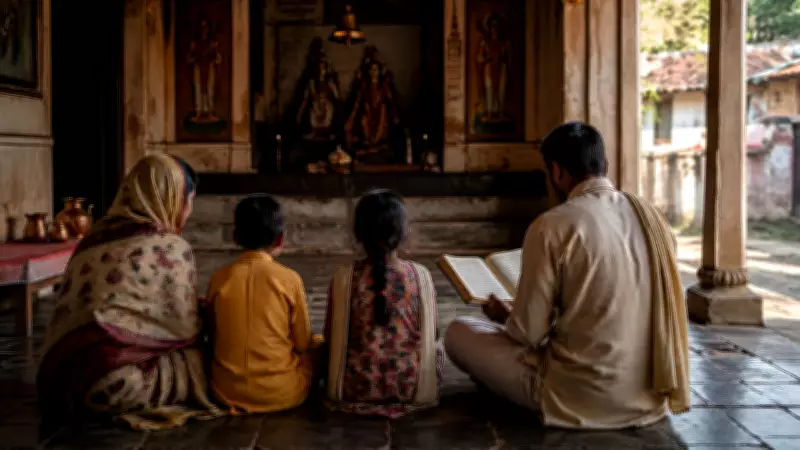
Parenting is not only about rules, report cards and routines. At its best, it is the slow shaping of a child's character: how they think, how they respond to pressure, how they treat others and how they find their place in the world. That is why the Bhagavad Gita still feels so relevant. Its wisdom is not trapped in time. It speaks plainly about duty, discipline, courage, self-control and emotional balance, qualities every child needs long before they are old enough to understand the word 'success.' Here are five lessons from the Gita that can quietly build a stronger, steadier child.
Focus on effort, not just results
Shloka: Karmanyevadhikaraste ma phaleshu kadachana | Ma karmaphalaheturbhurma te sangostvakarmani ||
Meaning: You have a right to action, but not to the results of action. Do not let your attachment be to the outcome, and do not become attached to inaction.

This is one of the most powerful lessons a parent can teach. Children today grow up under constant comparison, marks, trophies, social approval, performance. The Gita reminds them that effort matters more than the immediate reward. A child who learns to value hard work over applause becomes less fragile, less fearful of failure and more resilient when life does not go to plan. It teaches them to show up fully, without being crushed by every result.
Do the right thing, even when it is difficult
Shloka: Svadharme nidhanam shreyah paradharmo bhayavahah ||
Meaning: It is better to follow one's own duty, even imperfectly, than to follow another's path in fear.
Children often feel pressure to copy others, friends, classmates, trends, expectations. This verse teaches moral courage. It tells a child that right action matters more than popularity. Parents can use this lesson to nurture honesty, integrity and self-respect. A child who learns to choose what is right over what is easy grows into an adult who can stand firm under pressure. That is a rare gift in a noisy world.
Stay steady when emotions run high
Shloka: Dhyayato vishayan pumsah sangasteshopajayate | Sangatsanjayate kamah kamatkrodho bhijayate ||
Meaning: When a person dwells on desires, attachment grows. From attachment comes desire, and from desire comes anger.
Children are emotional by nature, which is not a weakness. But they need guidance to understand how quickly feelings can spiral. This verse explains the chain reaction that begins in the mind and ends in anger or poor choices. It is a useful teaching for everyday life: pause before reacting, notice what you are feeding your mind and do not let one strong feeling take over everything else. Parents who teach emotional awareness early give their children a lifelong tool for calmer relationships and better decisions.
Learn discipline, not just comfort
Shloka: Uddharedatmanatmanam natmanamavasadayet | Atmaiva hyatmano bandhuratmaiva ripuratmanah ||
Meaning: One must lift oneself by one's own efforts and not let oneself fall. The self can be both a friend and an enemy.
This verse speaks directly to self-mastery. A parent can use it to teach children that growth does not happen by accident. Good habits, steady effort and inner discipline matter. It also teaches responsibility: no one else can do all the inner work for you. At the same time, it is not harsh or cold. It is empowering. It tells a child that they are not helpless. They can build, improve and rise through consistent effort. That belief can shape confidence for life.
Be kind, balanced and without arrogance
Shloka: Adveshta sarvabhutanam maitrah karuna eva cha | Nirmamo nirahankarah samaduhkhasukhah kshami ||
Meaning: One who is free from hatred, friendly and compassionate to all, without possessiveness or ego, balanced in pleasure and pain, and forgiving.

In a world that often rewards louder voices and bigger egos, this verse offers a gentler model of strength. It teaches children that real maturity is not about dominating others. It is about kindness, emotional balance and humility. Children who learn compassion become easier to trust and easier to love. Children who learn not to cling too tightly to ego handle criticism better and recover faster from hurt. This is a deeply modern lesson dressed in ancient language.
The Bhagavad Gita is not just a spiritual text. It is a practical guide to raising a human being who can think clearly, act bravely and live gently. For parents, that may be the greatest lesson of all: success is not only about what a child achieves, but about who they become along the way.





