Six Indian States with Famous Handloom Traditions
India boasts a rich tapestry of handloom traditions across its states. These textiles reflect deep cultural roots and skilled craftsmanship. Many regions have gained fame for their unique weaving styles and fabrics.
Kashmir: The Land of Pashmina and Kani Shawls
Kashmir stands out for its luxurious Pashmina shawls. Artisans use fine wool from Changthangi goats to create these soft and warm pieces. The region also produces intricate Kani shawls with detailed patterns woven on looms. These textiles often feature floral and paisley designs. They represent centuries of weaving expertise in the valley.
West Bengal: Home to Dhakai and Baluchari Saris
West Bengal is famous for its Dhakai and Baluchari saris. Dhakai saris come from Dhaka, now in Bangladesh, but West Bengal weavers continue the tradition. They use fine cotton threads to make lightweight and elegant saris. Baluchari saris showcase mythological scenes on silk. Weavers in Murshidabad and Bishnupur craft these narrative textiles with great care.

Gujarat: Renowned for Patola and Bandhani
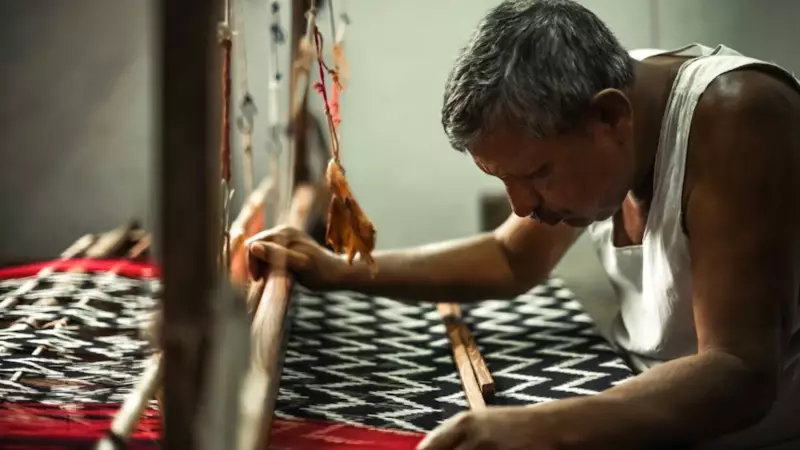
Gujarat excels in Patola and Bandhani textiles. Patola involves a double ikat technique where both warp and weft threads are dyed before weaving. This creates vibrant geometric patterns. Bandhani, or tie-dye, produces dotted designs on fabrics like sarees and dupattas. Cities like Patan and Jamnagar are hubs for these crafts. The state's handlooms often feature bright colors and intricate details.
Andhra Pradesh: The Center for Pochampally and Venkatagiri
Andhra Pradesh is known for Pochampally and Venkatagiri weaves. Pochampally ikat saris use a resist dyeing method to create bold patterns. Weavers in Bhoodan Pochampally village master this technique. Venkatagiri saris come from Nellore district and feature fine cotton with gold zari borders. These textiles are prized for their durability and elegance. The state's handloom sector supports many rural artisans.
Assam: Famous for Muga and Eri Silk
Assam produces unique Muga and Eri silk fabrics. Muga silk has a natural golden hue and gets stronger with each wash. It is used for traditional Mekhela Chadors and saris. Eri silk, or peace silk, comes from the eri silkworm and is known for its warmth. Weavers in Sualkuchi village are central to this industry. Assam's handlooms often incorporate tribal motifs and natural dyes.
Tamil Nadu: Celebrated for Kanchipuram and Chettinad Saris
Tamil Nadu is renowned for Kanchipuram and Chettinad saris. Kanchipuram saris feature heavy silk with contrasting borders and pallus. They often include temple designs and are popular for weddings. Chettinad saris come from the Chettiar community and use cotton with checks and stripes. Weaving centers like Kanchipuram city drive this craft. The state's textiles reflect a blend of tradition and innovation.
These six states highlight India's diverse handloom heritage. Each region offers distinct fabrics that tell stories of local culture. Handloom weaving remains a vital part of India's economy and identity. It provides livelihoods for millions of artisans across the country. Preserving these traditions is crucial for future generations.