7 Fascinating Birds That Swim Underwater Like Fish: Nature's Aquatic Aviators
While birds are universally celebrated for their mastery of the skies, a select group of avian species has evolved to conquer an entirely different realm: the underwater world. These remarkable birds possess specialized adaptations that allow them to swim, dive, and hunt beneath the water's surface with an efficiency that rivals fish. Through unique anatomical features and behavioral traits, they demonstrate nature's incredible capacity for evolutionary innovation in aquatic environments.
Penguin: The Master of Marine Navigation
Penguins stand as the undisputed champions of underwater avian locomotion. Their wings have transformed into powerful flippers that propel them through aquatic environments with remarkable grace and speed. Species like the emperor penguin showcase extreme adaptations, capable of plunging to depths exceeding hundreds of meters and remaining submerged for extended periods while hunting. These flightless birds have perfected marine life, with streamlined bodies and dense bones that facilitate deep dives in icy ocean waters.
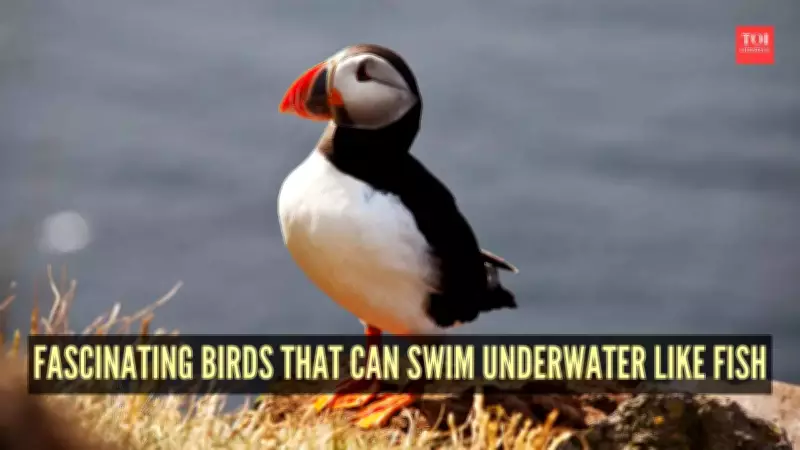
Puffin: The Dual-Environment Specialist
Puffins exhibit a fascinating ability to "fly" underwater by beating their wings like aquatic paddles while steering with their webbed feet. Typically diving tens of meters below the surface, they remain submerged long enough to capture schools of small fish. This dual capability for efficient movement in both air and water proves essential for survival in the cold northern oceans where prey often resides beneath the surface layers.

Cormorant: The Pursuit Diver Extraordinaire
Cormorants are powerful pursuit divers that utilize webbed feet for propulsion, sometimes partially spreading their wings for enhanced maneuverability. Their remarkable diving abilities allow them to reach significant depths in search of fish. A distinctive behavior involves spreading their wings to dry after hunting, as their feathers are less waterproof than other waterbirds—an adaptation that actually improves their underwater hunting efficiency by reducing buoyancy.
Loon: The Deep-Diving Specialist
Loons represent highly aquatic birds capable of swimming substantial distances underwater and diving to approximately 60 meters. Their solid bones and ability to compress air from both lungs and feathers significantly reduce buoyancy, enabling deeper and more efficient dives while pursuing fish. These sophisticated adaptations create graceful underwater swimmers, though they appear notably clumsy when navigating terrestrial environments.
Grebe: The Freshwater Stealth Hunter
Grebes possess exceptionally streamlined bodies and specialized lobed feet that facilitate silent, rapid dives in freshwater habitats. They employ these adaptations both for capturing prey and evading predators, demonstrating how structural evolution can transform a bird into an expert underwater swimmer. Their ability to disappear beneath the water's surface with minimal disturbance makes them particularly effective hunters in lake and pond ecosystems.
Common Murre (Auk Family): The Wing-Propelled Marine Diver
Common murres and related auks are wing-propelled divers whose underwater movement closely resembles that of penguins. Some murre species can dive beyond 100 meters while chasing schooling fish, spending the majority of their lives at sea and returning to land primarily for breeding purposes. Their existence highlights how different bird families have independently evolved similar solutions for marine life.
Anhinga (Snakebird): The Submerged Spearfisher
Anhingas, often called snakebirds, swim with their bodies fully submerged while spearing fish using a sharp bill and rapid neck strike. Unlike most waterbirds, their feathers become thoroughly wet rather than repelling water, which reduces buoyancy and dramatically improves diving capability. Following hunting sessions, they characteristically spread their wings to dry, creating a distinctive silhouette that has earned them their serpentine nickname.

The Evolutionary Marvel of Aquatic Birds
From penguins navigating icy Antarctic waters to anhingas hunting in warm subtropical wetlands, these seven bird species collectively illustrate the remarkable diversity of underwater adaptation within the avian world. Their specialized wings, powerful feet, dense bones, and oxygen-conserving physiological adaptations demonstrate how evolution has equipped certain birds to thrive in aquatic environments. These nature's aquatic aviators continue to fascinate scientists and bird enthusiasts alike, serving as living examples of evolutionary innovation and ecological specialization.