We often take our eyes for granted, assuming most creatures see the world in a similar way. However, a deep dive into the animal kingdom reveals a spectacular array of visual adaptations that shatter this assumption. From heads you can see through to silent third eyes, nature has engineered solutions for survival that seem straight out of science fiction. These fascinating creatures, often trending online, remind us that vision is not a one-size-fits-all tool but a highly specialized sense shaped by evolution.
Nature's Most Unusual Visual Systems
The diversity of eye structures in the animal world is a testament to evolution's creativity. While humans rely on a familiar pair of forward-facing eyes, other species have developed radically different approaches to gathering visual information. These adaptations are not mere curiosities; they are critical for finding food, avoiding predators, and navigating challenging environments. The following examples showcase some of the most extraordinary visual systems found on our planet.
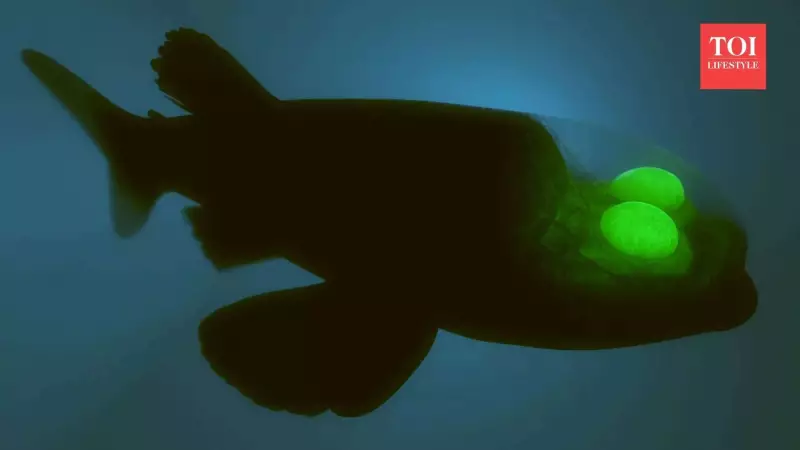
The Deep-Sea Spectacle: Pacific Barreleye Fish
One of the ocean's most enigmatic residents, the Pacific barreleye fish, possesses a head that is completely transparent. Its eyes are not on the surface but are housed inside this clear shield, looking upwards through its own skull. This unique design provides crucial protection in the dark, high-pressure depths of the ocean while allowing the fish to spot silhouettes of prey above. The transparent dome acts like a reinforced cockpit window, giving its sensitive eyes both safety and an unobstructed view.

The Reptilian Sentinel: Iguana's Pineal Eye
Many reptiles, including the common iguana, boast a secret weapon: a third "eye" on the top of their head. Known as the parietal eye, this organ cannot form detailed images. Instead, it is supremely sensitive to changes in light and dark, detecting the shadows of approaching predators. It also helps the animal regulate its daily and seasonal rhythms by sensing blue and green light. This light-sensing patch uses specialized cells, different from rods and cones, making it an ancient and effective early-warning system.
Masters of the Night and Sky
In the forests of Southeast Asia, the tiny tarsier relies on its enormous, saucer-like eyes to be a successful nocturnal hunter. Each of its eyes is heavier than its brain, providing exceptional light-gathering ability. This adaptation is crucial for spotting insects and small prey in near-total darkness. Meanwhile, in the insect world, dragonflies and damselflies are aerial acrobats thanks to their massive compound eyes. Each eye contains thousands of individual lenses, granting them a nearly 360-degree field of view, the ability to detect ultrafast movement, and even see ultraviolet light invisible to humans.
Eyes on Stalks and Wandering Eyes
Stalk-eyed flies present one of the animal kingdom's most exaggerated facial features. The males, in particular, have eyes mounted on long, slender stalks that protrude from the sides of their head. This bizarre arrangement is often used in mating displays and combat. In a completely different transformation, the flounder undergoes a remarkable migration of one eye during its development. Born with an eye on each side, the flatfish slowly has one eye travel over the top of its head as it matures, ending with both eyes on the same side. This allows it to lie flat on the seafloor while maintaining a watchful gaze upward.
The Ultimate Camouflage Artist: Chameleon
The chameleon's eyes are a marvel of independent movement and stealth. Its eyelids are fused, covering most of the eyeball and leaving only a small pinhole for the pupil. This, combined with skin-coloured eyelids, helps its eyes blend seamlessly into its surroundings—a perfect complement to its legendary colour-changing ability. Each eye can rotate and focus independently, allowing the chameleon to scan a full 360 degrees for prey and threats without moving its head.
Disclaimer: The information in this article is based on ecological studies and online sources. Specific details may vary across species and geographical regions. Images are for representative purposes.