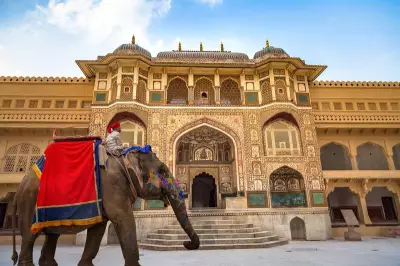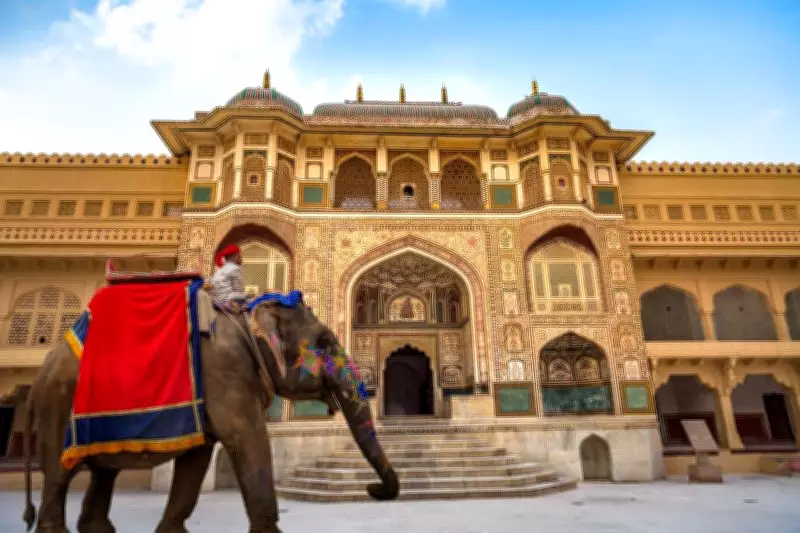
For the first time, advanced scientific techniques are being employed to conserve the mural paintings dating from the 16th to 18th centuries at Amer Fort, a UNESCO World Heritage site in Rajasthan. The ambitious conservation project, executed in collaboration with the Indira Gandhi National Centre for the Arts (IGNCA), the Amer Development and Management Authority (ADMA), and the Rajasthan state archaeology department, has received a sanction of Rs 2.32 crore. The primary goal is to preserve the originality and authenticity of these historic wall paintings that adorn the fort's palaces and gates.
Pioneering Use of XRF Technology
Project manager Kirtipal Singh Parmar emphasized that this is the first time such high-end X-ray fluorescence (XRF) technology, valued at nearly Rs 1 crore, is being used for scientific mural analysis in any palace under the Rajasthan archaeology department. "The XRF technique allows us to identify the natural pigments, chemical composition, and surface condition of the paintings without taking samples or causing any damage," Parmar stated. This non-invasive method not only safeguards the artwork but also provides precise data for developing targeted conservation strategies.
Alongside XRF, experts are utilizing ultraviolet photography, multispectral imaging, and infrared analysis. Ultraviolet photography is particularly effective in detecting past retouching or repainting. "If later layers of paint are found, they will be studied and, if required, removed to restore the artwork closer to its original form," Parmar added. Multispectral imaging helps digitally map the paintings and uncover hidden layers that may reveal the artists' original techniques or later modifications.

Assessing Centuries of Deterioration
The murals have endured constant exposure to sunlight, rain, humidity, and temperature fluctuations over centuries, leading to fading colours and surface deterioration in many sections. The conservation work began at the fort's dining hall, with plans to extend to Singhpol, Ganeshpol, and the Man Singh Palace. Each area presents unique challenges, requiring tailored approaches.
After thorough scientific analysis, detailed conservation guidelines will be drafted. The restoration process will involve cleaning, retouching, and possibly replicating original pigments. Officials are creating test patches at various points to determine the safest cleaning methods that will not harm the original artwork. Traditional miniature artists are also being consulted to compare historically used natural pigments, which may be replicated during restoration if necessary.
Long-Term Preservation Vision
Amer Fort Superintendent Rakesh Chholak noted, "The use of modern scientific tools will help accurately assess the condition of the murals and extend their longevity while preserving their authenticity." The project is seen as a model for future conservation efforts at other heritage sites across India, blending cutting-edge science with traditional craftsmanship. The collaboration between IGNCA, ADMA, and the archaeology department ensures that the work adheres to international conservation standards.
The success of this initiative could pave the way for similar scientific approaches to preserving other fragile murals in Rajasthan, such as those at the City Palace and other forts. By investing in high-tech analysis and respectful restoration, the authorities aim to protect a vital part of India's cultural heritage for generations to come.