Alipur's Solemn Mourning: A Karnataka Village Remembers Ayatollah Khamenei
Just beyond the industrial fringes of Doddaballapur, the landscape shifts subtly. The road narrows, and signboards begin to display names like Allama Street, Hussain Circle, and Hamza Street. This is Alipur, a village approximately 70 kilometers northwest of Bengaluru, which on Sunday descended into a hushed, three-day period of mourning. The passing of Ayatollah Ali Khamenei was not merely distant international news here; it was a deeply personal loss for a community that once hosted him.
A Village Dubbed 'Mini Iran'
Black banners appeared on shopfronts, conversations turned quiet, and the overall mood became subdued. With a population of around 25,000, of which roughly 23,009 are Shia Muslims, Alipur is often referred to as 'Mini Iran'. The village is locally administered through the Anjuman-e-Jafaria, a community body described by residents as an advisory and welfare institution. Despite this significant demographic tilt, many inhabitants emphasize that daily life is firmly rooted in Indian and Kannada culture.
"Almost 100% of our daily life follows Indian and Kannada culture, with only some Islamic practices," stated Alhaj Er Mir Ali Abbas, president of the Anjuman. He explained that the body comprises Islamic scholars and selected members serving two-year terms, overseeing welfare, mediation, and community development. "If people want to go to the police or courts, they can freely do so. Our association handles development, infrastructure, and community needs."

Economic Roots and Cultural Identity
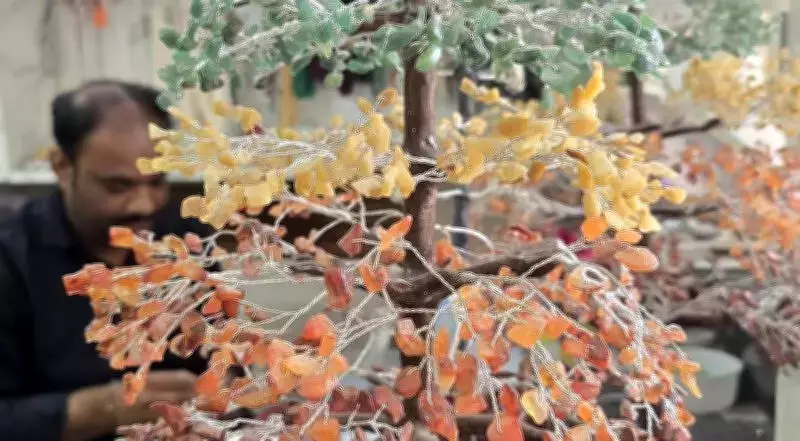
The economic backbone of Alipur lies in the gemstone trade. Chief patron Allama Hujjatul asserted that the village's identity is not built on foreign patronage. "Most of our business and lifestyle, like gem trading, comes from our forefathers and Indian tradition, not Iranian culture. We follow Islamic law here most of the time, but people are free to follow their own system as well. We have received no funding from Iran," he clarified. He added that many families send at least one child to study in Iran for religious education, but they "eventually come back".
Though Arab traders are believed to have settled here nearly 300 years ago, and later links with Iran influenced religious practices, the cultural foundation remains distinctly local. This is evident in daily life:
- Food: Lunch tables are more likely to feature ragi mudde, idli, vade, and dose than any distinctly Iranian dishes.
- Education: Six schools in the village follow state, CBSE, or ICSE syllabi, including two government-run institutions. Land has been donated for a proposed government first-grade college for girls, highlighting a long-standing emphasis on women's education.
A Historic Visit Woven into Memory
The emphasis on education and welfare, according to residents, was significantly reinforced by Ayatollah Khamenei's visit in March 1981. On that summer day almost 45 years ago, he arrived around 11 a.m., accompanied by associates, during a broader tour of India. A Shia delegation had extended the invitation, and security was notably tight.
Mir Fazil Raza, now secretary of the Anjuman, was 14 years old at the time. "We were arranged in rows inside the mosque to welcome him," he recalled. Twelve boys were selected through a lucky draw to formally greet Khamenei. "At the time, they were looking for class 7 and 8 boys who were presentable. I was very happy when I was selected," said Raza. They wore yellow shirts bearing the words 'Republic of Iran — Welcome' in Farsi or Urdu.
Ahmed Abbas Alipur, 64, a social worker with a doctorate in non-Muslim Urdu poets, was part of the organizing team. "We prepared carefully — volunteers were chosen to manage security and for welcome duties," he said. He remembered Khamenei's "energetic address" that lasted about 45 minutes, emphasizing the need to respect one's motherland. "He highlighted education, welfare, and local development, and his presence inspired initiatives such as establishing a mini-hospital," Ahmed added. This hospital stands as one of the tangible legacies of that visit.
There were also smaller, intimate moments that left a lasting impression:

- Khamenei was taken to a mosque where an elderly man had passed away. At the family's request, he offered prayers for the deceased.
- Later, he stopped by the fields where a farmer was working. When the farmer attempted to touch his feet, Khamenei stopped him, brushed the mud off his hands, and embraced him.
- Mir Murtuza Ali, now 96 and a former gram panchayat chairman, hosted Khamenei for lunch. "My nephew brought him here from Bengaluru. I requested him to have lunch at our place. From my own farm, I provided goats to prepare mutton biryani for everyone," he recalled with a smile. "I remember him saying, 'I don't usually eat this much spice, but since you made it with love, I ate it — it's so good.'" The spot where Khamenei sat has since been converted into a small prayer space.
Principles of Coexistence and Social Fabric
Alipur's social fabric extends beyond its Shia identity, showcasing a model of coexistence. Basavaraj, 68, a farmer born and raised in the village, spoke of this harmony. "The population of Muslims here is larger, but there haven't been many fights; we've always lived in harmony," he said.
He recalled a tense episode about 30 years ago when Muharram and the Ganesha festival coincided. "A small clash occurred, which police resolved. Since then, whenever there is a festival, the cops usually come. Otherwise, everything is fine — we discuss issues among ourselves, and if there are any problems, we approach the panchayat officials."
These accounts reveal the layered reality of 'Mini Iran'. Residents acknowledge that the 1979 Iranian Revolution influenced certain religious practices here, such as hijab use, Quran recitation, and daily prayers following Shia norms. The village has no pubs, theatres, or stadiums, and entertainment options are limited, with charity sustaining welfare initiatives.
Looking Ahead: Indian in Daily Life, Shia in Faith
Soon, the shops in Alipur will reopen, farmers will return to their fields, and classrooms will buzz with activity once more. Yet, the memories of Ayatollah Ali Khamenei's visit continue to shape how this village perceives itself — firmly Indian in daily rhythms and traditions, while devoutly Shia in faith and religious observance. This unique blend defines Alipur's identity, making it a poignant example of cultural integration and community resilience in rural Karnataka.