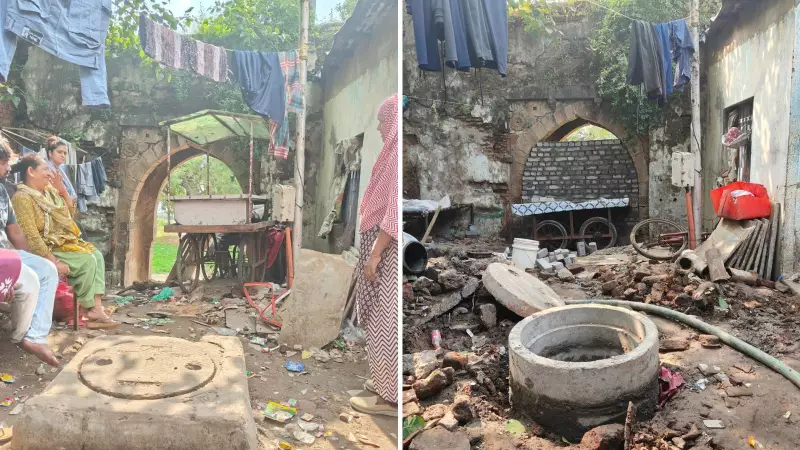
The Ahmedabad Municipal Corporation (AMC) has permanently sealed an ancient, unnamed doorway in the historic Bhadra Fort, severing a vital connection between a riverside slum and the Sabarmati River. The action, carried out on Saturday, involves walling up the pedestrian passage on the fort's north-western end, which is over 600 years old.
Heritage Project and Sewage Issues Prompt Closure
Officials stated the move is part of a larger initiative to develop a heritage garden on the river's east bank, between Nehru Bridge and Ellisbridge. This garden area lies between the ancient city wall and the modern riverfront road. A key reason cited for sealing the doorway is a persistent sewage problem, with wastewater reportedly flowing into the new garden space. The AMC claims that illegal constructions from the Chand Shaid Dargah na Chhapra slum have encroached upon and blocked a sewage line, exacerbating the issue.
Residents of the slum, who have used this doorway for generations to access the river, were served notices about partial demolitions on November 20. These notices targeted structures deemed illegal for blocking the sewage infrastructure. A senior AMC official explained the dilemma: while they are fixing the sewage system, encroachments on manholes and the line itself hinder proper service delivery.

Living Heritage Lost and Community Impact
The sealing has a dual consequence: it physically cuts off the slum community's direct access to the Sabarmati River and also hides the settlement from the view of visitors to the upcoming heritage garden. Residents of the Jamalpur ward have additionally complained that the sewage malfunctions cause wastewater to overflow into their homes regularly, particularly in the mornings.
The decision has sparked controversy among heritage advocates. Activist Munaf Ahmed, known for previous legal actions to protect monuments, has filed complaints with the Chief Minister’s Office, the Municipal Commissioner, and the city’s Heritage Department. He argues that the doorway, though not formally named in archives, represents centuries of continuous public use and is part of Ahmedabad's living heritage. He criticized the Heritage Department as a "toothless tiger" for failing to protect such sites.
Historical Context and Official Response
The ancient fort wall stretches for approximately 800 metres along the Sabarmati's east bank. Deputy Municipal Commissioner (Heritage) Ramya Kumar Bhatt confirmed the sealing, reiterating that the focus is on resolving the sewage issue. Historically, identifying the doorway is complex. While an 1879 gazetteer mentions a "Baradari Darwaza" in a similar location, historians suggest this referred to a pavilion that is now gone. Other historical sources, like Professor M S Commissariat's work, note different passageways in the area.
The controversy first gained public attention after a report by The Indian Express on October 13, where residents protested the proposed closure. The AMC's subsequent notice and final action highlight the ongoing tension between urban development, heritage conservation, and the rights of marginalized communities in the city, which recently marked 614 years since its founding by Sultan Ahmed Shah I in 1411.