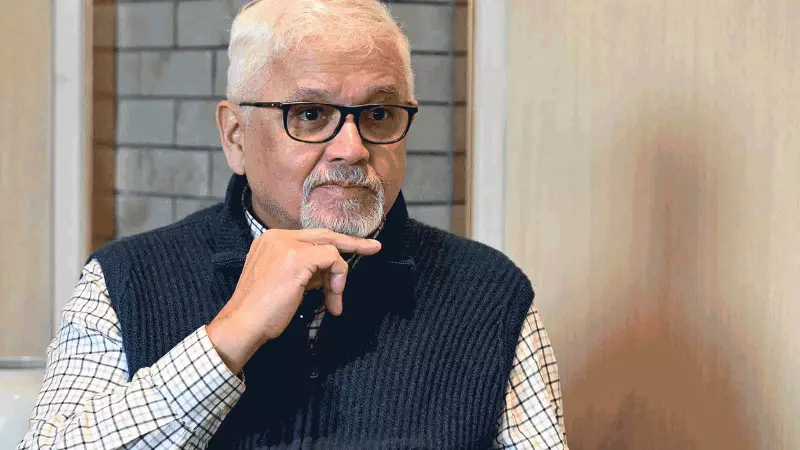
During a recent visit to India, celebrated author Amitav Ghosh shared his nuanced perspectives on a range of topics, from the global Indian community to the politics of climate change. The conversation, held with Vikas Singh and Saikat Dasgupta on January 10, 2026, offered a deep dive into the themes surrounding his latest literary work, Ghost Eye.
Reassessing the Diaspora Narrative
Amitav Ghosh presented a thought-provoking view on the experiences of Indians living abroad. He suggested that the challenges faced by the Indian diaspora are often 'overinterpreted'. To illustrate his point, he highlighted the remarkable political journey of Zohran, whom he described as 'the most astonishing political phenomenon'. Ghosh pointed to the election of an Indian-origin mayor of New York as a powerful example of the deepening ties that connect Indian and American societies.
Climate Denial and the Petro-Dollar Complex
Shifting to global environmental politics, Ghosh offered a critical analysis of Donald Trump's climate denialism. He framed it not merely as a political stance but as 'the last stand of the petro-dollar complex'. This perspective links the rejection of climate science directly to the economic interests entrenched in the global fossil fuel economy. Furthermore, Ghosh challenged a purely materialist worldview, stating his belief that 'the idea that science tells us everything about the world is ridiculous'.

The Enduring Allure of Calcutta
When reflecting on his roots and the city's unique character, Ghosh attributed Calcutta's great pull to its inherent 'contradictoriness'. This quality, he implied, is a source of the city's vibrant culture and intellectual depth, making it a continual muse for art and literature.
The wide-ranging discussion during his India tour underscores Ghosh's role as a keen observer of cross-cultural currents and global power structures. His insights move beyond simple narratives, encouraging a more layered understanding of identity, power, and place in the contemporary world.