Ancient Church Uncovered Near Zoroastrian Fort in Iraqi Kurdistan
Archaeologists have made a groundbreaking discovery in the Gird-î Kazhaw area of Iraqi Kurdistan, unearthing a church dating back to the 5th or 6th century AD. This significant find, located adjacent to a Sasanian fortification, was conducted by researchers from Goethe University in Frankfurt and Erlangen-Nuremberg University. Their findings, detailed in a study from Goethe University Frankfurt, offer compelling evidence for religious pluralism during this historical period, challenging previous assumptions about interfaith conflicts.
Evidence of Coexistence Between Christians and Zoroastrians
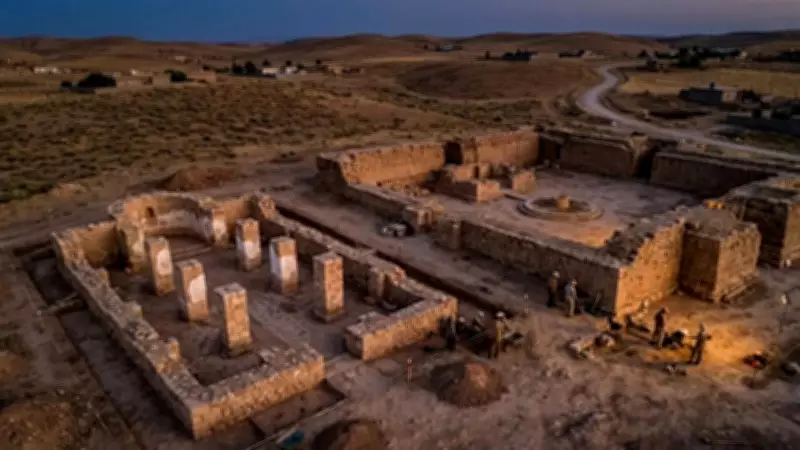
The proximity of this Christian worship site to a Zoroastrian structure suggests that Christians and Zoroastrians may have coexisted more harmoniously than previously thought. Historians had often posited that these communities were at odds, but the excavation reveals a different narrative. The site includes three nacelle pillars from the church and numerous pottery shards adorned with Maltese crosses, providing a vivid glimpse into how diverse religious groups lived together in rural Mesopotamia under Sasanian rule.
This discovery underscores the complex social dynamics of the era, indicating that religious tolerance was more prevalent in these rural settlements than in imperial centers. The church's location next to the fortress highlights an area where early Christians and Zoroastrians shared space, fostering a multicultural environment that supported economic and cultural prosperity.

Architectural and Artifactual Insights into Early Christian Worship
The research team has identified the structure as a church based on distinct archaeological features. Excavations have revealed five square pillars made from quarried stone, partially covered in white plaster, and an architectural plan indicating a three-nave pattern. These elements align with early Christian church designs from northern Syria and Mesopotamia, confirming the site's religious purpose.
Additionally, the recovery of a pottery sherd decorated with a Maltese cross serves as definitive evidence of Christian liturgical activity. This artifact, combined with the architectural remains, suggests that the site was actively used for worship, contributing to our understanding of Christian practices in the region during the 5th and 6th centuries.
Tracing Cultural Evolution at Gird-î Kazhaw
This study is part of a broader project investigating rural communities on the Shahrizor Plain, aiming to reconstruct the daily lives of workers, farmers, and religious followers outside royal capitals. The church and Sasanian fortress were later overlain by an Islamic burial site, illustrating the region's cultural and religious evolution over millennia.
Future research will employ archaeometry, including archeobotanical and forensic anthropology techniques, to explore aspects such as health, nutrition, and infrastructure of the ancient inhabitants. This multidisciplinary approach promises to deepen our knowledge of the social foundations that underpinned economic growth in rural Mesopotamia.
In summary, the discovery of this ancient church near a Zoroastrian fort in Iraqi Kurdistan not only sheds light on religious pluralism but also enriches our understanding of rural life during the Sasanian period. It highlights the importance of archaeological studies in uncovering the nuanced histories of coexistence and cultural exchange.