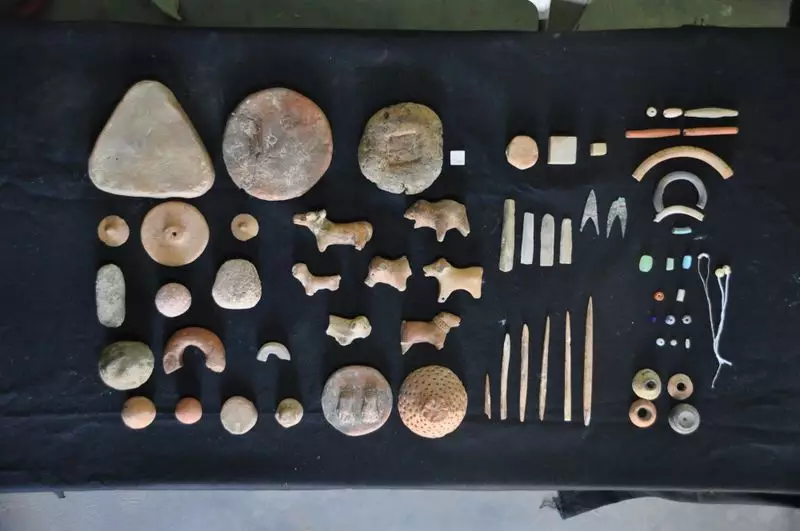
In a remarkable fusion of ancient heritage and modern craftsmanship, a group of skilled artisans from Khambhat, Gujarat, has successfully revived a 5000-year-old bead-making technique at the historic site of Rakhigarhi in Haryana. This initiative creates a tangible, living link to the Indus Valley Civilization, one of the world's oldest urban cultures.
Bridging Millennia with Stone and Skill
The project was formally launched on a significant date, April 18, 2024, at Rakhigarhi, which is recognized as the largest Harappan site in the Indian subcontinent. The driving force behind this revival is the Haryana government's archaeology and museums department, led by its director, Dr. Banani Bhattacharyya. The department invited seven master craftsmen from Khambhat, a town historically renowned for its lapidary work, to demonstrate and recreate the precise methods used by Harappan artisans millennia ago.
Using raw materials like agate and carnelian, the Khambhat artisans employed traditional tools and techniques to fashion beads, pendants, and seals that are exact replicas of those unearthed at Rakhigarhi and other Harappan sites. This was not a mere demonstration; it was a powerful act of cultural continuity. Dr. Bhattacharyya emphasized that the goal was to establish a direct "living link" between the ancient past and the present, allowing visitors to witness the creation process firsthand.

Rakhigarhi: A Portal to the Harappan World
The choice of Rakhigarhi as the venue is deeply symbolic. Spread across 550 hectares, it is a site of immense archaeological importance. Recent excavations have revealed a wealth of structures, including:
- Granaries, indicating advanced agricultural storage and planning.
- Drainage systems, showcasing sophisticated urban infrastructure.
- Streets and platforms, reflecting organized city layout.
- A variety of artifacts like seals, pots, and tools.
However, some of the most captivating finds have been the beads made from semi-precious stones. The revival project directly addresses this aspect of Harappan material culture, bringing it back to life at the very place where it once flourished.
Cultural Revival and Future Implications
The presence of the Khambhat artisans at Rakhigarhi does more than just showcase a dead craft; it injects it with new vitality. Officials and archaeologists present at the event, including Additional Chief Secretary Vijayendra Kumar, noted that this initiative helps the public visualize and connect with the daily lives and technological prowess of the Harappan people. It transforms abstract historical knowledge into a sensory, observable experience.
This project has significant implications beyond archaeology. It highlights:
- The survival of traditional knowledge systems in places like Khambhat.
- The potential for heritage-based skill development and tourism at archaeological sites.
- A innovative model for making history engaging and accessible to all.
By successfully recreating the intricate beadwork, the Khambhat craftsmen have not only paid homage to their ancient predecessors but have also secured a role for traditional artisans in the narrative of India's cultural heritage. The event at Rakhigarhi marks a pioneering step in experiential archaeology, where the past is not just studied but is respectfully and skillfully reborn.