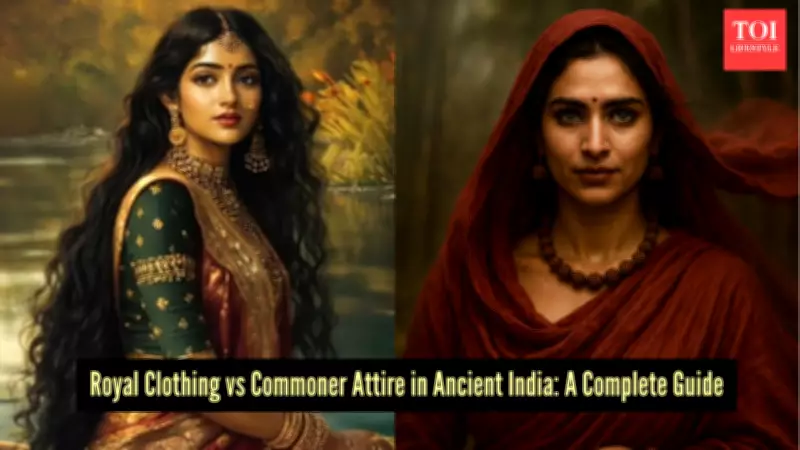
Ancient Indian Attire: The Stark Divide Between Royal and Commoner Clothing
Clothing in ancient India was far more than mere fabric; it served as a powerful visual language that communicated an individual's position within the complex social hierarchy. From the opulent silks reserved for royalty to the humble cotton worn by commoners, prescribed dress codes meticulously reflected one's societal standing, wealth, caste, occupation, and regional identity. This article delves into the distinct characteristics that set ancient Indian royal and commoner clothing apart, revealing a world where attire was intrinsically linked to power and daily life.
The Fabric and Material: A Tale of Luxury Versus Utility
The choice of fabric presented the most immediate and visible distinction between the elite and the masses. Royalty adorned themselves in ensembles crafted from exquisite, often imported, materials. Fine silks such as kauseya, delicate muslin, and richly woven brocades were hallmarks of aristocratic dress. During the prosperous Maurya and Gupta periods, trade routes facilitated the import of luxurious fabrics, with the use of zari (gold thread) and perfumed textiles becoming prevalent among the nobility.
In stark contrast, commoner clothing prioritized functionality and durability. Their attire typically featured simple, straightforward silhouettes made from locally sourced, sturdy cotton. These garments employed minimal dyes, focusing on practicality for labor and daily chores in India's often hot climate, rather than on display or extravagance.

Embroidery and Detailing: Opulence Meets Simplicity
Royal garments were rarely, if ever, plain. They were distinguished by lavish ornamentation that signified wealth and status. Heavy embroidery using gold and silver threads, intricate borders with symbolic motifs, and embellishments with precious gemstones were common. Decorative sashes, statement waistbands, and elaborate accessories further enhanced the grandeur of royal attire, turning clothing into a canvas of art and affluence.
Conversely, the clothing of commoners exhibited no such lavish detailing. Their attire was characterized by its simplicity, with plain fabrics and basic construction. Any decoration was minimal—perhaps simple hemline stitches or rudimentary prints—and typically reserved only for special occasions or festival wear, highlighting the vast economic and social gap.
Color Symbolism: Vibrant Hues Versus Earthy Tones
Color played a profound and symbolic role in ancient Indian clothing, serving as another clear differentiator. Royalty favored deep, vibrant, and saturated colors produced from expensive natural dyes. Shades of deep red, saffron, gold, and royal blue—derived from sources like indigo and madder—were predominant, as these hues were associated with power, prosperity, and divine connection.
For the common man and woman, the palette was markedly different. Their clothing featured muted, earthy tones such as off-whites, browns, and light tans. Often, garments were made from undyed or lightly dyed cotton, reflecting not only limited access to costly dyes but also a lifestyle centered on practicality and blending with the natural environment.
Structure and Layering: Grandeur Versus Mobility
The structure and layering of garments further emphasized the divide. Ancient Indian clothing was largely unstitched, relying on draping techniques. Royal ensembles were complex and voluminous, designed to impress. A typical royal outfit might include a finely pleated dhoti or antariya (lower garment), an uttariya (upper drape) made of silk, and multiple layers of stoles, scarves, and sashes to create an aura of majesty and presence. While stitched garments became more common in later periods, the emphasis remained on grandeur.
Commoner attire, however, prioritized mobility, comfort, and suitability for the climate. For women, this often meant saree-style drapes that were calf-length for ease of movement. Men typically wore basic dhotis. Layering was minimal—often just a short upper cloth—to accommodate labor and the heat, showcasing a design philosophy centered on necessity rather than display.

In summary, ancient Indian clothing was a definitive marker of social stratification. Royal attire, with its luxurious silks, intricate embroidery, vibrant colors, and elaborate layering, was a testament to power, wealth, and status. Commoner clothing, made from simple cotton, featuring minimal decoration, earthy colors, and functional designs, reflected a life of utility and modesty. This sartorial divide not only distinguished classes but also wove the fabric of societal identity into the very threads worn by the people.