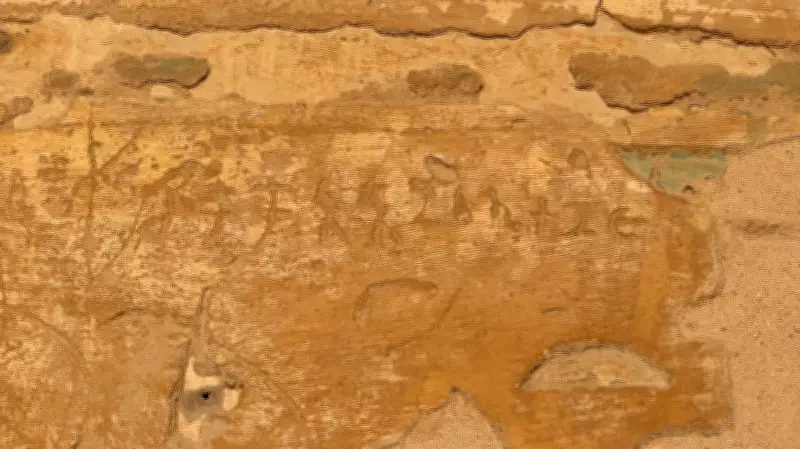
Ancient Scripts in Egyptian Tombs Reveal 2,000-Year-Old India Trade Links
Archaeologists have made a groundbreaking discovery in Egypt, unearthing thirty ancient inscriptions that shed light on historical trade connections with the Indian subcontinent. These inscriptions, found in six rock-cut tombs, include twenty written in Tamili and ten in Sanskrit and Prakrit, indicating that people from various regions of India were actively visiting Egypt around two thousand years ago.
Discovery of Inscriptions in Egyptian Tombs
The inscriptions were uncovered during recent excavations in Egypt, providing tangible evidence of long-distance trade and cultural exchange. The presence of multiple Indian scripts suggests a diverse group of travelers or traders from the subcontinent, highlighting the complexity of ancient maritime and overland routes.
This finding underscores the historical depth of India-Egypt relations, which date back to antiquity. The inscriptions are not only linguistic artifacts but also markers of economic and social interactions between these two ancient civilizations.

Implications for Historical Trade Networks
The discovery implies that trade between India and Egypt was more extensive than previously thought. The use of Tamili, Sanskrit, and Prakrit scripts points to involvement from different linguistic and cultural groups within India, such as those from Tamil Nadu and other regions.
- Twenty inscriptions in Tamili suggest strong connections with South India.
- Ten inscriptions in Sanskrit and Prakrit indicate links with North and Central India.
- This diversity reflects a broad network of trade and travel across the Indian Ocean and beyond.
These inscriptions serve as a testament to the vibrant exchange of goods, ideas, and people in ancient times, challenging earlier assumptions about the isolation of these regions. They provide valuable insights into the early globalization that characterized the ancient world.
Archaeological and Cultural Significance
The rock-cut tombs where the inscriptions were found add to the archaeological importance of the site. Such discoveries help reconstruct historical timelines and understand the spread of languages and scripts.
- The inscriptions may offer clues about the types of goods traded, such as spices, textiles, or precious stones.
- They could also reveal information about religious or cultural practices exchanged between India and Egypt.
- This finding contributes to ongoing research by UNESCO and other organizations on world heritage and ancient civilizations.
As research continues, these inscriptions are expected to provide further details on the nature of India-Egypt interactions, enriching our knowledge of ancient trade routes and cultural diplomacy.