Animals That Laugh and Giggle Like Us
We often see animals laughing in cartoons and movies. While those scenes are exaggerated, real animals do produce sounds remarkably similar to human laughter. These vocalizations are not just random noises. They serve important purposes in animal societies.
Scientific studies show these laugh-like sounds help animals signal friendliness, reduce tension, and strengthen social bonds. They reveal complex emotional lives in the animal kingdom. Researchers analyze these sounds to understand how animals maintain group harmony and express positive emotions.
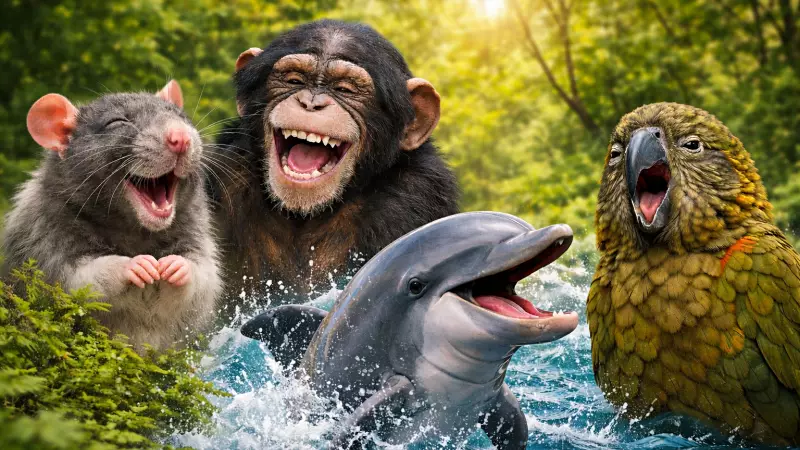
Here are six animals whose laughter, giggles, and chuckles sound surprisingly like our own.

1. Chimpanzees
Chimpanzees make breathy, panting sounds during play fights and tickling sessions. These vocalizations closely resemble human laughter. They help keep playful interactions from turning aggressive. The sounds signal enjoyment and fun among group members.
Scientists consider chimpanzee laughter an evolutionary precursor to human laughter. It shows how social bonding through vocal expressions has deep roots in our primate ancestors.
2. Bonobos
Bonobos are known for their peaceful and cooperative behavior. They produce soft giggles and high-pitched chuckles during social play. These laugh-like sounds help strengthen social bonds within groups.
The vocalizations reinforce friendly interactions and signal trust among bonobos. They create positive social atmospheres that support the species' famously harmonious social structure.
3. Gorillas
Gorillas produce rhythmic panting sounds during wrestling, chasing, and play fighting. This form of "laughter" communicates fun and enjoyment, especially among young gorillas. It helps maintain harmony within troops.
These vocalizations show that even large, powerful animals use laughter-like sounds to facilitate social play. They demonstrate how play behavior serves important social functions across primate species.
4. Dolphins
Dolphins emit rapid squeaks, whistles, and playful vocalizations during social interactions. Researchers describe these sounds as laugh-like expressions of joy. They reflect dolphins' high intelligence and complex emotional lives.
Dolphins also make open-mouth facial expressions during play that function similarly to human smiles. These visual and auditory signals work together to facilitate social bonding in dolphin pods.
5. Kea Parrots
Kea parrots of New Zealand have a unique play call that sounds similar to human laughter. These intelligent birds use their beaks and feet with remarkable dexterity. When one kea makes this sound, it often triggers others to join in.
The laughter-like call becomes a social cue that encourages playful group interactions. It demonstrates how vocalizations can coordinate social behavior even in bird species.
6. Rats
Rats produce high-pitched ultrasonic chirps when they play or are gently tickled. Humans usually cannot hear these sounds without special equipment, but researchers consider them a form of laughter. The chirps are linked to joy, excitement, and social play.
Rats that make more of these chirps tend to be more playful and social. This shows that even small rodents have rich emotional lives and use vocalizations to express positive emotions.
The Science Behind Animal Laughter
Animal laughter serves multiple important functions in social species. These vocalizations help animals establish and maintain social bonds. They signal positive intentions during play and reduce the risk of misunderstandings turning into conflicts.
Researchers study animal laughter to understand the evolution of human social behavior. The similarities between human and animal laughter suggest shared evolutionary origins. They reveal how vocal expressions of joy have developed across different species.
These findings challenge old assumptions about animal emotions. They show that many animals experience and express joy in ways we can recognize and study scientifically.