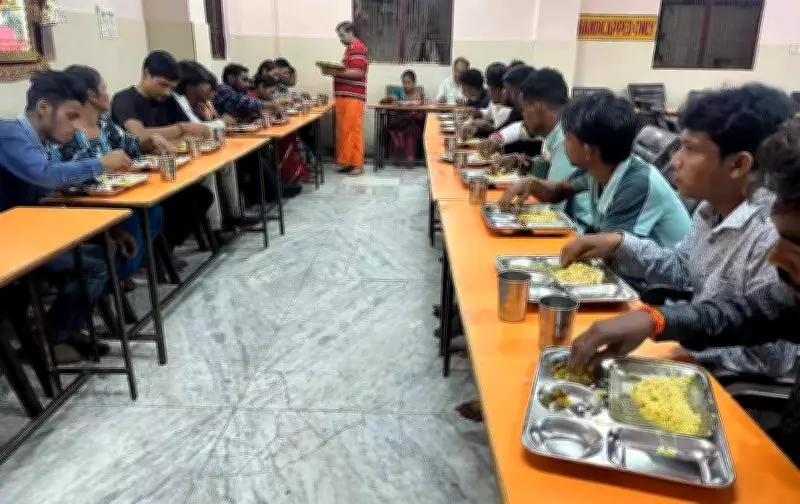
Historic Annapurna Temple Kitchens Resume Operations After LPG Shortage
The iconic 300-year-old Annapurna temple in Varanasi witnessed the reopening of its sacred 'Annakshetras' (food courts) on Sunday, following an unprecedented shutdown caused by an LPG shortage. This marked the first time in the temple's long history that its kitchens had ceased operations, temporarily halting the distribution of prasad to thousands of pilgrims.
Administrative Intervention Restores Prasad Services
The district administration took swift action upon learning of the crisis, arranging LPG refills late Saturday and early Sunday morning. Temple mahant Shankar Giri confirmed that both kitchen units, which have the capacity to serve prasad to approximately 25,000 pilgrims daily, are now functioning again, though not yet at full capacity.
District Magistrate Satyendra Kumar emphasized that timely communication could have prevented the closure. "If the temple had alerted us earlier, we would have arranged refills promptly to avoid disrupting the Annakshetras," he stated. Kumar revealed that authorities have now instructed all religious institutions, educational facilities, hospitals, and care homes to keep officials informed of their LPG requirements.

Historical Context and Pilgrim Impact
Remarkably, these kitchens continued operating even during the strict COVID-19 lockdowns of 2020 and 2021, making Saturday's closure particularly notable. Before shutting down on Saturday morning, the kitchens managed to serve around 3,000 pilgrims. However, many seers traveling to Ayodhya reportedly missed out on the traditional prasad due to the unexpected interruption.
Long-Term Solutions and Infrastructure Development
In response to the crisis, authorities are accelerating efforts to provide more reliable energy solutions. Giri confirmed that surveys for installing PNG (Piped Natural Gas) connections to both the Annakshetras and the temple-run school have been completed.
Uttar Pradesh Minister Ravindra Jaiswal announced that special camps are being organized at eight zonal offices across Varanasi to facilitate PNG connection applications. During an inspection at the Varanasi Municipal Corporation zonal office in Nadesar, Jaiswal emphasized the government's commitment to ensuring safe and affordable gas access for every household in the city.
Existing Gas Infrastructure and Future Plans
The city already boasts substantial gas infrastructure, including approximately 102 kilometers of steel pipeline for high-pressure supply that forms the backbone of Varanasi's main gas grid. Additionally, about 1,450 kilometers of plastic pipeline has been laid for low-pressure distribution to homes throughout the city and surrounding areas.
Jaiswal directed officials to complete gas connection processes within one week of receiving applications, urging maximum public participation in the scheme. GAIL officials provided helpline numbers (7268071339 and 9454535384) for addressing connection and supply-related complaints.
This incident highlights both the vulnerability of traditional energy systems and the ongoing transition toward more reliable infrastructure in one of India's most spiritually significant cities.