The Many Lives of Annie Besant: A Victorian Rebel's Journey to India
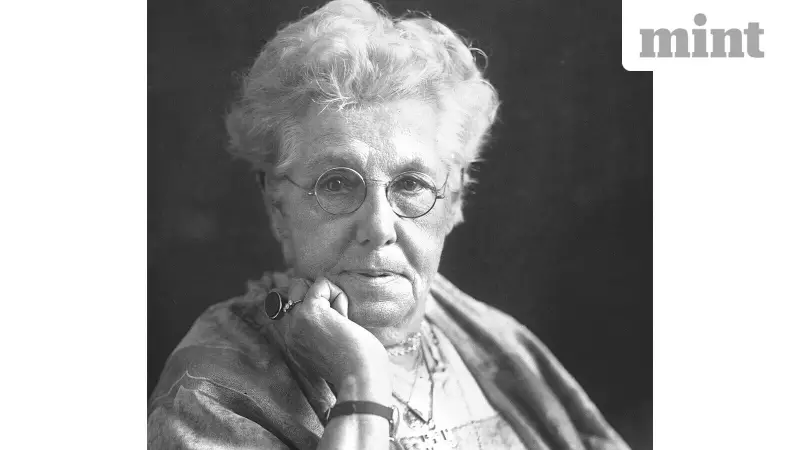
"We are a family of Theosophists." This statement echoed through my childhood. I always associated it with my gentle great-grandfather, a Theosophist himself. In family discussions, the term explained our liberal views, social conscience, and distance from rigid rituals. Annie Besant featured prominently in our stories because my aunt bore her name, like many girls of that era. So who was Annie Besant, this woman who appeared in both family lore and history textbooks?
A Biography of Reinvention
Clare Paterson's The Nine Lives of Annie Besant chronicles Besant's multiple transformations within her single lifetime from 1847 to 1933. The book does not explore past incarnations but rather her remarkable ability to reinvent herself repeatedly. Sometimes she changed to survive difficult circumstances. Other times she transformed despite them. Theosophy ultimately brought her to India, where her work with the Home Rule League became the final chapter of her extraordinary journey.
Early Struggles and Radical Beginnings
Annie Wood acquired her famous surname through a brief, abusive marriage to a clergyman in 1867. The union produced two children before she courageously left after six years, taking her daughter with her. She fought for several years to regain custody of her son. Her marriage collapsed partly due to her loss of Christian faith, which brought lasting stigma.

In her next phase, Besant emerged as a Freethinking pamphleteer and public speaker. She began her writing career during this period. She fearlessly addressed numerous topics, from atheism to women's rights. Her irrepressible nature made her a formidable voice.
One controversial subject she tackled was sex education—still viewed with suspicion today. Together with collaborator Charles Bradlaugh, she published and promoted a doctor's graphic birth control manual aimed at the general public. Her atheism, commitment to science, and secular views were scandalous enough. Her outspoken nature compounded the trouble. These actions cost her custody of her daughter and prevented her from earning a college degree.
Socialist Turn and Theosophical Conversion
In 1885, Besant attended a Fabian Society meeting, marking another rebirth. This event introduced her to socialist ideas and brought George Bernard Shaw into her life. While others saw contradiction with her past work, she viewed Fabian Socialism as a natural evolution. She declared, "I am a Socialist... because I am a believer in Evolution."
Her socialist credentials solidified in 1887 when she defended protestors arrested at a London trade union rally. She noted that the magistrate seemed "too astonished by my profound courtesy and calm assurance to remember that I had no right to be here..." By joining the Fabians, Besant brought considerable celebrity to every movement she embraced, including trade unionism.
Paterson addresses Besant's relationships with the many men in her life without prurient speculation. She wisely observes, "Judgements about people's love lives are tricky in retrospect, with very little evidence to go on." While Besant approached relationships with characteristic intensity, her intellectual pursuits always drove her transformations, not romantic attachments.
Embracing Theosophy and Indian Connections
The late 1880s introduced Besant to Theosophy. The turn of the century witnessed emerging socialist, suffragist, labor, and peace movements alongside growing interest in occult and spiritual matters. Initially skeptical, Besant found herself drawn to theosophy and sought out founder Madame Blavatsky. From that moment, her story intertwined with the Theosophical Society, though she maintained other interests.
Despite her traumatic beginnings, this biography reveals someone who quickly rose to prominence through ability, strategic positioning, and fortunate timing. Barely a year passed between her first meeting with Blavatsky in 1889 and her assumption of leadership at Blavatsky Lodge in London. Paterson writes, "Annie moved on up the line like a steam train."
During this period, M.K. Gandhi attended her talks in London. Future Indian leaders Sri Prakasa and Jawaharlal Nehru heard her speak on Theosophy as children.

Indian Sojourn and Controversial Guardianship
At age 46, Besant moved to the Theosophical Society headquarters in Adyar, present-day Chennai, in 1893. She had already achieved more than most people accomplish in a lifetime. Theosophical writings, including her own, had predicted a new messiah—Jiddu Krishnamurti.
Besant assumed the role of Krishnamurti's spiritual and temporal mother, managing every aspect of his and his brother's lives. She even took them to England for education. Their father initially agreed, hoping for quality schooling. However, when he saw his son promoted as a spiritual leader, he sued Besant for custody. One allegation involved prominent Theosophical Society member Charles Leadbeater's reputation as a child abuser.
In 1906, authorities brought child abuse charges against Leadbeater, who taught at the Adyar campus. The accusation claimed he taught masturbation to young boys. Besant responded equivocally, arranging a compromise where Leadbeater simply relocated. Paterson acknowledges that today this would be seen as enabling an abuser. She notes that Besant valued sex education but chose to ignore questions about Leadbeater's true actions or the power imbalance with his students.
Political Engagement and Home Rule
Paterson identifies Besant's ninth life as her involvement with Indian politics. She began as a Theosophy preacher, urging Indians to reclaim their heritage. This approach resonated with certain strands of Indian nationalism emerging from social reform movements like the Arya Samaj.
In 1913, she felt spiritually called to Indian political work. During World War I, she championed greater self-government through the Home Rule League, founded in 1916. Theosophical Society and Home Rule League memberships grew together and often overlapped.
The colonial government considered her threatening enough to place her under house arrest for several months in 1917. In solidarity, the Indian National Congress elected her president that year, making her the first woman to hold the office.
Conservative Positions and Growing Irrelevance
In this final phase, the fiery English radical held surprisingly conservative views about India. Though she had once criticized the Empire as a staunch republican, she came to see British rule as beneficial for Indians—provided they reclaimed pride in their heritage. She advocated devolution of power or dominion status rather than full independence.
Through actions suggesting she knew better, she gradually alienated initial admirers. When Gandhi's call for satyagraha and complete independence mobilized Indians, Besant yielded ground ungracefully, rendering herself somewhat irrelevant.
Paterson describes a 1916 event inaugurating Banaras Hindu University, organized by Besant with Gandhi as a speaker. Gandhi's speech criticized Indians' use of English, Western fashions, ornate dressing, and colonial bureaucracy. The relationship between the two leaders never fully recovered.
Gandhi's remarks highlighted Besant's major limitation in Indian politics—she spoke English to English speakers. Her definition of Indian heritage, learned through Theosophy's Brahminical textual knowledge, remained distant from most Indians' everyday beliefs and experiences. Her audience consisted mainly of upper-caste or dominant-caste professionals and landowners. She attracted them first to Theosophy, then to the Home Rule League, but her reach stopped where Gandhi's—and later B.R. Ambedkar's—began.
A Complex Legacy
Each chapter documents the taunts and criticisms Besant faced, making her experience familiar to women in today's public sphere. She possessed a lively intellect and followed its guidance with uncommon self-confidence. Unlike Gandhi, whose transparency developed gradually, Besant's confidence stemmed from an unbounded belief in her own correctness.
We encounter someone who learned to prioritize her interests ruthlessly—whether intellectual, political, or spiritual. In contemporary terms, hers is a survivor's story. While we applaud survival, we often judge female icons for doing what it takes to survive and thrive. For Besant, this meant changing course, moving between networks, strategically seeking influence, and speaking with the entitlement typically expected of male leaders.