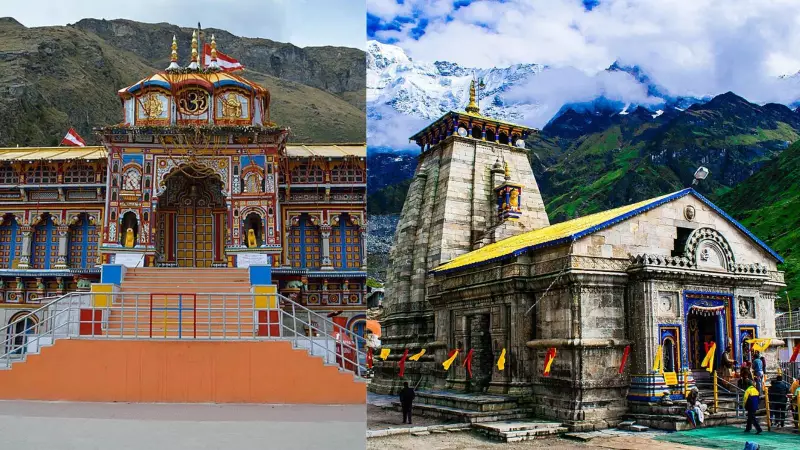
Badrinath-Kedarnath Temple Committee Considers Ban on Non-Hindus Amid Internal Disagreements
The temple committees overseeing the sacred Char Dham shrines in Uttarakhand are contemplating a significant move to restrict access to their premises, with the Badrinath-Kedarnath Temple Committee president, Hemant Dwivedi, announcing that a decision on banning the entry of non-Hindus will be passed at an upcoming board meeting. This proposal has ignited a wave of controversy and exposed internal divisions within the committee, as stakeholders express conflicting views on the matter.
Proposed Ban and Internal Conflicts
Hemant Dwivedi stated that the committee plans to convene a board meeting to pass a resolution prohibiting all non-Hindus from entering the temple areas. He emphasized that this move aligns with similar demands regarding non-Hindu access to the ghats in Haridwar, and the committee intends to discuss the issue with the state administration and the Chief Minister. However, this announcement has not been universally accepted within the committee.
A senior office-bearer of the board, who preferred to remain anonymous, revealed that no formal discussions have taken place on this topic. The next meeting, scheduled for February, is primarily focused on budget planning. The office-bearer criticized Dwivedi's statement, noting it was made without consulting the board or other stakeholders. He highlighted practical concerns, pointing out that many traders and laborers in the area are non-Hindus, and their exclusion could disrupt local economies. Additionally, he clarified that Sikhs, Jains, and Buddhists would not be affected, suggesting the ban should target non-Sanatanis instead.

Broader Implications and Political Reactions
The Temple Committee, established under the 1948 Act of Uttar Pradesh, is a government undertaking with 17 members, including public representatives and officials. Its decisions impact the administration of both Kedarnath and Badrinath temples, which are among the most visited pilgrimage sites in India. In 2025, these four Dhams recorded a footfall of 51 lakh visitors, with Kedarnath leading at 17.68 lakh and Badrinath at 16.6 lakh. The potential ban raises questions about its effect on international tourists and diverse visitor groups.
Dharmanand Semwal, chairman of the Shri Gangotri Dham Temple Committee, indicated that his board will also deliberate on a similar proposal, citing a general sentiment among residents to exclude those who disrespect the religion. He mentioned that Sikhs, who he noted originate from Hinduism, would not be barred, and any resolution would require administrative approval before implementation.
Politically, the proposal has drawn sharp criticism. Former chief minister and Congress leader Harish Rawat accused the BJP of communal polarization, arguing that Hinduism has historically been inclusive and that such bans contradict its open nature. He questioned the practicality of excluding non-Hindus, including potential state leaders. Senior Congress leader Suryakant Dhasmana labeled the move a distraction from real issues, pointing out constitutional rights to access public spaces and the challenges of barring international tourists.
Context and Future Steps
The debate occurs against a backdrop of existing restrictions, such as municipal bylaws in Har Ki Pauri, Haridwar, which limit non-Hindu entry. As the committee prepares for its February meeting, stakeholders are urged to engage in thorough discussions to balance religious sentiments with practical and constitutional considerations. The outcome could set a precedent for other religious sites in the region, making this a critical issue for Uttarakhand's cultural and social landscape.