Bengali Diaspora Authors Unite at Kolkata Book Fair to Preserve Cultural Heritage
The 49th International Kolkata Book Fair, which concluded on Tuesday, witnessed a remarkable gathering of authors representing the Bengali diaspora from across India. Among the hundreds of literary participants were Ajay and Chaitali Sanyal from Bihar's Purnia district, Biswajit Nag from Meghalaya, and Satyajit Chowdhury and Aparna Deb from Assam. These writers share a common mission beyond showcasing their works: they came to West Bengal's capital to amplify the voices of linguistic minorities and highlight the struggles faced by Bengali communities outside their home state.
A Platform for Diaspora Voices
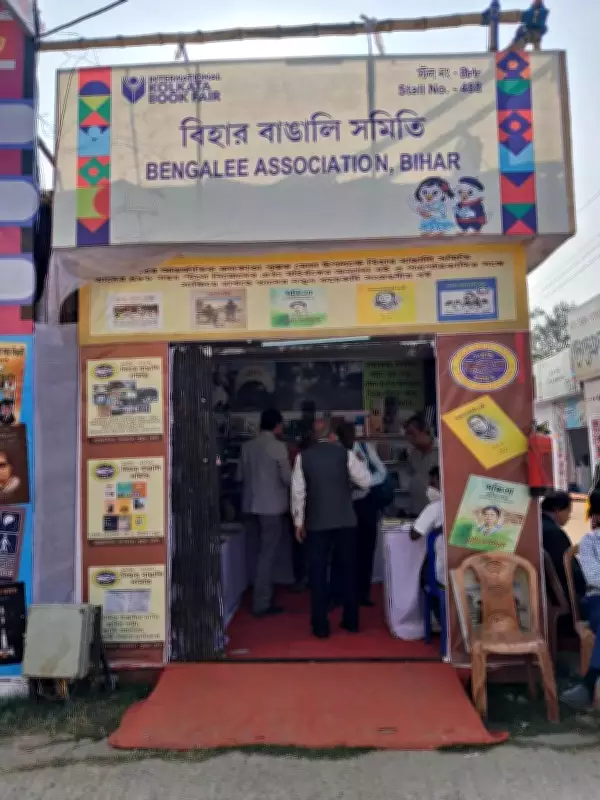
The Bengalee Association, Bihar, established in 1938 by Patna High Court barrister Priya Ranjan Das, brother of Deshbandhu Chittaranjan Das, provided this crucial platform. At their modest stall in the book fair, visitors could observe racks labeled with various states and Union territories, ranging from Andaman and Nicobar to Chhattisgarh. These displays featured works by local Bengali authors alongside magazines published by Bengali organizations throughout India.
Tanmay Bir, an associate professor of Bangla and honorary member of the association, highlighted several publications featured at the stall. These included 'Bakpratima', the sole Bengali magazine published from the Andaman Islands, alongside 'Madhyabalay' from Madhya Pradesh and 'Unmukta Uchchas' from Delhi. The collection also showcased books by authors not only from Bihar and other Hindi-speaking regions but also from the distant Northeast and Andaman & Nicobar Islands.

Combating Language Crisis Through Unity
Bir explained that since 2022, the association has utilized the Kolkata Book Fair as a platform to unite Bengali voices from different parts of the country. Their primary objective is to preserve the culture and mother tongue, which are rapidly diminishing among younger generations. "The Bengalee Association was established in the pre-partition era to fight for the rights of ethnic Bengalis living in Bihar for generations, after the state was carved out of Bengal in 1912. While advocating for rights, we also prioritized preserving our language and culture," he stated.
This preservation effort has become increasingly urgent due to what Bir describes as a language crisis exacerbated by modern challenges. The lack of Bengali education at the school level has resulted in younger generations residing outside West Bengal, including in Bihar, being unable to read Bangla. "We decided to bring together small Bengali associations and writers working across India, providing them a platform at the book fair to voice their concerns and showcase their works," Bir emphasized.
Building Connections and Raising Awareness
The association organized a discussion on the condition of Bangla language, culture, and education outside West Bengal, where academics exchanged ideas about issues faced by Bengali speakers as linguistic minorities. Bir noted that at least 50,000 Bengalis reside in nearly every Indian state, with only one or two exceptions. "We aim to connect with older Bengali associations that are losing prominence, such as the Bangiya Sahitya Parishats in Shillong and Bihar's Bhagalpur, to raise a united voice against the crisis and preserve our heritage," he declared.
For authors like Biswajit Nag and Aparna Deb, the fair offers more than just a venue to display their literary works to a broader audience. It provides an opportunity to witness firsthand the writings of their counterparts from other parts of India. "We come here every year with our books and connect with each other," shared Nag.
Deb highlighted the initiative's focus on attracting the new generation toward the language. "We blame ourselves as guardians for not encouraging our children enough to engage with Bangla. Limited resources also play a significant role in this challenge," she reflected.
Through this collective effort at the Kolkata Book Fair, the Bengali diaspora continues to strengthen its cultural bonds and advocate for the preservation of its linguistic heritage across India.