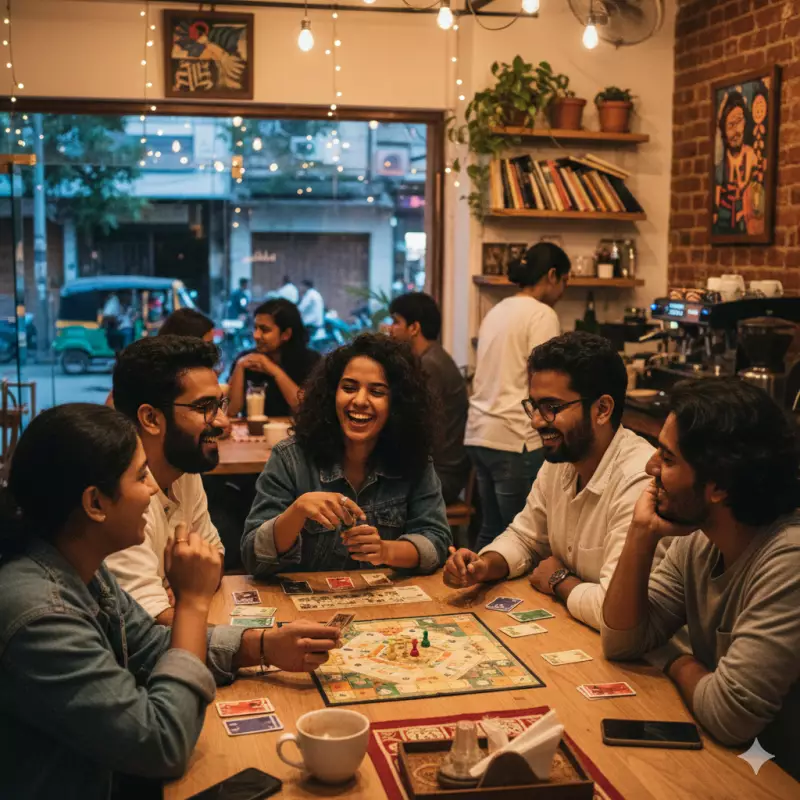
Weekends in India's tech capital are witnessing a quiet revolution, not on screens, but on tabletops. Across Bengaluru's bustling cafes, dedicated clubs, and lively community meet-ups, a select few board games have risen to prominence, becoming the city's preferred tools for connection and fun. Their power lies not merely in entertainment, but in their unique ability to dissolve social barriers, ignite conversations, and bring diverse groups of people together seamlessly.
The New Social Catalysts of Bengaluru
Mansi from The Boardgame Den, a prominent board game community in the city, observes a clear trend. "These days, large-group social games are the most popular," she says. She notes that many participants seek an escape from digital fatigue, aiming to de-stress, forge new friendships, and enjoy genuine interaction. "These games act as a platform for people of all types to interact without the pressure of small talk," Mansi explains. This shift highlights a growing desire for shared, analog experiences in a digitally saturated world.
Breaking the Ice with Words and Wit
Topping the list of favourites is Codenames. This word-based game thrives on teamwork and collective deduction. Players give one-word clues to help their teammates identify secret agents, sparking lively discussion, friendly debate, and inevitable laughter. Mansi points out that for newcomers, games with simple rules and high player interaction work best. "Games that last about 20–30 minutes and get everyone involved click immediately, and Codenames does exactly that, often turning strangers into teammates within minutes," she adds. Its success is a testament to its perfect design as a social icebreaker.

Another standout is Dixit, a game that swaps strategy for storytelling. Players use beautifully illustrated cards to give cryptic clues, leading to wildly different interpretations. The game's magic unfolds in the unexpected conversations and shared laughter that arise from these personal perspectives. Regular players note a change in motivation post-COVID: "People aren't just playing to win anymore. Many come because they want to meet people or try something different."
Strategy, Negotiation, and Lasting Bonds
For those craving more cerebral engagement, Catan remains a cornerstone of Bengaluru's board gaming culture. This game of resource management and settlement building mixes deep strategy with interpersonal negotiation. Trading resources and forming temporary alliances ensure constant, dynamic interaction around the table. Zulfi, a regular at city meetups, shares his perspective: "I usually play board games in two moods. One is for a challenge — games that rely less on luck and more on strategy. Another aspect is that I enjoy the feeling of gameplay slowly ramping up towards the endgame." Catan masterfully offers this balance.
The social depth of such games is profound. Nagashree, another participant, offers a powerful insight: "You can learn more about a person in one round of Catan than in three hours of small talk." This statement captures the essence of why these games have become so vital for community building.
Accessibility meets satisfaction in Ticket to Ride, a game that appeals to both novices and veterans. Its calm pace allows players to focus on planning their railway routes across a map, while still engaging in light table talk. Mansi emphasizes that variety is key to sustained interest. "What keeps people coming back week after week is variety. It isn't one or two games — people enjoy trying something different each time." Consequently, Ticket to Ride is a staple in rotating game libraries, especially for mixed-skill groups.
Making a significant mark in recent times is the classic tile-based game, Mahjong. It has carved a niche among Bengaluru players seeking thoughtful, skill-driven play that rewards memory, sharp observation, and patience. Reema, a recent convert to the game, describes its unique appeal: "It's strategic, social, and strangely meditative. You're connected to the table without needing to say much." Its rising popularity underscores the diverse tastes within the city's gaming community.

More Than Just a Game Night
The consistent popularity of these five games—Codenames, Dixit, Catan, Ticket to Ride, and Mahjong—reveals a broader social trend in Bengaluru. They have transcended their role as pastimes to become essential social infrastructure. In a fast-paced, often impersonal metropolis, they provide a structured yet relaxed environment for genuine human connection. They answer a clear need for offline interaction, creative thinking, and collaborative fun, proving that in the heart of India's Silicon Valley, the simplest tools for connection are sometimes a board, some pieces, and a willingness to play.