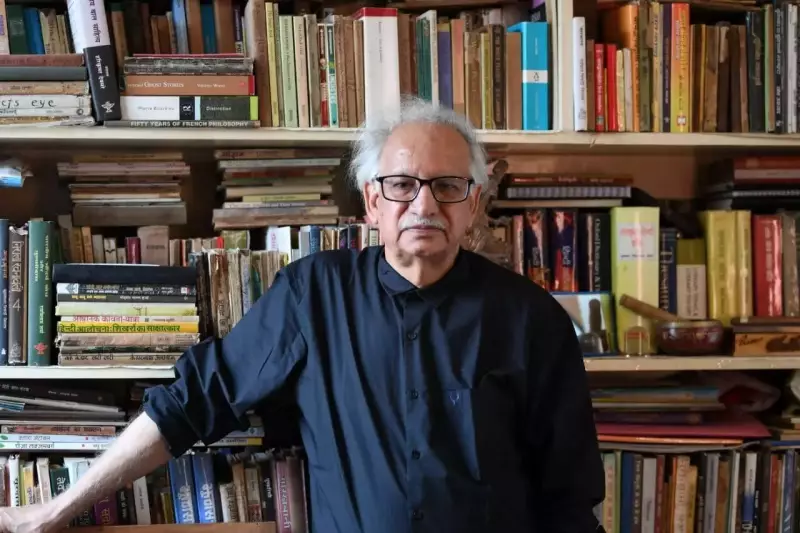
Eminent litterateur and Sahitya Akademi Award winner Arun Kamal recently shared his concerns with TOI's B K Mishra. He spoke openly about the alarming decline of Bihar's language academies. Kamal emphasized the urgent need to protect the state's rich literary heritage before it fades away completely.
The Current State of Language Academies
Arun Kamal expressed deep worry about existing language academies in Bihar. He stated that to the best of his knowledge, all academies established after Independence are now gasping for breath. Official apathy and neglect have pushed these institutions to the brink of collapse.
The state government originally set up several language academies in response to public demand. Their mission was clear: promote both national and regional languages. In those initial years, most academies did commendable work toward achieving their important objectives.

Examples of Early Success
Kamal highlighted specific examples of early achievements. The Bihar Rashtra Bhasha Parishad, initially headed by eminent litterateur Acharya Sheo Pujan Sahay, published some of the finest works by legendary authors.
These included Rahul Sankritayan, Hazari Prasad Dwivedi, Gopi Nath, and Moti Chand. These publications created a genuine literary wave that spread across the entire country. Unfortunately, Kamal noted with sadness that this institution is virtually defunct today.
Similarly, other academies made significant contributions in their early years. The Bihar Hindi Granth Academy, Maithili Academy, and even the Magahi Academy all published numerous informative and engaging books. They served as vital centers for literary activity and cultural preservation.
The Decline Begins
When did this worrying decline start? Arun Kamal pinpointed the 1990s as the turning point. Most language academies, along with other research institutions in Bihar, began their downward spiral during this period.
Why did this happen? Kamal explained that government priorities shifted dramatically. The focus moved away from art and culture toward commercially driven, money-making activities. This change in direction had devastating consequences for cultural institutions.
Budgets for academies and research institutions faced drastic cuts. Appointments of chairmen and directors became based on political considerations rather than scholarly merit. This erosion of professional standards accelerated the decline.
Impact on Present and Future Generations
Arun Kamal warned that the impact of languishing academies would be disastrous for youth and students. He observed that many budding writers have already migrated from Bihar to other states. They seek places where opportunities are better and literary activities receive greater support.
Over time, this exodus could lead to a cultural vacuum. People in Bihar might lose interest in literary and cultural pursuits altogether. The state risks severing its connection to a proud literary tradition that once flourished.
Government's Proposed Solution
The state government currently contemplates bringing all academies under one umbrella organization. The stated goal is to foster their growth through centralized management. Arun Kamal offered a clear and firm opinion on this approach.
He believes such a move would actually be detrimental to their growth and development. Instead of more consolidation, Kamal advocates for the opposite approach. All academies should be freed from direct government control and allowed to function independently.
A Path Forward
Kamal outlined specific recommendations for revival. Each academy must become truly autonomous. They should be headed by eminent scholars of the concerned language, not political appointees.
All sanctioned vacant posts need immediate filling with qualified individuals. Most importantly, academies require adequate government grants to ensure their unhindered growth. Only through genuine independence and proper funding can these institutions regain their former glory.
Arun Kamal's message is clear and urgent. Bihar stands at a cultural crossroads. The choices made today will determine whether future generations inherit a living literary tradition or merely its fading memory.