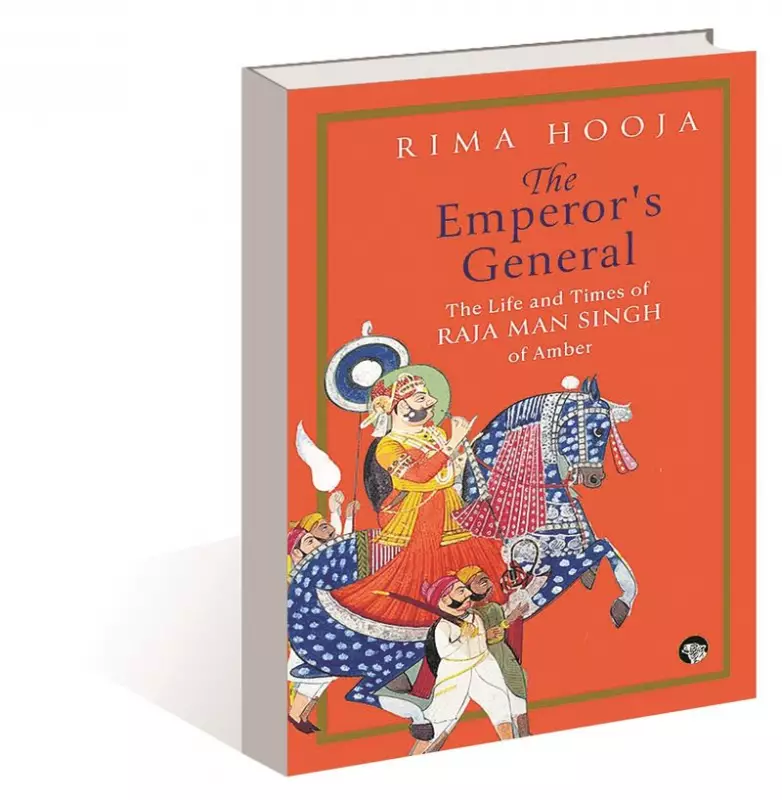
Historian and author Rima Hooja's latest work, 'The Emperor's General: The Paradox of Being a Rajput in the Mughal World', offers a profound exploration of identity, loyalty, and power in medieval India. Published by Penguin Viking, the book meticulously reconstructs the life and times of a Rajput noble navigating the complex corridors of the Mughal imperial court.
Unpacking the Central Paradox
The core of Hooja's narrative examines the inherent contradiction faced by Rajput chieftains who served the Mughal emperors. These individuals were simultaneously proud heirs to a martial Rajput lineage and trusted generals or administrators in a Persianate Islamic empire. The book asks a compelling question: How did these nobles reconcile their dual identities and often conflicting loyalties?
Through detailed archival research, Hooja moves beyond simplistic notions of 'collaboration' or 'resistance'. She paints a nuanced picture where service to the Mughal throne could coexist with a deep commitment to Rajput clan honour, personal ambition, and regional power dynamics. The narrative challenges the binary view of history, revealing a world of pragmatic alliances and sophisticated political manoeuvring.
A Deep Dive into Historical Context and Character
Hooja, a respected scholar with extensive work on Rajasthan's history, does not focus on a single, famous figure. Instead, she uses the archetype of 'the emperor's general' to analyse a broader social and political phenomenon. The book delves into the mechanisms of Mughal rule, particularly under emperors like Akbar, Jahangir, and Shah Jahan, who actively integrated Rajputs into the imperial framework.
The analysis covers key aspects of this integration:
- The Mansabdari System: The military-administrative ranking system that formalised Rajput entry into Mughal service, offering rank (mansab), land revenue (jagir), and prestige.
- Marital Alliances: The strategic practice of matrimonial relationships between the Mughal dynasty and Rajput royal houses, which created bonds of kinship alongside political subordination.
- Cultural Synthesis: The everyday realities of life where Rajput nobles adopted Mughal courtly etiquette, language, and dress, while often maintaining their own religious and social customs.
Hooja illustrates how Rajput generals balanced their duties. They led Mughal armies in distant campaigns while also managing their ancestral watan jagirs (homeland estates). They swore allegiance to the Padshah in Delhi or Agra but remained the leaders of their clans in Mewar, Marwar, or Amber.
Relevance and Scholarly Contribution
'The Emperor's General' is a significant contribution to the understanding of early modern Indian history. It provides a critical lens to view the composite culture of the Mughal era, where identities were fluid and multifaceted. Hooja's work is particularly relevant today, as it complicates nationalist narratives that often project rigid, monolithic identities onto the past.
The book underscores that the Rajput experience in the Mughal world was not one of uniform subjugation. It was a story of negotiation, adaptation, and sometimes, immense power. Some Rajput nobles, like Man Singh I of Amber, rose to become among the most powerful figures in the empire. Their success, however, was constantly shadowed by the question of whether they were ultimately seen as 'insiders' or 'outsiders' in the Mughal polity.
By focusing on this paradox, Rima Hooja offers readers a richer, more complex history. She moves the discussion from the battlefield to the court, the marriage chamber, and the administrative office, showing how the Mughal Empire functioned through a network of intricate, personal, and often contradictory relationships. This book is essential reading for anyone seeking to understand the true fabric of India's imperial past.