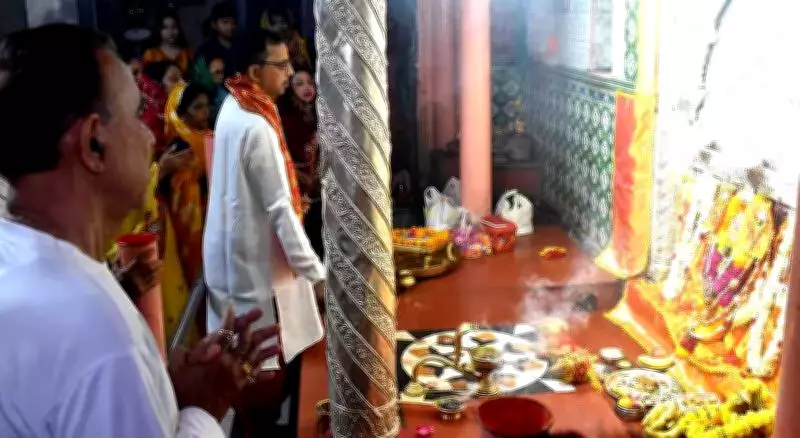
Prayagraj Temples Witness Massive Influx of Devotees on Chaitra Navratri Opening Day
The ancient city of Prayagraj came alive with vibrant spiritual energy on Thursday as the sacred festival of Chaitra Navratri commenced. Temples across the city experienced unprecedented footfall, with long queues of devotees forming from the early morning hours and continuing throughout the entire day.
Prominent Temples Experience Continuous Crowds
Several significant temples in Prayagraj remained packed with worshippers seeking blessings on this auspicious occasion. The Kalyani Devi temple, Alopibagh temple, and the revered Lalita Devi temple—recognized as one of the fifty-one sacred Shakti Peeths—were among the primary sites that attracted massive gatherings of faithful participants.
All religious establishments were beautifully adorned with colorful streamers and fresh floral decorations, creating a festive atmosphere throughout the city. The roads leading to these temples transformed into bustling marketplaces, with numerous temporary shops selling puja articles, ritual items, and idols of Goddess Durga.

Religious Scholar Explains Navratri Significance and Traditions
Noted religious scholar Dr. Amitabh Gour provided detailed insights into the profound meaning behind Chaitra Navratri celebrations. "Chaitra Navratri is dedicated to worshipping Goddess Durga in her nine divine forms," he explained. "This festival also marks the traditional beginning of the Hindu New Year, making it an especially significant period for spiritual renewal and devotion."
Dr. Gour elaborated on the distinctive color themes associated with each day of the nine-day festival. "Many devotees follow specific color codes throughout Navratri—yellow for Maa Shailputri on the first day, green for Maa Brahmacharini on the second day, grey for Maa Chandraghanta on the third day, and orange for Maa Kushmanda on the fourth day," he detailed.
The color progression continues with white for Maa Skandamata on the fifth day, red for Maa Katayani on the sixth day, royal blue for Maa Kalaratri on the seventh day, pink for Maa Mahagauri on the eighth day, and finally purple for Maa Siddhiadatri coinciding with Ram Navmi on the ninth day.
Devotional Practices and Community Participation
Dr. Gour further explained the etymological and spiritual foundations of Navratri. "The term 'Navratri' combines two Sanskrit words—'Nav' meaning nine and 'Ratri' meaning night," he noted. "During these nine sacred days, devotees worship nine different manifestations of Maa Durga, who represents the supreme feminine divine energy. Many followers observe strict fasts and perform special yajna rituals as part of their devotional practices."
Local resident Garima from Civil Lines shared her family's participation in the festivities. "My entire family visited the Kalyani Devi temple today to seek divine blessings," she said. "We have established a kalash at our home as part of our Navratri rituals and have also planted barley grains. Our family worships all nine forms of the goddess throughout these nine sacred days."
Economic and Logistical Aspects of the Celebrations
The festival generated substantial economic activity throughout Prayagraj. Restaurants and sweet shops reported excellent business, offering special Navratri thalis and fasting-friendly snacks to accommodate devotees observing religious fasts. Food establishments catering to those following traditional dietary restrictions during the festival experienced particularly high demand.
Security Measures and Traffic Management
Authorities implemented comprehensive security arrangements to manage the large gatherings. Officials from the Prayagraj Commissionerate of Police conducted thorough reviews of security protocols and crowd management strategies at all major temples. Police personnel were strategically deployed at static locations to ensure orderly conduct and public safety.

Traffic congestion became a significant challenge in certain areas. The Phaphamau bridge on the Prayagraj-Lucknow highway experienced severe traffic jams lasting over an hour as numerous devotees traveled to Sangam for holy dips in the Ganges River. Additional police forces had to be mobilized to clear the route and restore normal traffic flow.
The simultaneous convergence of pilgrims at multiple religious sites created complex logistical challenges that required coordinated efforts between religious organizations, municipal authorities, and law enforcement agencies to ensure the celebrations proceeded smoothly and safely for all participants.