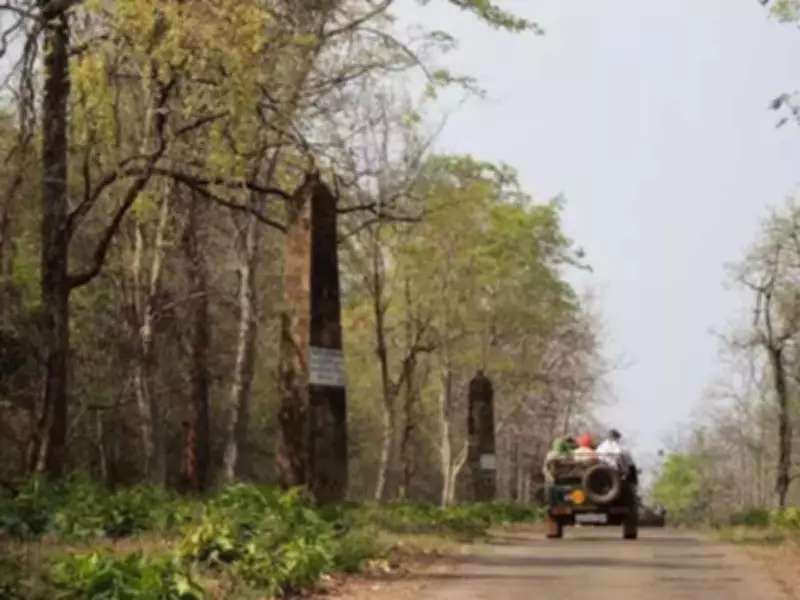
Chandrapur's Historic Pillars May Be Bhonsle Era, Not British: New Study
New archaeological findings by geologist and archaeologist Professor Suresh Chopane are challenging long-held historical records about a series of stone and brick pillars lining the historic Chandrapur-Nagpur forest route through Tadoba. According to his research, these structures likely date back to the Bhonsle era rather than the British period as officially documented in the Chandrapur Gazetteer.
Navigational Markers Through Dense Forests
Professor Chopane asserts that these pillars served as crucial navigational markers guiding travelers through dense forest stretches between Chandrapur and Nagpur. While many have been lost over time, a significant number still survive in the Tadoba region. He has identified distinct construction patterns that provide important clues about their origins.
Construction patterns reveal important details:

- Sandstone pillars between Chandrapur and Tadoba lake
- Brick structures further towards Nagpur
- A unique U-shaped stone feature atop several pillars, likely used to indicate direction or assist travelers in forest conditions
Questioning British Attribution
The researcher points to a significant absence in historical records that challenges the British attribution. "There is no evidence in official reports, financial records, or the British-era Gazetteer that the British built these markers," Professor Chopane states emphatically. This is particularly notable given the British administration's reputation for detailed documentation of infrastructure projects.
The study places the construction of these pillars between 1751 and 1853, during the rule of the Bhonsle dynasty. Installed at intervals of roughly 100 metres in dense forest areas, they ensured route continuity across the Chandrapur-Tadoba-Chimur-Umred-Nagpur corridor. Today, only 35 stone and nine brick pillars remain in Tadoba, though historical evidence suggests hundreds originally existed.
Rejecting Alternative Theories
Professor Chopane also rejects claims linking the structures to the Gond period, highlighting that Gond rulers neither used this route extensively nor employed brick in such constructions. In contrast, the Bhonsles actively developed trade and administrative links between Nagpur and Chandrapur, necessitating a reliable route through challenging forest terrain.
Historical context provides important perspective: Following their takeover in 1854, the British are believed to have improved only select stretches up to Tadoba lake and constructed rest houses, without extending the route further. According to available records, they constructed only two major roads connecting Chandrapur — one via Warora and another via Mul-Brahmapuri. There is no record of a Chandrapur-Tadoba-Chimur-Nagpur road being built by them.
Call for Historical Revision
The Gazetteer of the district was initially published in English in 1909 during the British era and received an updated version in 1973. The updated version of Chandrapur Gazetteer published for the first time in Marathi in October 2023 mentioned Tadoba Pillars being constructed during the British Raj. Professor Chopane has called for an official revision of historical records, urging authorities for correction in the Chandrapur Gazetteer issued by the district administration, what he describes as a longstanding misattribution that needs to be addressed for historical accuracy.
This research represents a significant challenge to established historical narratives and could potentially rewrite our understanding of regional infrastructure development during the Bhonsle period. The findings highlight the importance of ongoing archaeological research in correcting historical records and preserving accurate cultural heritage documentation for future generations.